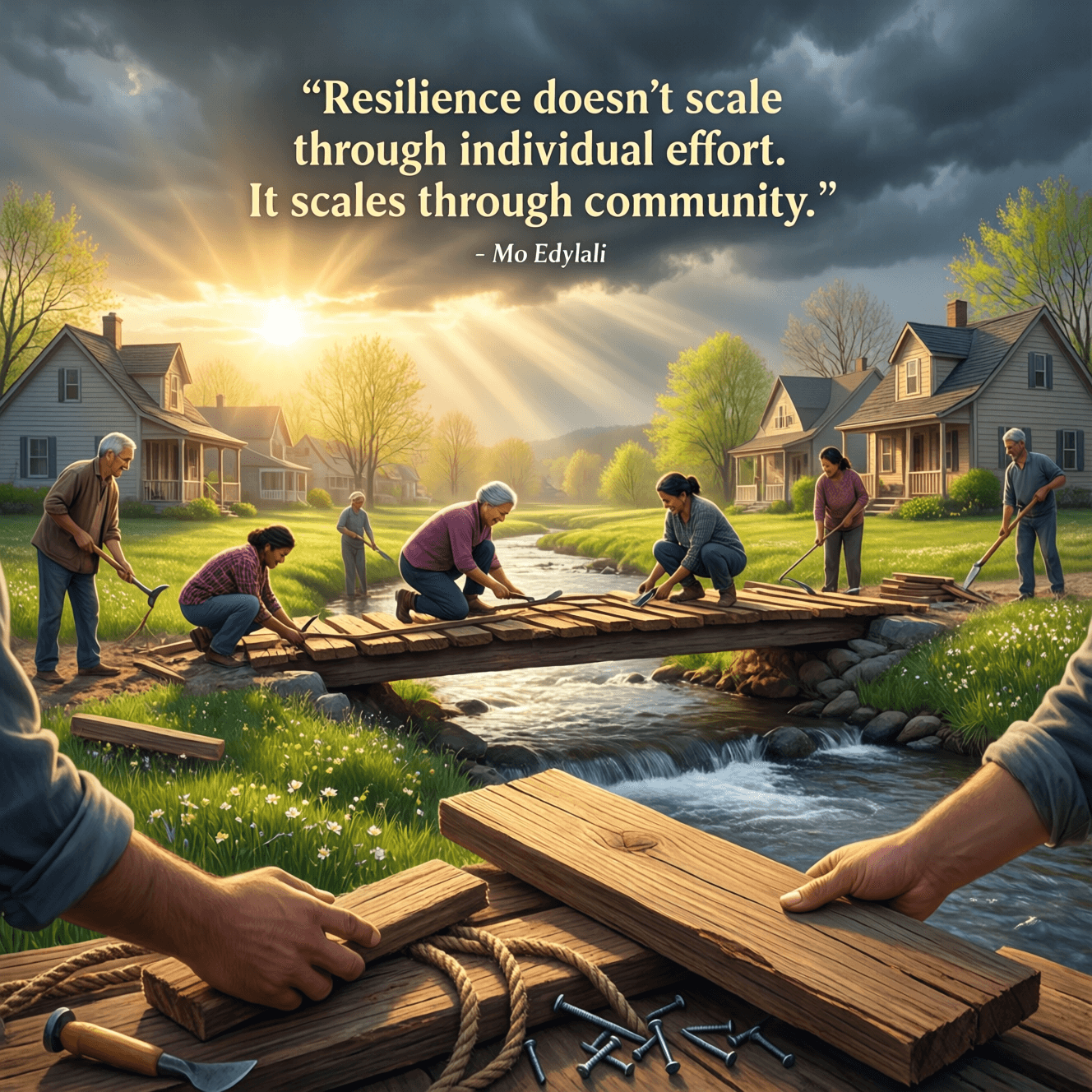
One concrete way community turns into scalable resilience is mutual aid—people directly meeting one another’s needs without waiting for formal institutions to catch up. Historically, mutual aid societies offered pooled resources for funerals, illness, or unemployment, creating a buffer that no single member could have maintained alone.
Moving from principle to everyday life, mutual aid can be as small as a childcare swap among parents or as coordinated as a neighborhood food distribution after a storm. These arrangements don’t just help one person survive; they create a template others can adopt, strengthening the entire group over time. [...]