Wangari Maathai
Wangari Maathai (1940–2011) was a Kenyan environmentalist, political activist, and founder of the Green Belt Movement. She won the 2004 Nobel Peace Prize—the first awarded to an African woman—for linking sustainable development, democracy and peace, and she championed tree planting, women's rights, and community empowerment.
Quotes by Wangari Maathai
Quotes: 16

How One Steady Step Expands Possibility
Wangari Maathai’s line begins with a deceptively small image: a single steady step. Yet the consequence is enormous—“redraws the map of what’s possible”—suggesting that reality is not fixed so much as revised by action. In this view, possibility is less a territory we discover than one we create as we move. Because the step is “steady,” not dramatic, Maathai shifts attention away from sudden breakthroughs and toward deliberate progress. The statement implies that the future is negotiated through repeated, grounded decisions, where each forward motion alters what we can imagine next. [...]
Created on: 1/15/2026

One Task, Shared Care, Lasting Resilience
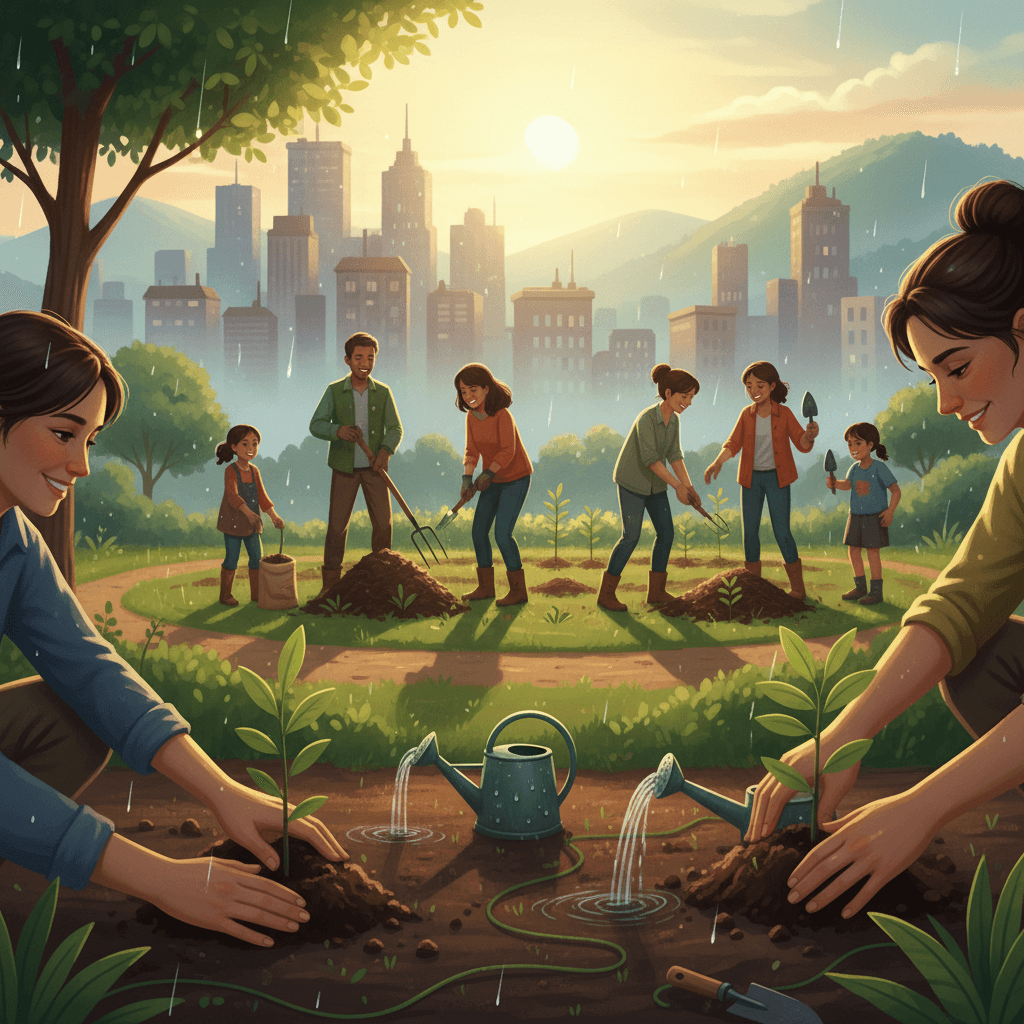
Maathai’s own work offers a lived example of her message. Through Kenya’s Green Belt Movement (founded 1977), communities—especially women—planted trees to restore degraded land, secure firewood, and protect watersheds. Planting a tree is the archetypal “one task at a time” action: concrete, local, and repeatable. Yet the impact compounds. Millions of trees, combined with civic education and community organizing, demonstrate how collective care can turn modest actions into environmental restoration and social empowerment—precisely the resilient world her quote points toward. [...]
Created on: 12/28/2025

Small Acts, Courageous Hope, Lasting Change
Once the focus is on doing what one can, the logic naturally expands to community: many “hummingbirds” acting together can alter what any single one could not. This is how movements grow—through accumulations of small, coordinated actions that make large systems respond. Maathai’s own Green Belt Movement, founded in 1977, embodied this principle by mobilizing communities—especially women—to plant trees and restore degraded land. The work looked modest at the level of one seedling, but scaled through participation, it became a durable form of environmental and civic transformation. [...]
Created on: 12/22/2025

Small, Steady Fires Against Cold Doubt
Furthermore, the quote hints that steady effort is contagious in a way that dramatic gestures may not be. A small fire can be approached, tended, and shared; it invites participation rather than awe. When others see actions that are repeatable and humane in scale, they are more likely to join, which multiplies warmth far beyond what one person could generate alone. In social movements and workplaces alike, the most durable culture shifts often begin with simple norms: listening well, keeping commitments, documenting progress, mentoring newcomers. These practices look unremarkable until they accumulate into a climate where cynicism has less room to settle. [...]
Created on: 12/15/2025

The Hidden Environmental Debt to Future Generations
Wangari Maathai’s warning exposes a moral imbalance at the heart of modern development: those who benefit most from environmental destruction are rarely those who bear its full costs. Instead, today’s comforts—fossil-fueled transport, throwaway plastics, unchecked deforestation—create long-term harms that unfold slowly. Because climate shifts, ecosystem collapse, and resource depletion operate on decades-long timescales, the consequences arrive when the original decision-makers are gone, leaving children and grandchildren to navigate a damaged world they did not choose. [...]
Created on: 12/6/2025

Quietly Honed Courage for the Coming Dawn
In this light, the metaphor of dawn is also political. Social-movement scholars argue that success hinges on timing—identifying and exploiting openings when institutions briefly become permeable (McAdam, Tarrow, and Tilly, Dynamics of Contention, 2001). Maathai’s trajectory mirrors this seasonal reading of power. After years of repression, Kenya’s 2002 transition created a clearing: Maathai won a parliamentary seat and served as Assistant Minister for Environment and Natural Resources. Shortly after, her 2004 Nobel Peace Prize affirmed that environmental stewardship can galvanize democratic change (Nobel Lecture, 2004). The lesson is cyclical: prepare in darkness, then move when the light returns and paths appear. [...]
Created on: 11/7/2025

Strength Forged Where the Wind Tests You
Maathai’s line compresses a life philosophy into a weather image. The wind is any force that resists us—loss, injustice, unfamiliar tasks—and the command to stand implies choosing exposure over retreat. Strength, then, is not a gift granted in calm but a capacity forged through friction. Like a cliff sculpted by gusts, character takes shape where pushback is real. Crucially, the quote does not glorify suffering for its own sake; it locates growth at the point of meaningful challenge. With that lens, we can read Maathai’s own biography as an extended experiment in standing firm when it would have been easier to bend. [...]
Created on: 10/31/2025