Authors
Zora Neale Hurston
Zora Neale Hurston (1891–1960) was an American author, folklorist, and anthropologist associated with the Harlem Renaissance. Her novels—most notably Their Eyes Were Watching God—and her fieldwork collecting African American and Caribbean folklore provided lasting literary and ethnographic contributions.
Quotes: 19
Quotes by Zora Neale Hurston

How Longing Can Quietly Consume What We Love
Next comes the subtler damage: longing trains us to experience absence even in the presence of what we want. In relationships, someone can “long” for a partner’s attention in a way that overlooks the attention actually given; in work, a person can long for the next promotion so intensely that they cannot inhabit their current role with competence or pride. The habit becomes: whatever is here is not enough. Over time, this can erode gratitude and clarity. The thing itself—person, place, craft—gets flattened into a placeholder for a better future, and that diminishes its texture in the present. [...]
Created on: 3/4/2026

The Deadly Cost of Silencing Pain
Hurston’s warning also points to the everyday incentives that train people to hide suffering: fear of retaliation, disbelief, shame, or being labeled “difficult.” Even well-meaning listeners can prefer a tidy version of events, nudging the hurt person toward politeness and restraint rather than honest disclosure. As a result, silence becomes a survival strategy that slowly turns into a trap. The longer pain is kept private, the harder it becomes to describe, and the more others interpret the absence of complaint as proof that nothing is wrong—or worse, that the situation is acceptable. [...]
Created on: 2/16/2026

The Irresistible Pleasure of Self-Confidence
At the same time, the line hints that people sometimes “deny themselves” good things for reasons that have little to do with merit. Prejudice, envy, conformity, or fear can make individuals reject what would actually enrich them. Hurston’s phrasing doesn’t plead for inclusion; it exposes the irrationality of exclusion—almost as if she’s watching others make a self-defeating choice. This shift matters because it reassigns responsibility. Instead of asking, “What’s wrong with me?” the quote asks, “What’s keeping them from seeing clearly?” That gentle indictment can be read as social commentary: communities can deprive themselves of brilliance when they cling to narrow judgments. [...]
Created on: 2/16/2026

Sharpening the Knife: Grit Over Grief
The sentence also carries wit: an oyster knife is an oddly specific object, and its specificity creates a dry humor that undercuts melodrama. That humor functions as armor—an ironic stance that keeps despair at a manageable distance. The effect is not coldness for its own sake, but a practiced toughness that preserves one’s ability to move. Through that tonal choice, Hurston suggests a method: when reality is sharp, sharpen back. Humor and grit become complementary tools, allowing a person to stay clear-eyed without becoming crushed. [...]
Created on: 2/15/2026

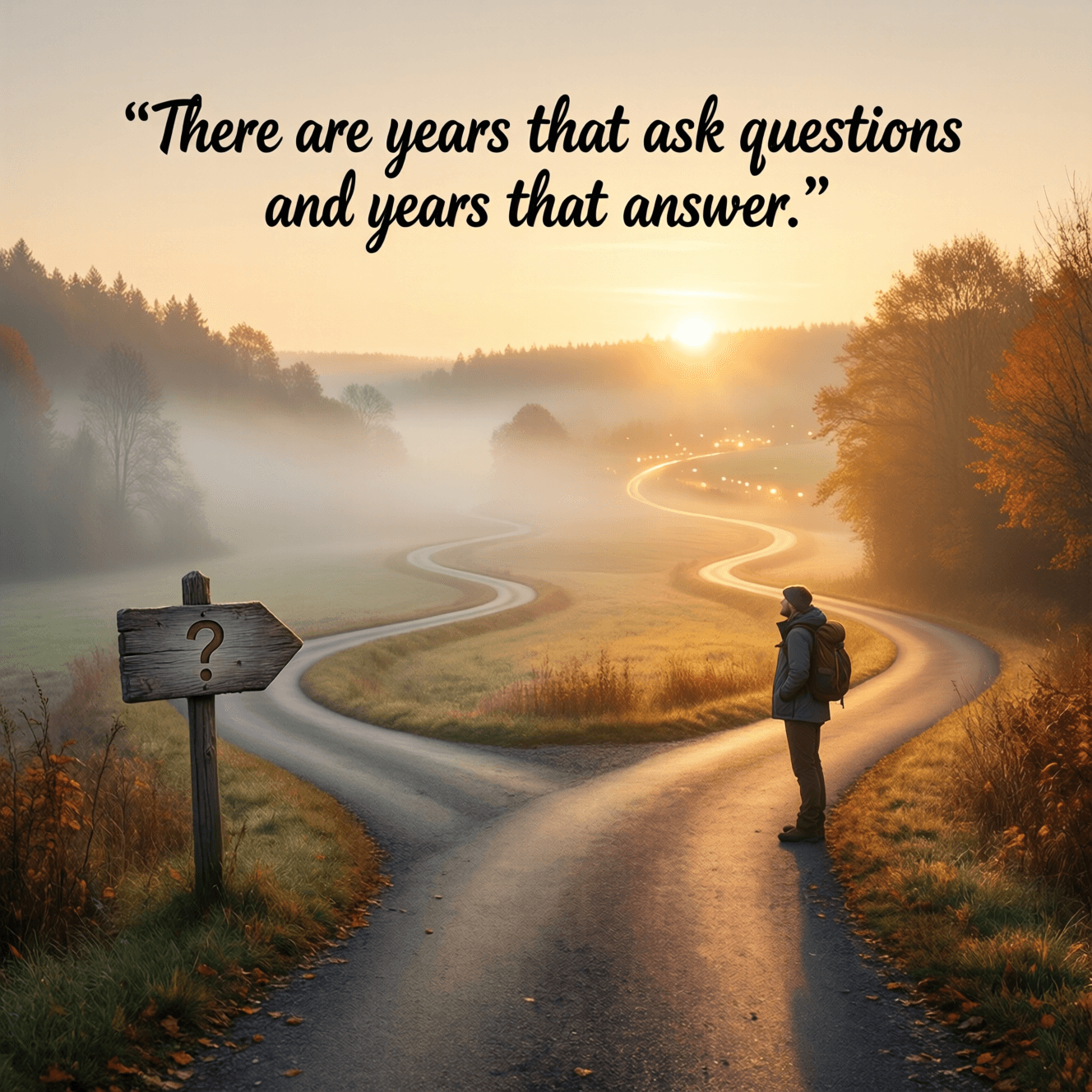
When Time Turns Questions Into Answers
To see how a year can “ask,” think of periods when life becomes all provisional: a move, an illness, a breakup, a new job, a political upheaval. In such years, even routine decisions—where to live, whom to trust, what to pursue—feel like open-ended prompts. This is why the question is often not intellectual but existential: Who am I now, given what has changed? As Hurston implies, the point of the asking is not immediate resolution, but pressure that shapes the self through repeated, sometimes uncomfortable inquiry. [...]
Created on: 1/19/2026

Molding a Life Through Steady, Gentle Work
The phrase “firm hands” introduces the necessity of structure. Clay collapses without pressure and guidance, and in human terms that pressure looks like self-discipline: showing up, setting limits, and choosing long-term value over short-term ease. Aristotle’s Nicomachean Ethics (4th century BC) emphasizes virtue as habit, built through consistent practice rather than occasional inspiration. Yet firmness is not harshness; it is clarity. A firm hand can mean saying no to distractions, protecting time for work, or committing to health routines even when motivation fades. This kind of steadiness provides the shape that makes a life recognizable and coherent. [...]
Created on: 1/9/2026

Loud Small Victories Build Public Confidence
Finally, the quote points to a long game: a reputation is built from accumulated moments, not a single breakthrough. Claiming small victories loudly is a way of stacking those moments where people can see them, so that over time your competence becomes familiar rather than surprising. As those claims compound, they don’t just announce what you did yesterday—they forecast what you can do tomorrow. That is the heart of Hurston’s insight: when you treat small wins as worth naming, you steadily educate the world to expect capability from you, and expectations often open doors that talent alone cannot. [...]
Created on: 12/25/2025