
Small Acts, Courageous Hope, Lasting Change
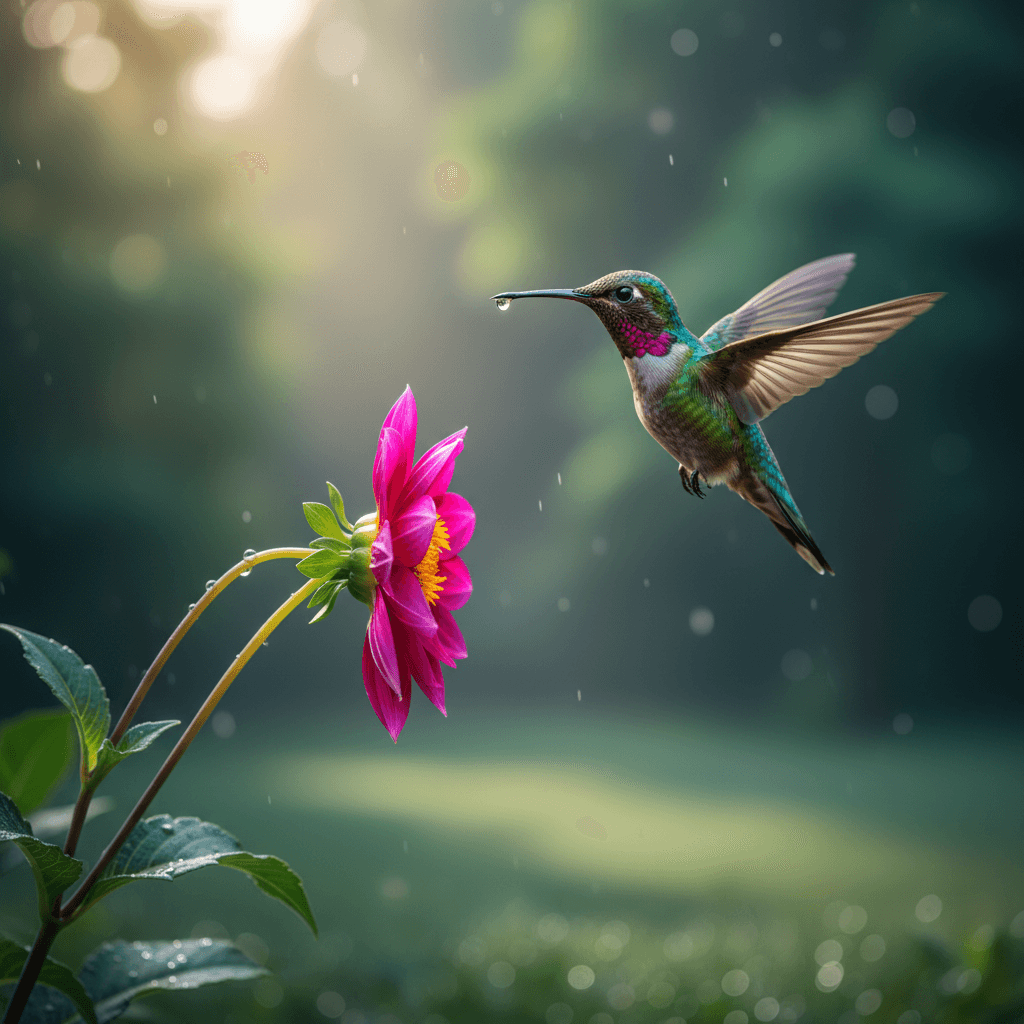
I will be a hummingbird. I will do the best I can. — Wangari Maathai
A Metaphor for Humble Action
By saying, “I will be a hummingbird,” Wangari Maathai chooses a creature defined less by size than by relentless motion. The hummingbird becomes a metaphor for the person who keeps showing up—quick, focused, and undeterred—despite appearing insignificant next to the scale of a problem. This framing matters because it shifts attention away from grand gestures and toward consistent effort. Instead of asking whether one individual can solve a crisis outright, Maathai points to a more practical question: will you contribute what you can, where you are, with the tools you have?
The Story Behind the Image
Maathai’s line echoes a widely told parable she popularized: a forest is on fire, and while larger animals flee or despair, a hummingbird carries drops of water in its beak and releases them on the flames. When others mock the effort as futile, the bird replies that it is doing the best it can. Moving from metaphor to moral, the story is less about extinguishing the entire fire alone and more about refusing resignation. In that sense, Maathai invites a kind of moral stubbornness: act anyway, even when your action seems too small to count.
Responsibility Without Heroics
The second sentence—“I will do the best I can”—grounds the poetry in a standard of responsibility rather than perfection. Maathai does not promise victory; she promises effort. That distinction is crucial because many people delay action until they feel certain it will “work,” and uncertainty becomes an excuse for inaction. Instead, she proposes an ethic of contribution: you are accountable for your attempt, your integrity, and your persistence, not for controlling every outcome. From there, doing your best becomes a daily practice—measurable, repeatable, and within reach.
A Blueprint for Collective Change
Once the focus is on doing what one can, the logic naturally expands to community: many “hummingbirds” acting together can alter what any single one could not. This is how movements grow—through accumulations of small, coordinated actions that make large systems respond. Maathai’s own Green Belt Movement, founded in 1977, embodied this principle by mobilizing communities—especially women—to plant trees and restore degraded land. The work looked modest at the level of one seedling, but scaled through participation, it became a durable form of environmental and civic transformation.
Courage in the Face of Overwhelm
The quote also addresses a modern psychological reality: the feeling that problems are so vast—climate change, injustice, poverty—that individual action is meaningless. Maathai’s hummingbird refuses that paralysis, modeling a way to live with the weight of big issues without being crushed by them. In practice, the courage she describes is quiet: it is the choice to keep acting even while fearing inadequacy. That is why the hummingbird is powerful—it represents hope as behavior, not as a mood.
Turning the Quote into Practice
Carrying Maathai’s idea forward means translating “best I can” into concrete, sustainable steps: one phone call, one vote, one tree, one mentoring session, one policy comment, repeated over time. The hummingbird does not carry an ocean; it carries what it can carry, again and again. Finally, the quote suggests a kind of moral identity: deciding who you will be in a crisis. When you choose to be the hummingbird, you stop waiting for the perfect plan or the perfect hero, and you become a dependable unit of change—small, persistent, and contagious.