
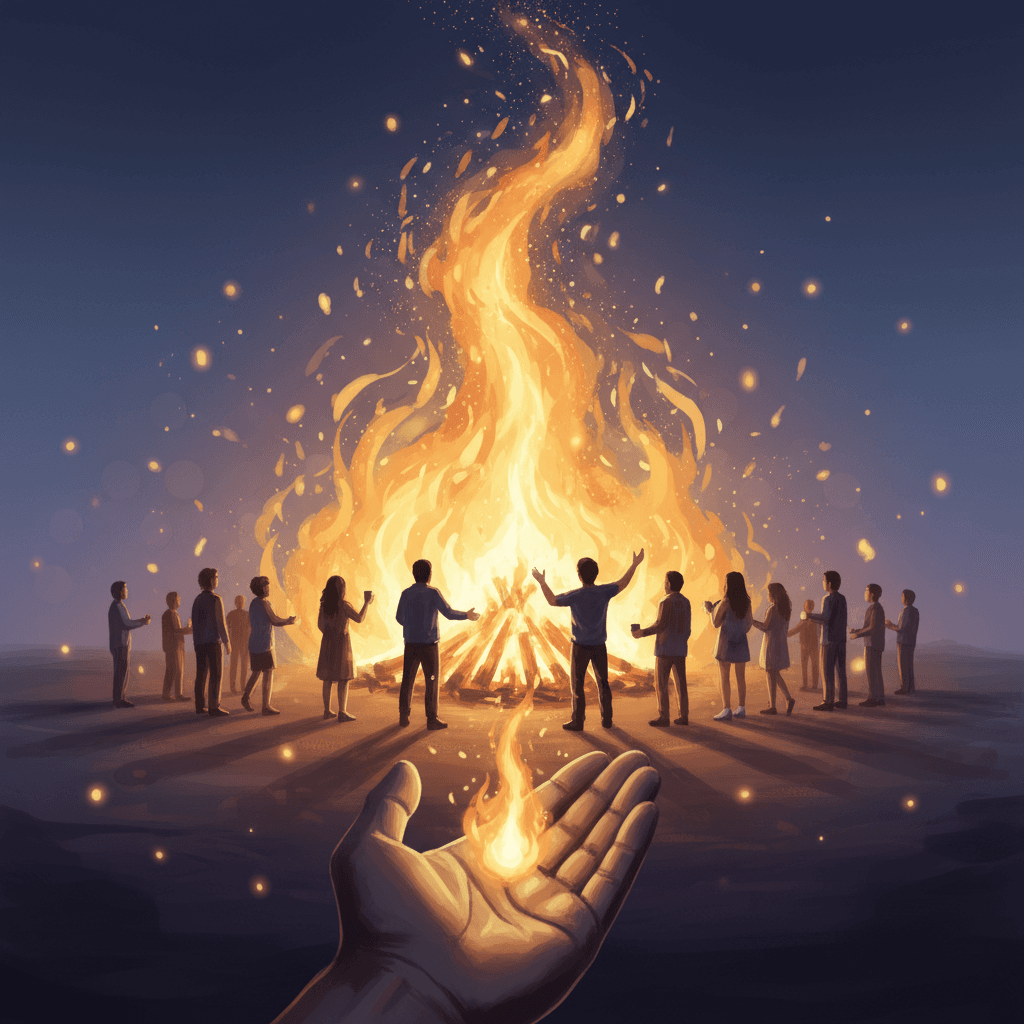
Light a small fire of kindness and watch it become a blaze that warms many. — Seamus Heaney
—What lingers after this line?
A Spark That Changes the Atmosphere
Seamus Heaney’s image of a “small fire of kindness” invites us to see gentle acts as sources of unexpected power. Just as a single match alters the darkness around it, a quiet gesture—a thoughtful word, a seat offered on a bus, a patient listening ear—begins to shift the emotional climate. Rather than imagining kindness as grand charity, Heaney suggests it starts modestly, almost imperceptibly, yet already holds transformative potential. In this way, a simple spark becomes the first step in reshaping the coldness or indifference of everyday life.
How Kindness Spreads Like Flame
Moving from spark to blaze, the metaphor highlights how kindness naturally seeks to spread. Fire, once kindled, reaches outward; similarly, a person who feels genuinely cared for is more likely to extend care in turn. Social psychologists describe this as “upstream reciprocity,” where recipients of help pass the benefit on to others rather than back to the original giver. A door held open leads to a day lived more gently; a teacher’s encouragement inspires a student to mentor others later in life. What starts as a solitary ember becomes a chain reaction of warmth.
Warmth as Belonging and Safety
Heaney’s choice of warmth is crucial, for warmth is both physical and emotional. By evoking a blaze “that warms many,” he points toward communities where people feel safe, seen, and included. Sociological studies of disaster response often show that in crises, small cooperative acts—sharing food, checking on neighbors—build a sense of collective resilience. This shared warmth reduces isolation, much like a communal hearth once gathered villagers together. Thus, kindness does more than comfort individuals; it forges a protective atmosphere in which many can rest and recover.
The Courage to Strike the Match
Yet before there is a blaze, someone must choose to light the first flame. Heaney’s phrasing, “light a small fire,” underscores agency and courage. Starting kindness can feel risky in a cynical environment; we fear rejection, misunderstanding, or appearing naïve. Still, storytellers from Aesop to modern films like “Pay It Forward” show characters who defy this hesitation, initiating generosity in otherwise hostile settings. They reveal that courage in kindness is less about dramatic sacrifice and more about consistent, everyday willingness to be the first to act warmly.
Tending the Fire Responsibly
At the same time, fire demands care, and Heaney’s metaphor quietly reminds us that kindness must be tended. A blaze that warms can also burn out or, if misdirected, overwhelm. Healthy kindness respects boundaries, avoids martyrdom, and invites others to share the work of keeping the hearth bright. Community initiatives that thrive—mutual aid networks, volunteer groups, neighborhood projects—do so because many hands stoke the coals, preventing any one person from being consumed. In this balance, warmth becomes sustainable rather than fleeting.
Becoming Part of the Shared Hearth
Ultimately, Heaney’s line is an invitation to view ourselves as part of a larger circle around a common fire. By lighting even a small flame, we contribute to a blaze none of us owns, yet all of us benefit from. Over time, these cumulative acts rewrite what feels “normal” in a community—from casual disregard to habitual care. Like the hearth in Homer’s epics, where strangers become guests and guests become friends, the blaze of kindness reshapes relationships. In standing near it, we are warmed—and gradually learn to keep it burning for others.
One-minute reflection
Why might this line matter today, not tomorrow?
Related Quotes
6 selectedLight a small candle for hope; its glow invites others to kindle warmth. — Desmond Tutu
Desmond Tutu
Desmond Tutu’s image of lighting a small candle captures how even fragile gestures can confront overwhelming darkness. A candle is ordinary, easily extinguished, and yet it remains one of humanity’s oldest symbols of res...
Read full interpretation →In every kind gesture, a seed of hope is sown.
Unknown
This quote highlights the significant impact that small acts of kindness can have on others. Even the simplest kind gesture can spark hope and positivity in someone's life.
Read full interpretation →Shine your light and make a positive impact on the world; every small act of kindness creates a ripple of hope. — Unknown.
Unknown
This quote emphasizes the significance of even the smallest acts of kindness. It suggests that each action, no matter how minor, contributes to creating a more compassionate and hopeful world.
Read full interpretation →Family is not just a place we come from, but a sanctuary we build every day through the small, intentional acts of kindness we offer one another. — Daisaku Ikeda
Daisaku Ikeda
At first glance, Ikeda’s quote gently shifts the meaning of family away from mere ancestry or birthplace. He suggests that family is not defined only by bloodlines or shared history, but by what people actively create to...
Read full interpretation →Boundaries do not make you less kind; they make you more capable of being kind without resentment. — Brené Brown
Brené Brown
At first glance, Brené Brown’s quote challenges a common assumption that kindness means endless availability. Instead, she reframes boundaries as the structure that allows generosity to remain sincere rather than forced.
Read full interpretation →You don't have to be a billionaire to believe you can make a difference. Give your time, give your love, or simply give a smile. — Steve Goodier
Steve Goodier
At its core, Steve Goodier’s quote challenges the idea that influence belongs only to the wealthy or powerful. By placing time, love, and even a smile alongside money, he broadens generosity into something almost anyone...
Read full interpretation →More From Author
More from Seamus Heaney →Walk on air against your better judgement. — Seamus Heaney
Heaney’s line hinges on a sharp contradiction: to “walk on air” is to do what gravity says you cannot, and to do it “against your better judgement” is to move despite the mind’s careful warnings. From the outset, the quo...
Read full interpretation →Turn the ordinary into a story worth taking further. — Seamus Heaney
Seamus Heaney’s line, “Turn the ordinary into a story worth taking further,” urges us to reconsider what we dismiss as mundane. Rather than waiting for dramatic events, he suggests that meaning emerges when we treat ever...
Read full interpretation →Stand where you are and turn your doubts into the ground for courage to grow. — Seamus Heaney
Heaney’s imperative to “stand where you are” reframes courage as composure before motion. Instead of scrambling for escape or certainty, he invites a pause that gathers scattered attention back into the body—feet planted...
Read full interpretation →Hold fast to small habits; they shape the landscape of a life. — Seamus Heaney
Seamus Heaney’s line invites us to see routine as terrain. His poems return to earth, craft, and the shaping touch—consider Digging from Death of a Naturalist (1966), where the pen becomes a spade and steady strokes repl...
Read full interpretation →