
Rising From Yesterday to Walk With Intent
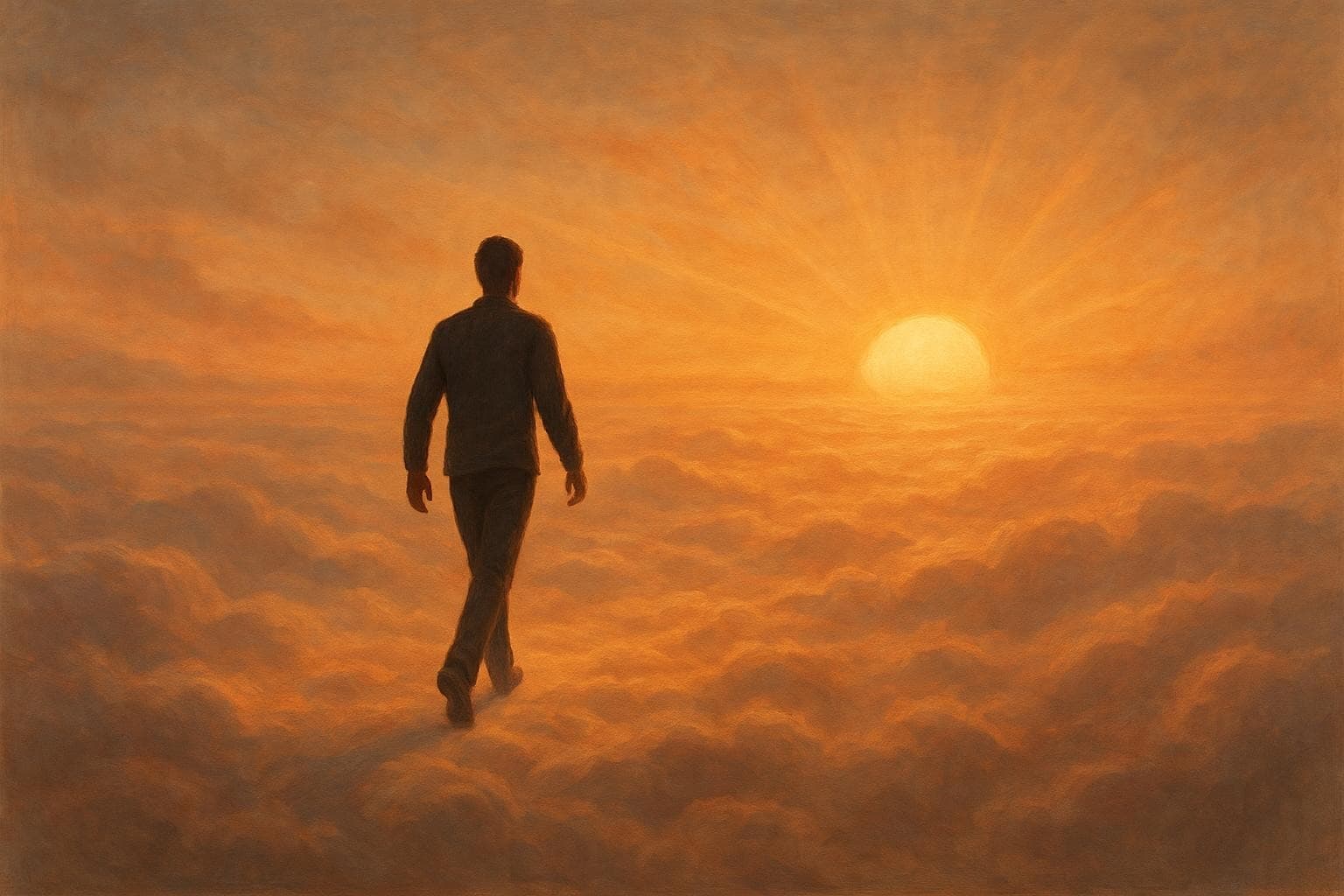
Rise from the bed of yesterday like a hymn, and walk with intent into the sun. — Sappho
—What lingers after this line?
Awakening From the Bed of Yesterday
The image of the “bed of yesterday” evokes more than literal sleep; it suggests the weight of past experiences, regrets, and comforts that can keep us lying still. To rise from that bed is to refuse to be defined solely by what has already happened. Instead of remaining entangled in yesterday’s stories, Sappho’s line invites a conscious awakening, a moment in which we recognize that each morning contains the possibility of renewal.
Singing the Self Like a Hymn
To rise “like a hymn” introduces a sacred and musical dimension to this awakening. A hymn is not merely sound; it is praise, remembrance, and communal affirmation. In a similar way, Sappho suggests that the act of getting up and facing a new day can itself become a song of reverence—for life, for resilience, for the body that stands again. Rather than dragging ourselves forward, we are urged to embody uplift, as if our very movement were a quiet act of worship.
Walking With Intent as Daily Practice
The second half of the quote turns from rising to walking, shifting from inner awakening to outward action. To “walk with intent” implies direction, clarity, and purpose, however modest. This does not necessarily mean grand life plans; it may simply be choosing to move through the day with awareness rather than drift. In this way, Sappho’s words echo later philosophical traditions—such as the Stoic emphasis on deliberate action in Epictetus’s *Discourses* (c. 108 AD)—that encourage aligning one’s steps with one’s values.
Into the Sun: Moving Toward Illumination
The destination—“into the sun”—suggests a movement toward light, warmth, and visibility. The sun traditionally symbolizes clarity and truth, from Homer’s epics to Plato’s allegory of the cave in the *Republic* (c. 375 BC), where stepping into sunlight represents awakening to deeper understanding. Thus, Sappho’s line implies more than walking into a new day; it is an invitation to approach what is honest and revealing, even when that light exposes our vulnerabilities as well as our strengths.
Sappho’s Enduring Voice of Renewal
Although much of Sappho’s poetry survives only in fragments, the intensity and intimacy of her voice have resonated for centuries, influencing poets from Catullus in ancient Rome to modern lyricists. This quote fits within her broader legacy of blending personal emotion with universal insight. By yoking bodily action (rising, walking) to spiritual overtones (hymn, sun), she crafts a compact philosophy of daily renewal. Each morning, her words suggest, we have a chance to treat our first steps not as routine, but as a deliberate, almost ceremonial, turning toward light.
Living the Hymn in Ordinary Moments
Ultimately, Sappho’s exhortation is less about a single dramatic transformation and more about how we inhabit ordinary beginnings. Rising from yesterday means acknowledging the past without surrendering to it, while walking with intent into the sun means allowing even simple tasks—making breakfast, commuting, greeting a stranger—to be infused with purpose. In this reading, the quote becomes a gentle daily mantra: stand up, make your life a song, and keep moving toward whatever represents light for you—justice, understanding, compassion, or creative work.
Recommended Reading
As an Amazon Associate, we earn from qualifying purchases.
One-minute reflection
What feeling does this quote bring up for you?
Related Quotes
6 selectedYou are not a machine designed to be productive 24/7. Even the most fertile land must lie fallow to produce a harvest again. — Wendell Berry
Wendell Berry
Wendell Berry’s line begins by challenging a modern assumption: that our worth is measured by constant productivity. By stating plainly that you are “not a machine,” he re-centers the conversation on human limits—physica...
Read full interpretation →An intentional life embraces only the things that will add to the mission of significance. — John C. Maxwell
John C. Maxwell
John C. Maxwell’s line reframes life as a deliberate design rather than a default drift.
Read full interpretation →The heaviness of being successful was replaced by the lightness of being a beginner again. — Steve Jobs
Steve Jobs
Steve Jobs frames success not as pure triumph but as something that can accumulate gravity over time. Once you are seen as “successful,” expectations harden: you are supposed to be consistent, certain, and constantly rig...
Read full interpretation →Winter always turns to spring. — Nichiren Daishonin
Nichiren Daishonin
Nichiren Daishonin’s line begins with a plain seasonal observation that carries immediate emotional weight: winter does not last forever. By choosing a cycle everyone recognizes, he frames change as dependable rather tha...
Read full interpretation →You will burn and you will burn out; you will be healed and come back again. — Fyodor Dostoevsky
Fyodor Dostoevsky
Dostoevsky’s line treats suffering not as a single dramatic episode but as a recurring rhythm: intensity, collapse, recovery, and return. Instead of promising a smooth ascent toward improvement, he describes a life that...
Read full interpretation →You will burn and you will burn out; you will be healed and come back again. — Fyodor Dostoevsky
Fyodor Dostoevsky
Dostoevsky’s line frames suffering as rhythmic rather than final: first the blaze of effort or emotion, then the collapse, then the slow work of recovery, and finally the return. Instead of treating burnout as a personal...
Read full interpretation →More From Author
More from Sappho →Sow a single clear word and let it bloom into a chorus. — Sappho
Sappho’s line begins by shrinking expression down to its smallest unit: a single clear word. The emphasis on clarity suggests intention rather than verbosity, as if meaning can be planted only when it is cleanly chosen.
Read full interpretation →Let desire fuel your craft but let kindness steady the heart. — Sappho
Sappho’s line sets up a deliberate pairing: desire as the engine of making, and kindness as the stabilizer of being. Desire pushes the artist toward intensity—toward risk, experimentation, and the hunger to shape experie...
Read full interpretation →Let your voice fracture the silence; even a small sound reshapes the air. — Sappho
Sappho’s line begins by treating silence not as emptiness, but as a kind of held breath—an atmosphere with shape and tension. When she urges, “Let your voice fracture the silence,” she implies that quiet has weight, and...
Read full interpretation →Sing with the courage of a throat that will not be silenced by storms. — Sappho
Sappho’s line frames singing as more than art—it is a refusal to be erased. The “throat” is deliberately physical, reminding us that courage is not an abstract virtue but something practiced in a body that can tremble, t...
Read full interpretation →