
Turning Doubt Into Astonishing New Life Pages
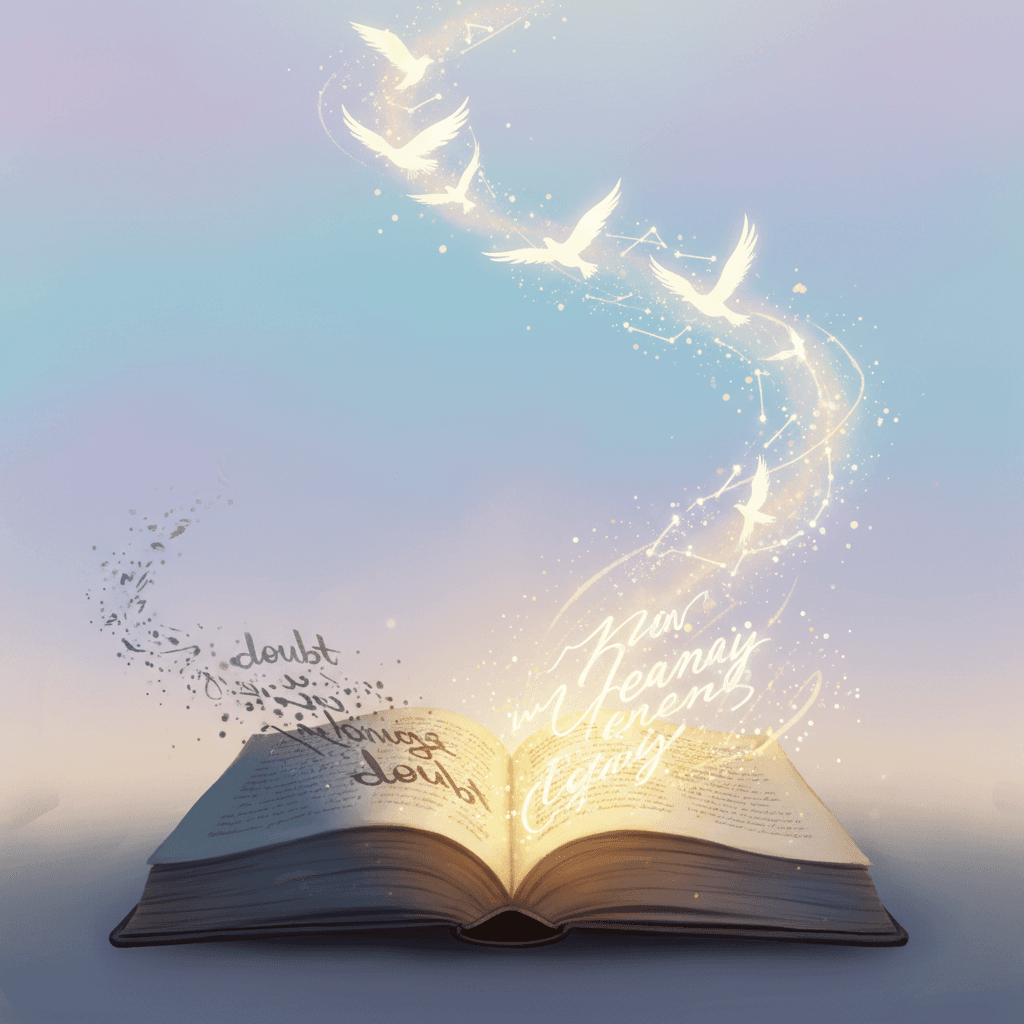
Turn the page of doubt and write the paragraph that astonishes you. — Marcus Aurelius
—What lingers after this line?
One-minute reflection
What feeling does this quote bring up for you?
From Stoic Reflection to Creative Command
Although often remembered as a sober Roman emperor, Marcus Aurelius also wrote as a quiet creator of his own inner life. The line, “Turn the page of doubt and write the paragraph that astonishes you,” distills a Stoic insight into a creative metaphor: life is both a book and a blank page. Instead of being trapped re-reading old fears, he urges us to flip the sheet and actively compose something worthy of our own admiration. Thus, the saying bridges Stoic self-discipline with the daring freedom of authorship, inviting us to see each day as a revision, not a sentence.
Doubt as an Old, Over-Read Page
To understand this image, it helps to view doubt as a worn, dog-eared page we keep revisiting. In *Meditations* (c. 180 AD), Aurelius repeatedly returns to the same themes: our anxieties, other people’s opinions, and the brevity of life. These recurring thoughts, like margins filled with scribbles of worry, can feel familiar yet unhelpful. By likening doubt to a page rather than an absolute truth, the quote suggests that uncertainty is a chapter, not the entire book. We are not required to stay there; the binding of our life still holds many unwritten sheets beyond that cramped, anxious text.
The Courage to Turn the Page
However, the crucial movement in the quote is not the writing but the turning. Shifting from doubt to action demands a small, decisive gesture: a mental page-turn. Aurelius often counsels himself to “start living, stop delaying” in *Meditations*, emphasizing that hesitation quietly consumes the time we think we are preserving. In the same spirit, turning the page means accepting that previous lines—mistakes, regrets, failed attempts—cannot be erased but also need not dictate what follows. This gentle yet firm pivot transforms doubt from a stopping point into a hinge on which the whole narrative can swing open.
Writing the Paragraph That Astonishes You
Once the page is turned, the quote calls not for mere improvement, but for astonishment. This is a remarkable standard: you are asked to write something that would make you pause in disbelief that you were capable of it. In Stoic terms, this aligns with the practice of living “according to your highest nature,” striving to act with more courage, justice, and clarity than your habits predict. Just as a writer surprises herself with an unexpectedly vivid sentence, a person can surprise himself with an act of integrity, kindness, or boldness that exceeds his familiar script. The astonishment is the signal that you have stepped beyond your old limits.
A Quiet Rebellion Against Your Old Story
Seen this way, Aurelius’s invitation is a quiet rebellion against the story you have been telling about yourself. Where doubt insists, “This is just who I am,” the act of writing an astonishing paragraph whispers, “Watch what I can become.” Philosophers from Epictetus to Simone de Beauvoir have argued that freedom lies in re-authoring our roles rather than merely acting them out. By choosing one surprising, generative action—making the difficult apology, attempting the daunting project, speaking a truth you usually swallow—you begin to revise your narrative. The astonishment you feel is not vanity; it is the dawning recognition that your identity is more spacious than your doubt allowed.
Living as an Ongoing Manuscript
Finally, the metaphor of the page reminds us that this is not a single, grand gesture but a daily practice. A manuscript worth reading emerges paragraph by paragraph, with missteps and revisions folded into its depth. Aurelius himself wrote *Meditations* as personal notes, never polished for publication, yet they now astonish readers across centuries. In the same way, you are not asked to produce a flawless life, only to keep turning from stale doubt toward fresh, courageous lines. Over time, these choices accumulate into a volume that, when reread, allows you to say with genuine wonder: I did not know I could write such a life.