#Personal Transformation
Quotes tagged #Personal Transformation

Quotes: 63

Fear as a Doorway to Growth
Finally, “make room” implies discernment, not self-endangerment. Some fears are warnings about real harm; others are alarms triggered by novelty, uncertainty, or the possibility of rejection. The art is distinguishing between the two, then choosing the fears that open into growth rather than into damage. A workable interpretation is to treat fear as a prompt for inquiry: What exactly am I afraid will happen? What value is underneath this fear? What is one small step I can take that respects my limits while still moving forward? In answering, you turn Woolf’s doorway into an actual path. [...]
Created on: 12/23/2025

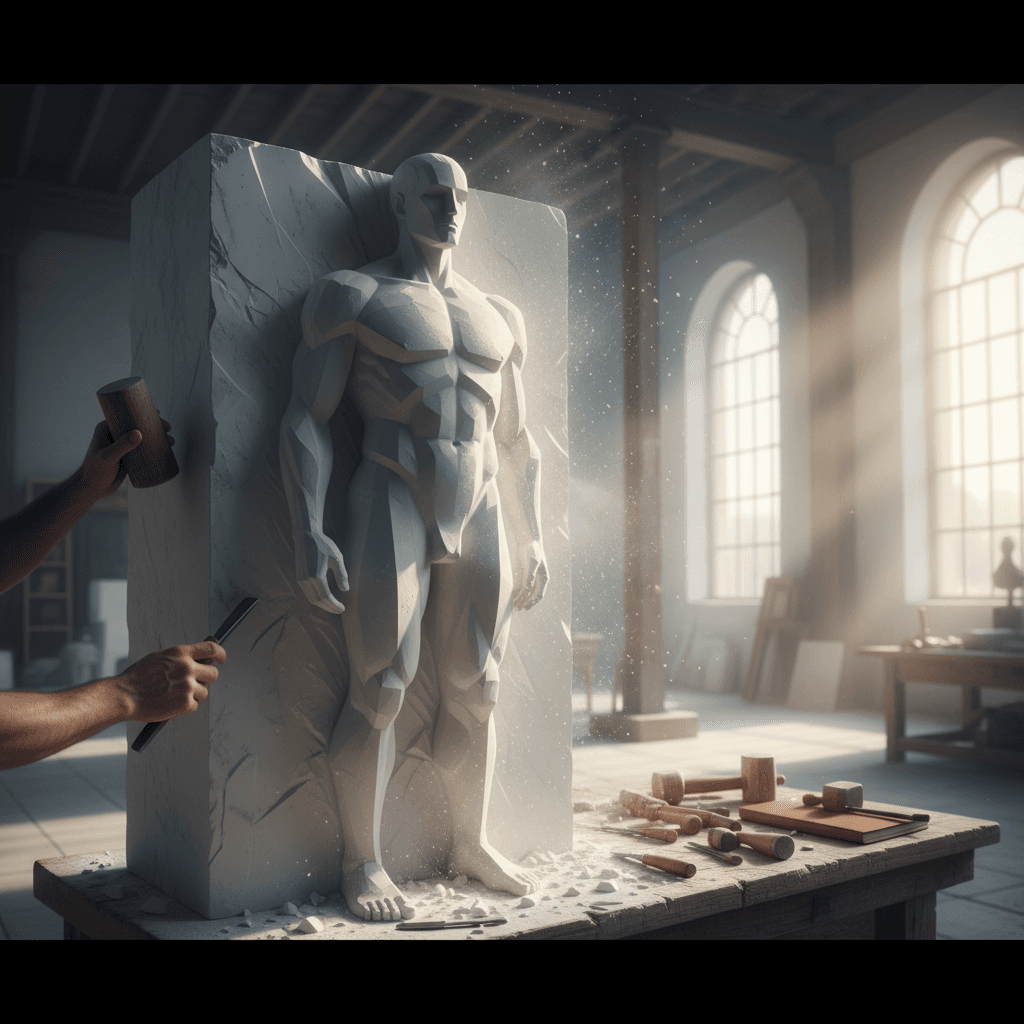
Chiseling Away the Needless to Become Yourself
From there, the quote redefines “needless” as anything that dilutes purpose, not merely what is unpleasant. Subtraction can look like refusing distractions, ending performative relationships, or abandoning goals that were adopted to impress others. Although this can feel like losing parts of oneself, Michelangelo implies it is actually a recovery of form. This is why the chisel matters: it represents deliberate, sometimes uncomfortable choice. A sculptor doesn’t remove marble once and call it done; similarly, becoming who you are meant to be involves repeated, conscious edits—less noise, fewer false obligations, and a clearer outline of what remains. [...]
Created on: 12/15/2025

Small Rituals, Astonishing Life-Long Transformation
Once small deeds become rituals, time becomes an ally. Five minutes of writing, a short walk after lunch, or putting out tomorrow’s clothes the night before may look trivial in the moment, but over months they stack into skill, stamina, and self-trust. This is how an “astonishing” life is built without grand gestures: the results eventually feel disproportionate to the inputs. The astonishment isn’t magic; it’s the delayed visibility of incremental change finally becoming obvious—like noticing a tree is tall only after many seasons of quiet growth. [...]
Created on: 12/14/2025

Turning Doubt Into Astonishing New Life Pages
However, the crucial movement in the quote is not the writing but the turning. Shifting from doubt to action demands a small, decisive gesture: a mental page-turn. Aurelius often counsels himself to “start living, stop delaying” in *Meditations*, emphasizing that hesitation quietly consumes the time we think we are preserving. In the same spirit, turning the page means accepting that previous lines—mistakes, regrets, failed attempts—cannot be erased but also need not dictate what follows. This gentle yet firm pivot transforms doubt from a stopping point into a hinge on which the whole narrative can swing open. [...]
Created on: 12/8/2025

Becoming the Miracle You’re Waiting For
This perspective does not deny pain; instead, it suggests that suffering can become a seed of transformation. Vujicic himself, born without arms and legs, speaks openly about despair before discovering purpose in encouraging others. His life illustrates how personal wounds, when faced honestly, can become sources of empathy and strength. As people move through grief, disability, or failure, they may discover that their scars equip them uniquely to understand and uplift others. Thus, what once felt like a disqualifier can, over time, become the very reason someone else finds hope. [...]
Created on: 12/3/2025

Let Wonder Rechart the Geography of Your Life
Moreover, wonder becomes contagious in community. Astronauts report the “overview effect”—a shift toward planetary stewardship when seeing Earth from orbit (Frank White, 1987). On a smaller scale, neighborhood “star parties” or museum late nights replicate this widening gaze. Consistent with Piff et al. (2015), groups that cultivate awe often display greater humility and generosity. Consequently, a redrawn personal map radiates outward, reconfiguring the social terrain with more bridges than borders. [...]
Created on: 11/14/2025

How Habits Redraw Your Life’s Landscape
Building on that image, early Confucian thought frames character as the cumulative product of practiced forms. The Analects opens with delight in learning and constant practice—“Is it not a pleasure to learn and, when it is timely, to practice what one has learned?” (Analects 1.1). Elsewhere, it notes, “By nature, people are close; by practice, they are far apart” (Analects 17.2), implying that habit differentiates destinies. The Confucian concept of li (ritual propriety) functions like habit formalized—daily patterns that tune emotion, perception, and conduct toward harmony. Through repeated enactment, a person’s inner disposition and outer world align, gradually remaking the landscape of family, work, and civic life. [...]
Created on: 11/12/2025