
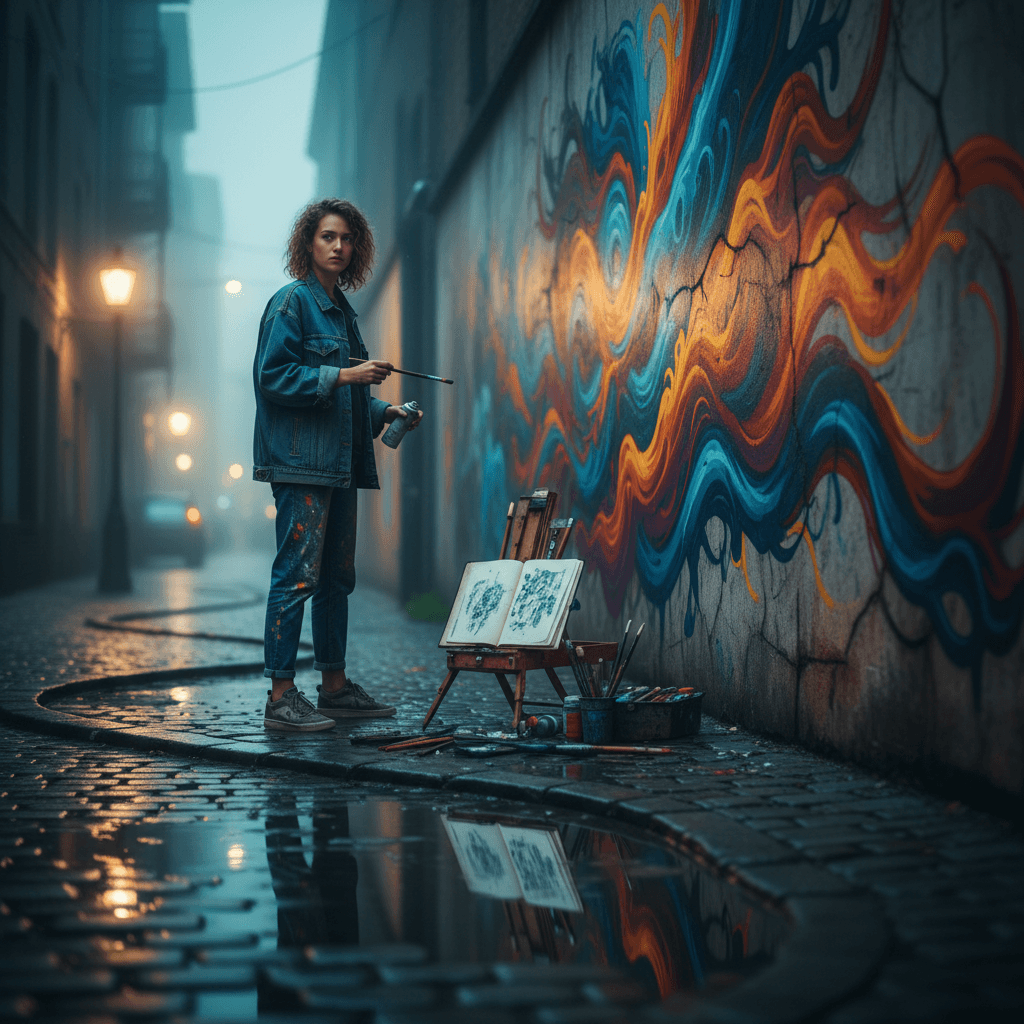
If the world asks for your struggle, give it your art — Octavio Paz
—What lingers after this line?
A Challenge Reframed as an Offering
Octavio Paz’s line pivots on a subtle refusal: if society demands your “struggle,” you are not obligated to hand over raw suffering as proof of worth. Instead, he proposes a transformation—give “your art,” the shaped and deliberate product of experience. In this reframing, struggle is not denied, but neither is it surrendered in its most exposed form. From the outset, the quote suggests agency. The world may ask invasive questions, expect confession, or reward pain as spectacle; Paz answers by insisting that what you offer can be chosen, crafted, and dignified. Art becomes the medium through which private hardship becomes public meaning without becoming public property.
Alchemy: Converting Pain into Form
Moving from refusal to creation, the quote implies an alchemy: struggle gains value when it is given form—rhythm, image, argument, melody, design. This doesn’t sanitize suffering; it organizes it so others can enter it without consuming the person who lived it. In that sense, art is both translation and boundary. Consider how Frida Kahlo’s paintings, shaped by chronic pain and emotional upheaval, do not merely display injury; they convert it into symbols that viewers can interpret and carry. By choosing composition over confession, the artist turns a personal wound into a language that can travel.
Resisting the Market for Suffering
Yet Paz also hints at a social critique: “the world” often behaves like an audience that demands trauma as a credential. In contemporary terms, this can resemble the pressure to narrate one’s hardships to be believed, to be visible, or to be granted a hearing. The quote pushes back against that transactional logic. In a related spirit, James Baldwin’s essays—such as those collected in The Fire Next Time (1963)—show how testimony can be powerful while still being crafted, intentional, and ethically controlled. The struggle is real, but the offering is art: structured, edited, and directed toward insight rather than voyeurism.
Art as Communication and Solidarity
Once struggle is shaped into art, it becomes shareable in a way that invites solidarity rather than pity. This is the next turn in Paz’s thought: art doesn’t merely protect the maker; it also builds a bridge to others. What was isolating can become communal when expressed through metaphor, story, or sound. Poetry, especially, excels at this compression of lived reality into recognizably human patterns. Paz’s own work, such as The Labyrinth of Solitude (1950), repeatedly seeks a language that connects the private self to a broader historical and cultural experience, suggesting that art can turn individual struggle into collective understanding.
Agency, Craft, and the Discipline of Making
The quote also elevates craft over impulse. Struggle is often chaotic; art requires decisions—what to include, what to omit, where to begin, when to stop. By recommending art as the response, Paz implies that dignity is preserved through discipline: the maker sets the terms of the exchange. This is why the line resonates beyond the arts. A scientist might turn frustration into a careful paper; an activist might turn anger into a speech with structure and strategy. In each case, the world receives something usable and clarifying, while the individual retains authorship over their narrative.
A Practical Ethic for Living and Creating
Finally, Paz’s statement functions as a compact ethic: you are not required to perform your suffering, but you can choose to convert it into something that enlarges life—for yourself and for others. The goal is not to aestheticize pain for its own sake; it is to ensure that struggle yields meaning rather than mere depletion. In practice, this might look like journaling that becomes a poem, grief that becomes a song, or injustice that becomes a film—works that do not erase hardship but transmute it. The world may ask for your struggle, but you can answer with a created thing: a sign that you endured, and that you shaped what tried to shape you.
One-minute reflection
Why might this line matter today, not tomorrow?
Related Quotes
6 selectedMake your resistance an instrument of beauty and a source of sustenance. — Audre Lorde
Audre Lorde
Audre Lorde’s line reframes resistance from a purely defensive posture into an active, generative force. Rather than merely enduring or opposing injustice, she urges the transformation of struggle into something that can...
Read full interpretation →Paint with your hands and let the world feel the colors of your effort. — Vincent van Gogh
Vincent van Gogh
At first glance, the line urges us to close the gap between idea and medium by literally reaching in with our hands. It reframes creativity as contact—pigment meeting skin—so that the labor of making becomes visible rath...
Read full interpretation →The act of making is an act of defiance against a culture that demands everything be instant and disposable. — Ursula K. Le Guin
Ursula K. Le Guin
At its core, Ursula K. Le Guin’s statement reframes making—whether writing, building, sewing, painting, or planting—as more than simple production.
Read full interpretation →Art is what we call it when the human soul shows up. — Seth Godin
Seth Godin
Seth Godin’s line reframes art as a moment of arrival: art happens when something distinctly human becomes visible through what we make. In this view, technique and output matter, but they are secondary to presence—the f...
Read full interpretation →Paint your days with fearless colors. — Yoko Ono
Yoko Ono
Yoko Ono’s line reads like a simple instruction, yet it carries an expansive challenge: treat your daily life as a canvas and yourself as the painter. Rather than waiting for rare, dramatic moments to feel alive, it asks...
Read full interpretation →Step into the studio of life and sculpt meaning from motion — Pablo Picasso
Pablo Picasso
Picasso’s line begins by relocating creativity from the gallery into daily experience: life itself becomes the studio. In that space, nothing is fully finished or perfectly arranged; instead, each moment arrives like raw...
Read full interpretation →More From Author
More from Octavio Paz →Harvest resilience from routine; repetition grows muscle in the soul. — Octavio Paz
Octavio Paz’s line frames routine not as drudgery but as a workshop where resilience is made. Instead of waiting for dramatic trials to reveal character, he implies that the small, recurring actions of daily life steadil...
Read full interpretation →Carry silence in one pocket and purpose in the other. — Octavio Paz
Octavio Paz frames a compact ethic: keep silence close at hand while also keeping purpose equally available. The image of “two pockets” suggests portability and readiness, as if these are tools you reach for in different...
Read full interpretation →Let restlessness become a compass guiding you toward meaningful labor. — Octavio Paz
Octavio Paz reframes restlessness as something more instructive than irritating—a signal that our current routines may be too small for our capacities. Rather than treating agitation as a personal defect, the quote invit...
Read full interpretation →Begin with a single honest gesture and watch the horizon change its shape. — Octavio Paz
Octavio Paz’s line invites us to linger on the word “begin.” Rather than demanding a grand transformation, he calls for a single, honest gesture—a small, concrete act that nonetheless carries immense weight. This framing...
Read full interpretation →