
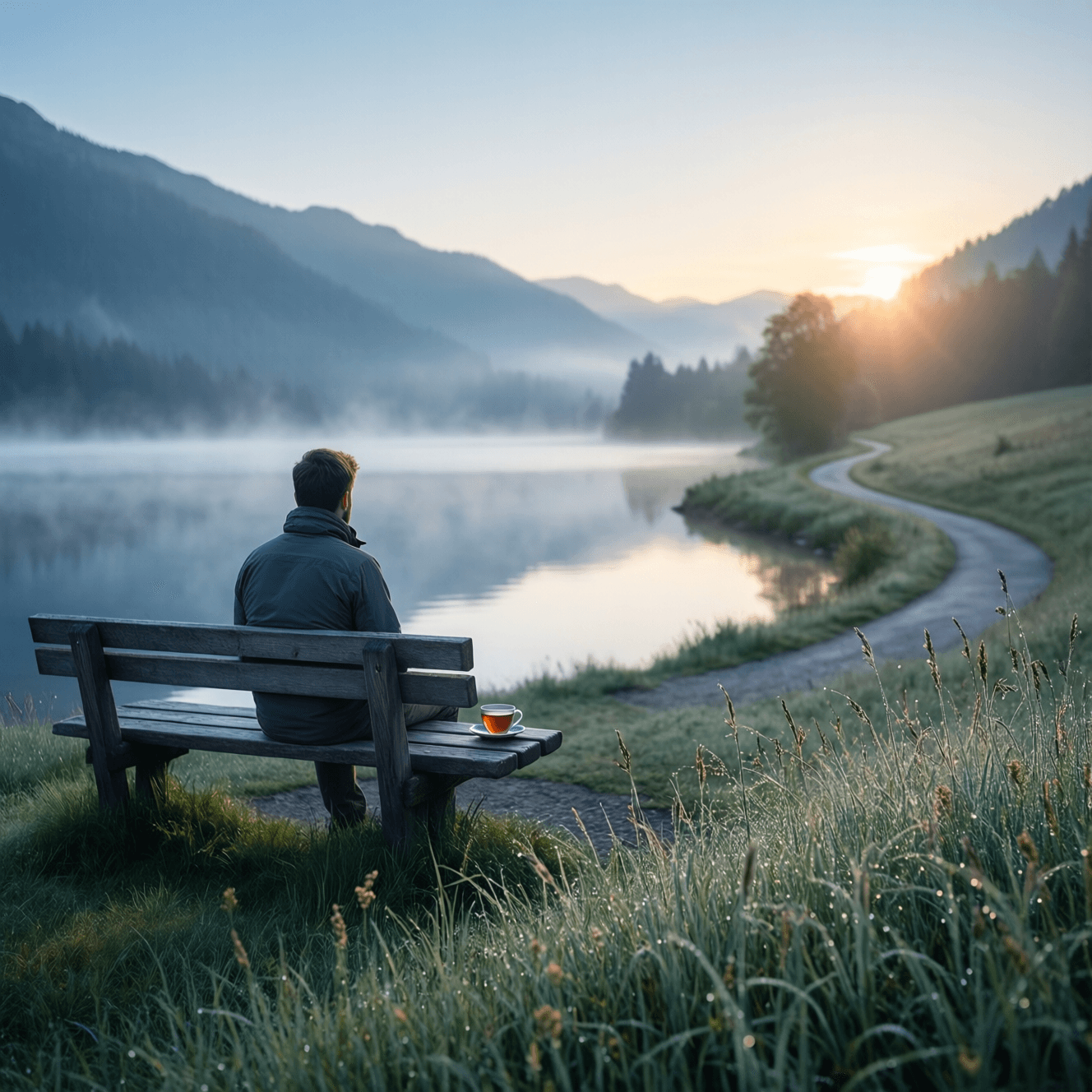
In an age of speed, nothing could be more invigorating than going slow. — Pico Iyer
—What lingers after this line?
A Paradox That Clarifies Modern Fatigue
Pico Iyer’s line lands as a paradox: if everything around us accelerates, why would deceleration feel energizing? Yet the statement captures a contemporary truth—speed can be draining when it becomes the default setting rather than a deliberate choice. The more our days are broken into alerts, errands, and rapid responses, the more “fast” starts to resemble friction rather than freedom. From that starting point, going slow becomes less a romantic escape and more a form of renewal. Iyer suggests that vitality isn’t always produced by adding stimulation; sometimes it comes from removing the constant pressure to keep up, allowing attention and breath to return to their natural rhythm.
Attention as the Real Currency of Time
Moving from the social tempo to the inner experience, the quote implies that speed often steals what it promises to deliver: lived time. When we hurry, we may cover more ground, yet register less of it—meals blur, conversations become transactional, and even accomplishments feel oddly weightless. In that sense, the “invigoration” Iyer names is the feeling of being fully present again. A small anecdote illustrates it: someone might take the same ten-minute walk twice—once while checking messages, once with the phone away. The distance is identical, but the second walk seems longer, richer, and more restorative. By slowing down, attention returns to the senses, and ordinary moments recover their depth.
Slowness as Resistance, Not Retreat
From presence, the idea naturally expands into agency. In a culture that prizes responsiveness, choosing slowness can be a quiet act of resistance—an insistence that not every demand deserves immediate access to your mind. Rather than retreating from life, going slow can be a way of reclaiming how you meet it, on your own terms. This is why “slow” can feel invigorating: it restores control. When you decide to read without skimming, cook without multitasking, or listen without planning your reply, you’re not doing less—you’re doing one thing with integrity. That concentrated engagement often produces a calmer energy than speed ever could.
Depth Over Breadth in Work and Creativity
Having reclaimed agency, slowness also reveals its practical value. Many forms of excellent work—writing, design, caregiving, problem-solving—depend on incubation and sustained focus. Quick output can mimic productivity while quietly eroding quality, because the mind needs unpressured time to notice patterns, test assumptions, and revise. Cal Newport’s Deep Work (2016) argues that concentrated attention is increasingly rare and therefore increasingly valuable, and Iyer’s point complements that claim from a more existential angle. Slowness doesn’t merely reduce stress; it can sharpen perception. In creative life especially, going slow often means giving ideas the time to become coherent rather than merely publishable.
Relationships Grow at Human Speed
From work, the transition to relationships is straightforward: intimacy cannot be optimized like a feed. Friendship, trust, and love require lingering—shared meals, unhurried conversations, long silences that aren’t awkward. Speed may increase contact, but it can decrease connection when interactions become brief check-ins instead of mutual attention. Here, going slow becomes invigorating because it restores warmth. When you sit with someone without a schedule pressing at your back, you offer a kind of generosity that modern life rarely grants. That generosity often comes back as steadiness, which is its own form of energy—less flashy than adrenaline, but far more sustaining.
Making Slowness a Practice, Not a Fantasy
Finally, Iyer’s insight invites translation into habit. Slowness works best when it becomes an intentional practice rather than a once-a-year vacation ideal. That might mean setting “response windows” instead of constant availability, taking one screen-free hour each evening, or building a short daily ritual—tea, a short walk, a few pages of a book—that signals the nervous system it can downshift. Over time, these small choices create a counter-rhythm to the age of speed. The goal isn’t to reject efficiency but to place it in its proper role: a tool, not a master. In that balance, the paradox resolves—going slow becomes invigorating because it returns you to a life that is actually yours to live.
Recommended Reading
As an Amazon Associate, we earn from qualifying purchases.
One-minute reflection
Where does this idea show up in your life right now?
Related Quotes
6 selectedIn an age of speed, nothing is more invigorating than going slow. — Pico Iyer
Pico Iyer
Pico Iyer’s line hinges on a paradox: when life accelerates, the most refreshing response is to decelerate. Speed promises efficiency and stimulation, yet it often leaves people feeling thinly stretched, as if every mome...
Read full interpretation →In an age of speed, nothing is so exhilarating as going slow. — Pico Iyer
Pico Iyer
Pico Iyer’s line hinges on a deliberate paradox: in a culture trained to equate speed with excitement, he argues that the true jolt of aliveness can come from deceleration. The word “exhilarating” reframes slowness not a...
Read full interpretation →In an age of speed, nothing is more exhilarating than going slow. — Pico Iyer
Pico Iyer
Pico Iyer’s line turns modern intuition upside down: if everything is accelerating, then the rarest—and therefore most invigorating—experience may be deceleration. The quote suggests that exhilaration isn’t only produced...
Read full interpretation →In an age of distraction, nothing is as luxurious as paying attention. — Pico Iyer
Pico Iyer
Pico Iyer’s line quietly flips the usual meaning of luxury. Instead of status objects or exclusive experiences, he points to something more intimate: the ability to be fully present with what’s right in front of us.
Read full interpretation →In an age of distraction, nothing is more luxurious than paying attention. — Pico Iyer
Pico Iyer
Pico Iyer’s line turns the usual idea of luxury on its head. Instead of expensive objects or rare experiences, he points to something subtler: the ability to give full attention.
Read full interpretation →The slow philosophy is not about doing everything in tortoise mode. It's about doing everything at the right speed. — Carl Honoré
Carl Honoré
Carl Honoré begins by dismantling a common caricature: that “slow” living is merely an aesthetic of delay, a kind of self-imposed sluggishness. By saying it’s not “tortoise mode,” he rejects the idea that slowness is a f...
Read full interpretation →More From Author
More from Pico Iyer →Sometimes the most productive thing you can do is step away, breathe, and let the chaos settle into clarity. — Pico Iyer
At first glance, Pico Iyer’s remark seems to contradict modern habits of busyness. We are often taught that productivity means relentless motion, faster replies, and fuller schedules.
Read full interpretation →It's precisely those who are busiest who most need to give themselves a break. — Pico Iyer
Pico Iyer’s remark turns a common assumption upside down: the people who seem least able to pause are often the ones most endangered by never doing so. Busyness can look like competence, ambition, or usefulness, yet it a...
Read full interpretation →Luxury is defined by all you don't need to long for. — Pico Iyer
Pico Iyer’s line shifts luxury away from glittering objects and toward an inner condition: not craving what you lack. Rather than asking what you own, he asks what still tugs at your attention and makes you feel incomple...
Read full interpretation →In an age of constant motion, sitting still is a radical act of power. Do not surrender your focus to the machine. — Pico Iyer
Pico Iyer frames stillness not as a passive retreat but as an active stance against a culture trained to equate movement with worth. In an age where speed signals relevance, “sitting still” becomes a decision that interr...
Read full interpretation →