
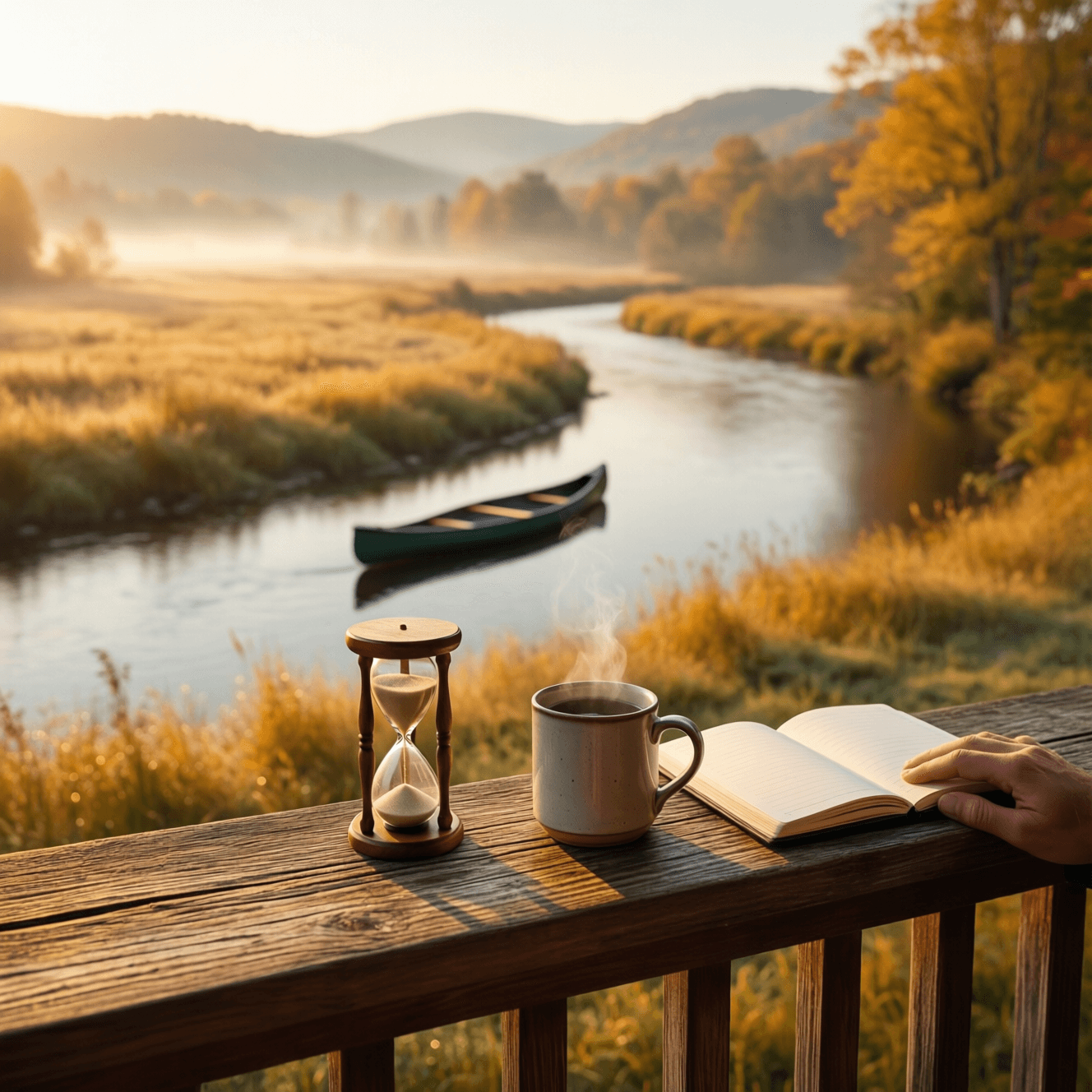
In an age of speed, I began to think nothing is as precious as slowness. — Alice Walker
—What lingers after this line?
A Countercultural Valuation
Alice Walker’s line begins with a modern assumption—life is accelerating—and then performs a quiet reversal: the rarer something becomes, the more it is worth. In an age that prizes quick replies, rapid production, and constant movement, “slowness” reads less like laziness and more like a scarce resource. From that starting point, her thought invites a change in what we measure as success. Instead of asking how much can be done in a day, the question becomes what kind of life is being built when days are treated as obstacles to rush through rather than experiences to inhabit.
Speed as a Hidden Cost
Once speed becomes a default, it often disguises its price. Faster schedules can compress reflection, shorten conversations, and turn attention into a tool for throughput rather than understanding. The result is not only fatigue but a thinner relationship to our own choices, because decisions made quickly are easier to make automatically. This helps explain Walker’s “began to think”: it sounds like an earned conclusion rather than a slogan. Slowness emerges as precious not merely because it feels pleasant, but because it restores what speed tends to erode—presence, deliberation, and the ability to notice consequences before they arrive.
Attention as the True Currency
Slowness matters because it protects attention, and attention is where meaning is made. Simone Weil argued that attention is a form of generosity in “Reflections on the Right Use of School Studies” (1942), suggesting that to truly attend is already to offer care. In a fast environment, attention is constantly fragmented; in a slow one, it can deepen. From there, Walker’s idea broadens beyond pacing into ethics. If attention enables empathy—listening fully, reading closely, seeing others clearly—then slowness becomes a moral stance as well as a personal preference, a way of resisting the reduction of life into tasks.
Craft, Nature, and Human Time
The more closely we look, the more we find that what we value most often follows slow timelines. Craft traditions—whether bread fermentation, woodworking, or long-form writing—depend on patience and revision, not just inspiration. Likewise, nature’s most reliable processes, from seasons to growth rings, refuse hurry. That contrast strengthens Walker’s claim: speed may be impressive, but it is not always where quality lives. Slowness aligns us with human time rather than machine time, reminding us that durability, taste, and wisdom frequently require waiting, repetition, and the willingness to let things unfold.
Slowness as Resistance and Repair
Because speed often serves external demands, slowing down can function as resistance. The “Slow Food” movement, launched by Carlo Petrini in Italy (1986), began as a protest against fast food’s standardization and the loss of local traditions; it reframed eating as culture rather than consumption. In the same way, Walker’s slowness implies choosing depth over efficiency when the two compete. This resistance is also reparative. When people slow their routines—walking without multitasking, taking unhurried meals, leaving space between commitments—they often discover not emptiness but recovery: the mind catches up, feelings become legible, and relationships gain room to breathe.
Making Slowness Practical
To treat slowness as precious is to treat it as something worth protecting, not something that happens accidentally. That can mean building friction into life: turning off nonessential notifications, scheduling blocks without meetings, or choosing a single task to finish with care rather than ten tasks done thinly. Small boundaries can create a larger tempo. Ultimately, Walker’s sentence reads like a personal philosophy formed under pressure: the faster the world becomes, the more deliberate we must be about pacing. Slowness, then, is not an escape from life’s demands but a way of meeting them with clarity, dignity, and full presence.
One-minute reflection
What does this quote ask you to notice today?
Related Quotes
6 selectedDon't underestimate the value of Doing Nothing, just going along, listening to all the things you can't hear, and not bothering. — A.A. Milne
A. A. Milne
At first glance, A.A. Milne’s line sounds playful, almost like permission to be lazy.
Read full interpretation →Quiet is a superpower in a world that thrives on noise. — Susan Cain
Susan Cain
At first glance, Susan Cain’s remark elevates something easily overlooked: quiet. In cultures that often reward speed, volume, and constant self-display, silence can seem passive.
Read full interpretation →Stillness is not the absence of energy. It is the consolidation of it. — Seneca
Seneca
At first glance, Seneca’s line challenges a common assumption: that stillness means passivity, emptiness, or retreat from life. Instead, he reframes it as a disciplined state in which energy is not scattered but drawn in...
Read full interpretation →Stillness is the birthplace of strength. — Epictetus
Epictetus
At first glance, Epictetus turns a common assumption upside down: strength does not begin in noise, force, or visible struggle, but in stillness. The Stoic philosopher suggests that real power is born when the mind becom...
Read full interpretation →You do not need to leave your room. Remain sitting at your table and listen. Do not even listen, simply wait, be quiet, still and solitary. The world will freely offer itself to you to be unmasked. — Franz Kafka
Franz Kafka
Kafka begins with a striking command: do not chase the world, but remain in place. At first, this seems to reject ordinary habits of ambition and movement, yet that reversal is precisely his point.
Read full interpretation →To move forward, you must first give yourself permission to be still. — Yung Pueblo
Yung Pueblo
At first glance, Yung Pueblo’s line seems contradictory: how can stillness help us move forward? Yet that tension is precisely the point.
Read full interpretation →More From Author
More from Alice Walker →The most beautiful things are those that take time to grow, requiring a commitment to the process rather than a hunger for the end. — Alice Walker
Alice Walker’s reflection shifts beauty away from instant results and toward slow formation. At its heart, the quote suggests that what becomes truly beautiful does so through time, care, and endurance rather than speed...
Read full interpretation →Hard times require furious dancing. Each of us is the proof. — Alice Walker
Alice Walker’s line treats “hard times” not as a cue for silence, but as a summons to movement. The phrase “furious dancing” reads like an intentional contradiction—how can joy or art survive suffering?
Read full interpretation →The most common way people give up their power is by thinking they don't have any. — Alice Walker
Alice Walker’s line points to a paradox: people often lose power not through force, but through a belief that power was never theirs to begin with. That assumption quietly reshapes behavior—choices narrow, risks feel poi...
Read full interpretation →The most common way people give up their power is by thinking they don’t have any. — Alice Walker
Alice Walker’s line points to a subtle but widespread form of surrender: not the dramatic loss of rights, money, or status, but the quiet decision to see oneself as incapable of influence. When people believe they have n...
Read full interpretation →