
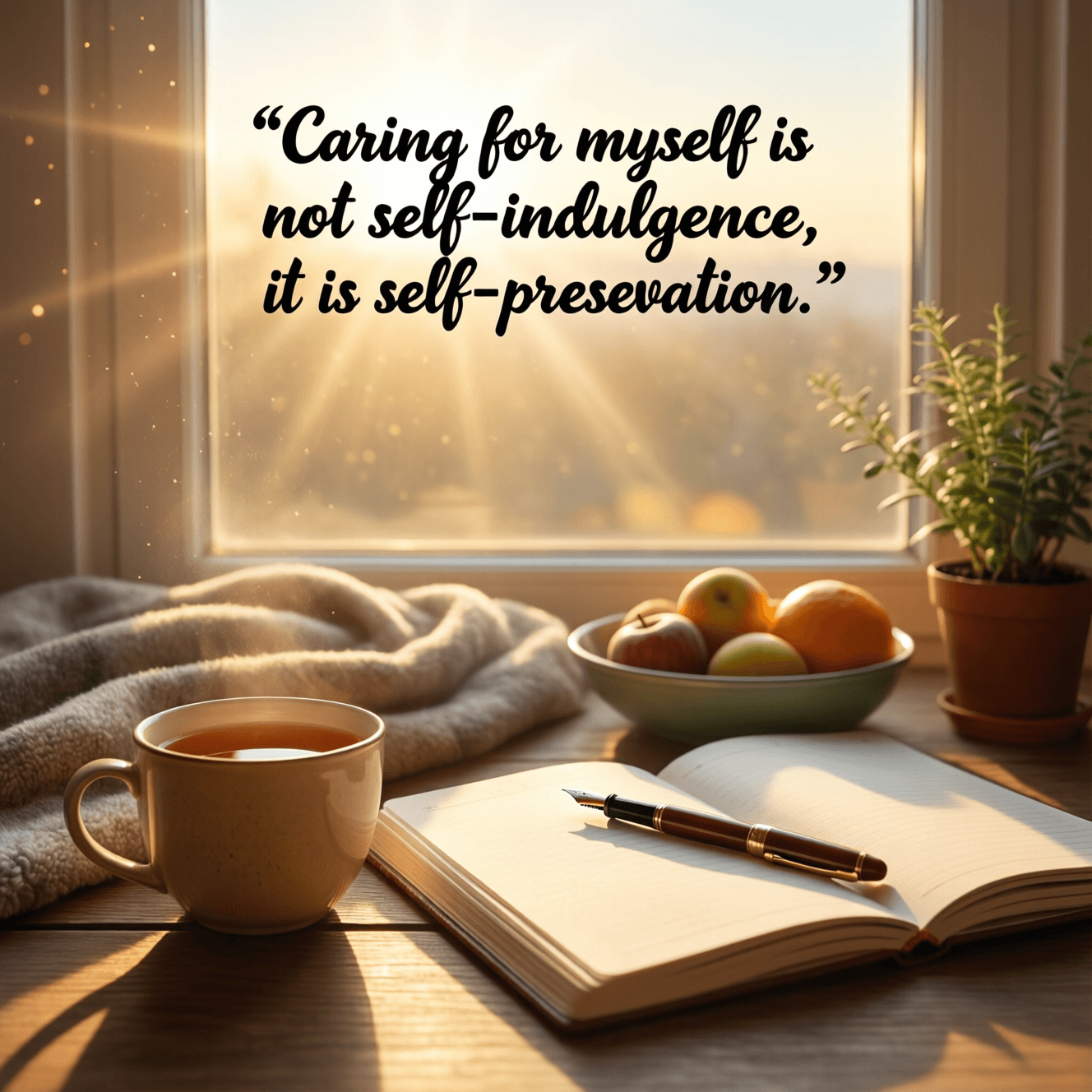
Caring for myself is not self-indulgence, it is self-preservation. — Audre Lorde
—What lingers after this line?
Reframing a Misunderstood Act
Audre Lorde’s statement pivots on a crucial reframing: what many dismiss as “self-indulgence” can be, in reality, the basic work of staying alive and whole. By pairing “caring for myself” with “self-preservation,” she challenges the moral suspicion often attached to personal needs, especially when those needs interrupt productivity or service to others. This distinction matters because indulgence implies excess, while preservation implies necessity. In Lorde’s framing, rest, boundaries, and healing are not luxuries added after life’s demands are met; they are the conditions that make meeting any demand possible in the first place.
The Social Pressure to Self-Sacrifice
To understand why Lorde’s clarification is so pointed, it helps to notice how frequently certain people are expected to run on depletion. Social roles—caregiver, advocate, employee, parent—can subtly reward self-erasure, treating exhaustion as evidence of virtue. In that climate, choosing to step back can look selfish, even when it prevents collapse. Consequently, Lorde’s line reads like a corrective to a culture that conflates worth with output. By naming self-care as preservation, she exposes how “indulgence” is sometimes a label used to keep people compliant, available, and endlessly giving.
Lorde’s Political Context of Survival
Moving from the personal to the political, Lorde wrote from lived experience as a Black lesbian feminist confronting racism, sexism, homophobia, and illness. Her insistence that self-care is self-preservation reflects a world where some bodies and voices are treated as more expendable than others, making daily maintenance an act of resistance. In essays such as those collected in The Cancer Journals (1980), Lorde links bodily vulnerability and social vulnerability, showing how survival often requires deliberate, sustained care. Within that context, tending to oneself becomes a way of refusing erasure—staying present, articulate, and alive.
Self-Preservation as a Foundation for Service
Next, Lorde’s idea complicates the false choice between caring for oneself and caring for others. Preservation is not withdrawal from responsibility; it is the groundwork for responsible engagement. A person who is chronically depleted may still keep showing up, but with diminishing patience, clarity, and empathy, which can quietly harm relationships and communities. By contrast, self-care can make generosity more durable. When sleep, nourishment, medical attention, and emotional support are treated as nonnegotiable, the result is often steadier commitment rather than sporadic heroics followed by burnout.
Boundaries as a Practical Form of Care
From this perspective, boundaries become one of the most concrete expressions of Lorde’s message. Saying no, limiting access, asking for help, or leaving harmful environments can feel harsh in the moment, especially to people trained to please. Yet these actions protect time, health, and dignity—the very resources preservation depends on. In everyday terms, self-preservation might look like declining an extra project when you are already at capacity, taking a mental health day without apology, or choosing therapy over silence. Each choice signals that your well-being is not an afterthought but a requirement.
A Sustainable Ethic of Living
Finally, Lorde’s sentence offers an ethic that scales from the intimate to the lifelong: treat yourself as someone worth sustaining. This does not deny pleasure or joy; it simply refuses to let care be dismissed as vanity when it is actually maintenance. In that way, “self-preservation” becomes both a personal practice and a moral stance. Taken together, her words invite a lasting shift—from earning rest to needing it, from proving toughness to honoring limits. The goal is not indulgence, but continuity: the ability to keep living, loving, and contributing without losing oneself in the process.
One-minute reflection
What does this quote ask you to notice today?
Related Quotes
6 selectedCaring for myself is not self-indulgence, it is self-preservation. — Audre Lorde
Audre Lorde
Audre Lorde’s statement turns a common accusation on its head: what some call “self-indulgence” may actually be the basic work of staying whole. By drawing a sharp line between luxury and necessity, she insists that care...
Read full interpretation →Caring for myself is not self-indulgence, it is self-preservation. — Audre Lorde
Audre Lorde
Audre Lorde’s line begins by dismantling a familiar accusation: that tending to oneself is frivolous or vain. By rejecting “self-indulgence,” she separates care from consumption, suggesting that rest, nourishment, and em...
Read full interpretation →Caring for myself is not self-indulgence, it is self-preservation. — Audre Lorde
Audre Lorde
Audre Lorde’s line begins by challenging a common moral reflex: the tendency to treat personal care as a luxury or a guilty pleasure. By rejecting “self-indulgence,” she separates self-care from vanity, consumption, or e...
Read full interpretation →Caring for myself is not self-indulgence, it is self-preservation. — Audre Lorde
Audre Lorde
Audre Lorde’s line begins by challenging a common moral reflex: the tendency to label personal care as indulgent. By drawing a firm boundary—“not self-indulgence”—she redirects attention from pleasure or luxury toward so...
Read full interpretation →Caring for myself is not self-indulgence, it is self-preservation. — Audre Lorde
Audre Lorde
Audre Lorde’s line begins by overturning a familiar accusation: that attending to one’s own needs is frivolous or vain. By naming self-care “self-preservation,” she shifts it from the realm of luxury into the realm of ne...
Read full interpretation →Caring for myself is not self-indulgence, it is self-preservation. — Audre Lorde
Audre Lorde
Audre Lorde’s line begins by challenging a common moral reflex: the suspicion that attending to one’s own needs is frivolous or selfish. By drawing a sharp boundary between “self-indulgence” and “self-preservation,” she...
Read full interpretation →More From Author
More from Audre Lorde →We are powerful because we have survived, and that is what it is all about—survival and growth. — Audre Lorde
At its core, Audre Lorde’s statement redefines power not as domination, status, or control, but as the hard-won strength that comes from continuing despite adversity. To survive is already to have resisted erasure, and L...
Read full interpretation →Community does not mean that we all agree on everything. It means that we respect each other enough to stay in the room. — Audre Lorde
At its core, Audre Lorde’s statement challenges the comforting but shallow idea that community is built on sameness. Instead, she argues that real belonging depends on the willingness to remain present with one another e...
Read full interpretation →Caring for myself is not self-indulgence, it is self-preservation. — Audre Lorde
Audre Lorde’s line begins by dismantling a familiar accusation: that tending to oneself is frivolous or vain. By rejecting “self-indulgence,” she separates care from consumption, suggesting that rest, nourishment, and em...
Read full interpretation →Caring for myself is not self-indulgence, it is self-preservation. — Audre Lorde
Audre Lorde’s statement turns a common accusation on its head: what some call “self-indulgence” may actually be the basic work of staying whole. By drawing a sharp line between luxury and necessity, she insists that care...
Read full interpretation →