
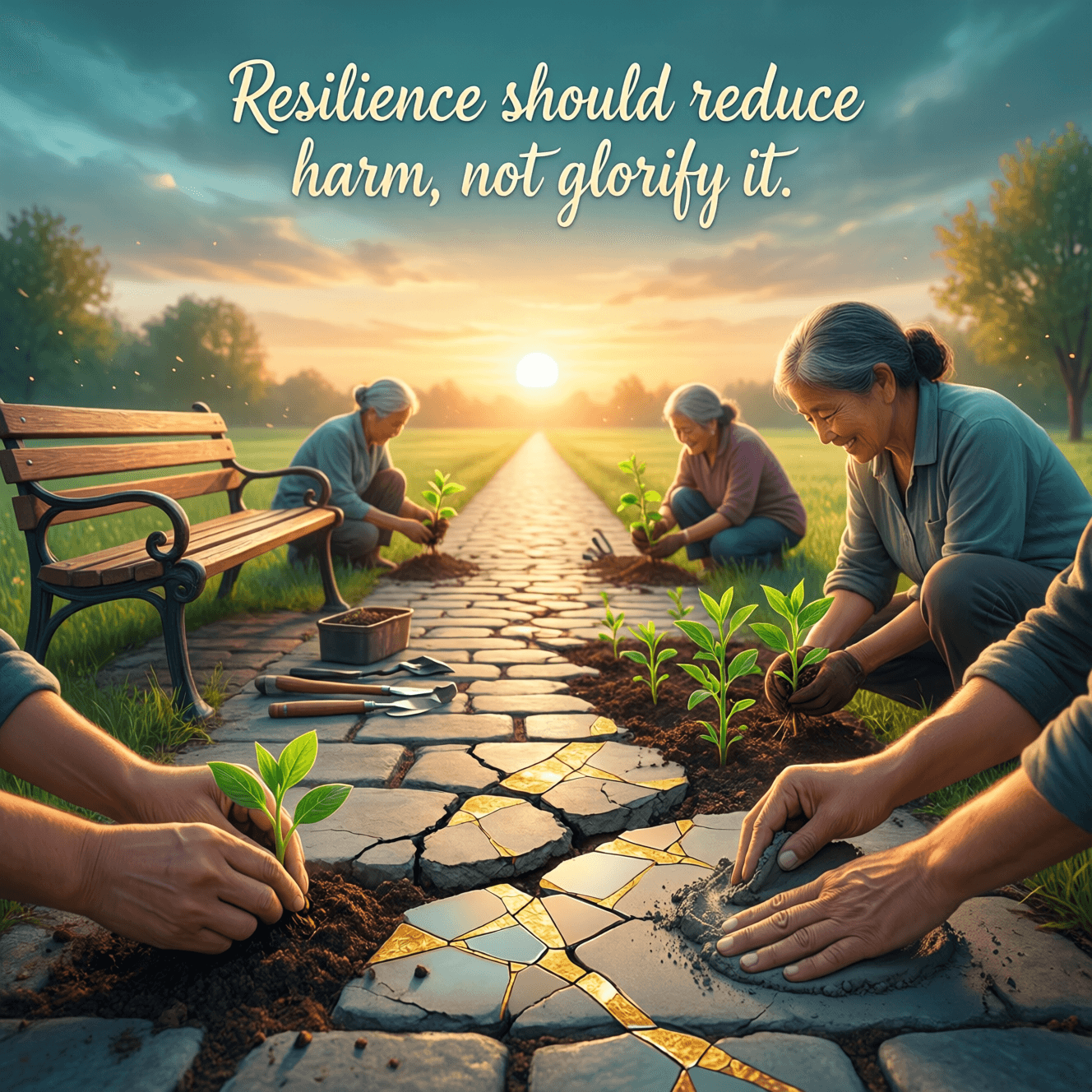
Resilience should reduce harm, not glorify it. — Nicola Knobel
—What lingers after this line?
Reframing What Resilience Is For
Nicola Knobel’s line shifts resilience away from a badge of toughness and back toward its proper purpose: minimizing damage. Resilience, in this view, is not a moral trophy earned by enduring pain; it is a practical capacity to recover, adapt, and protect well-being when adversity appears. From there, the quote quietly challenges a common cultural shortcut—equating strength with suffering. If resilience is measured by how much harm someone can tolerate, we risk missing its more humane aim: creating conditions in which harm is less likely, less severe, and less enduring.
The Hidden Danger of Romanticizing Suffering
Once we praise people mainly for “making it through,” hardship can start to look like a necessary rite of passage. Narratives that celebrate “what doesn’t kill you makes you stronger” can slide into implying that injury is somehow valuable, or that those who are harmed simply need to become tougher. This is where Knobel’s warning matters: glorifying harm can normalize it. It can also mute legitimate anger or grief, pushing individuals to perform composure rather than seek help—an outcome that contradicts resilience’s real function, which is to reduce long-term harm, not to turn it into a storyline.
Trauma, Growth, and the Cost We Forget
Importantly, acknowledging that some people grow after adversity is not the same as celebrating the adversity itself. Research on post-traumatic growth (Richard Tedeschi and Lawrence Calhoun, 1996) suggests that meaning, relationships, or priorities can change after trauma; however, it also emphasizes that distress can coexist with growth. Seen this way, the quote draws a boundary: growth is a possible aftermath, not a justification. Resilience becomes ethically grounded when it respects the reality that harm leaves marks—and that any “silver lining” does not erase the need to prevent the storm.
Resilience as Protection and Prevention
Moving from individual stories to systems, resilience looks different when the goal is harm reduction. In workplaces, for example, “be more resilient” can become a substitute for fixing overload, unclear expectations, or harassment. A more faithful interpretation is to design environments that make breakdowns less likely. That shift aligns with public health logic: the strongest resilience strategies often resemble prevention—guardrails, support networks, and early interventions. Rather than asking people to absorb impact, we reduce the impact itself, which is exactly what Knobel’s sentence insists upon.
Compassion Over Performance
On a personal level, glorifying harm can pressure people to appear unshaken. Yet resilience is often quieter than we imagine: setting boundaries, leaving a damaging situation, or admitting you need assistance. These acts reduce harm by interrupting cycles that would otherwise deepen. Consequently, resilience becomes less about proving strength and more about practicing self-compassion and realism. It allows someone to say, “This hurt me,” without shame—and to seek care without feeling that recovery diminishes their character.
What This Ethic Looks Like in Practice
Knobel’s principle ultimately becomes a decision rule: celebrate healing, not injury. We can honor someone’s endurance while still naming what happened as unacceptable, avoidable, or in need of repair. That distinction protects both truth and dignity. In everyday terms, it means praising the friend who gets therapy rather than the friend who never cries, rewarding organizations that reduce burnout rather than those that demand constant grit, and teaching children that asking for help is part of being strong. Resilience, then, is not the glorification of harm—it is the commitment to lessen it.
Recommended Reading
As an Amazon Associate, we earn from qualifying purchases.
One-minute reflection
What's one small action this suggests?
Related Quotes
1 selectedMore From Author
More from Nicola Knobel →