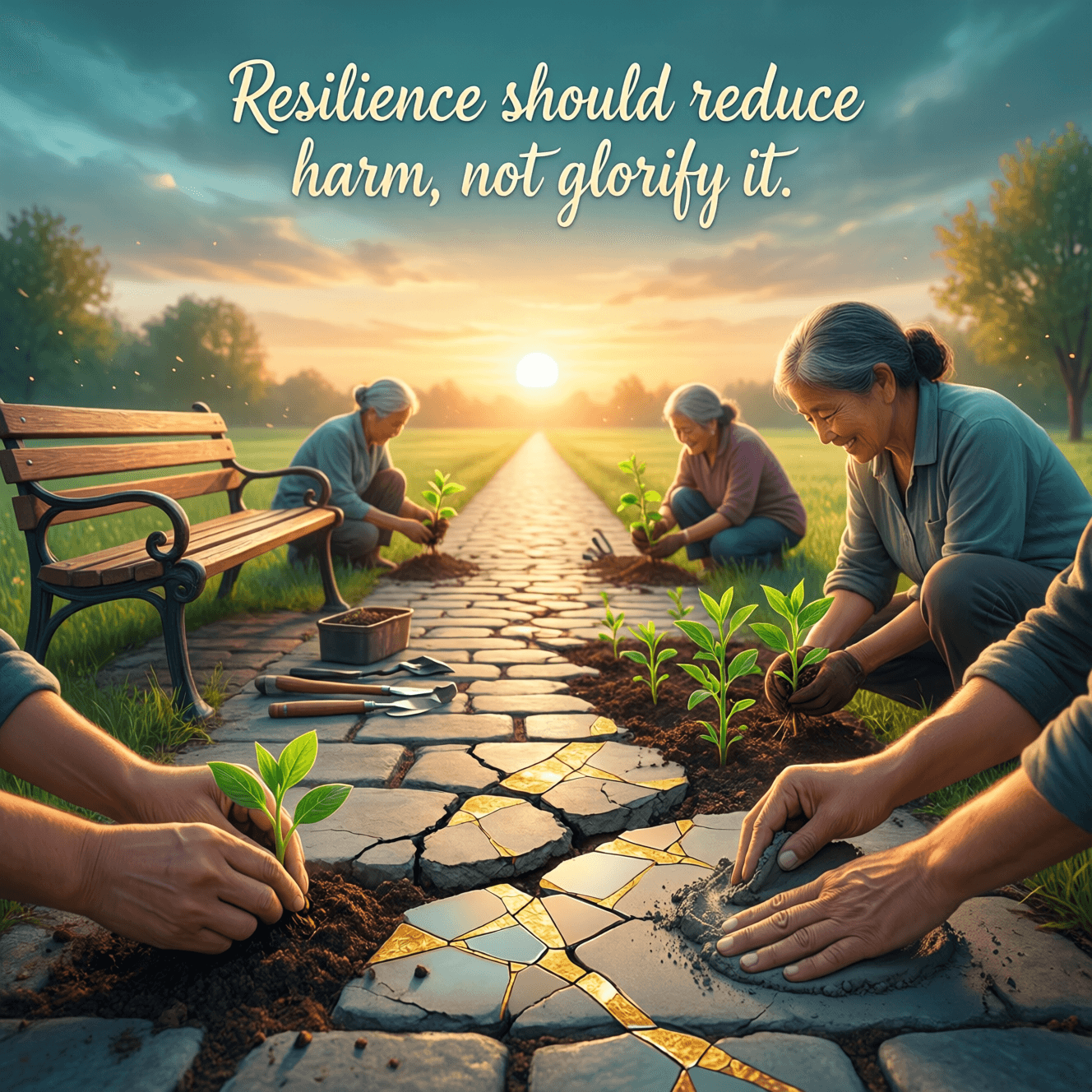
Moving from individual stories to systems, resilience looks different when the goal is harm reduction. In workplaces, for example, “be more resilient” can become a substitute for fixing overload, unclear expectations, or harassment. A more faithful interpretation is to design environments that make breakdowns less likely.
That shift aligns with public health logic: the strongest resilience strategies often resemble prevention—guardrails, support networks, and early interventions. Rather than asking people to absorb impact, we reduce the impact itself, which is exactly what Knobel’s sentence insists upon. [...]