
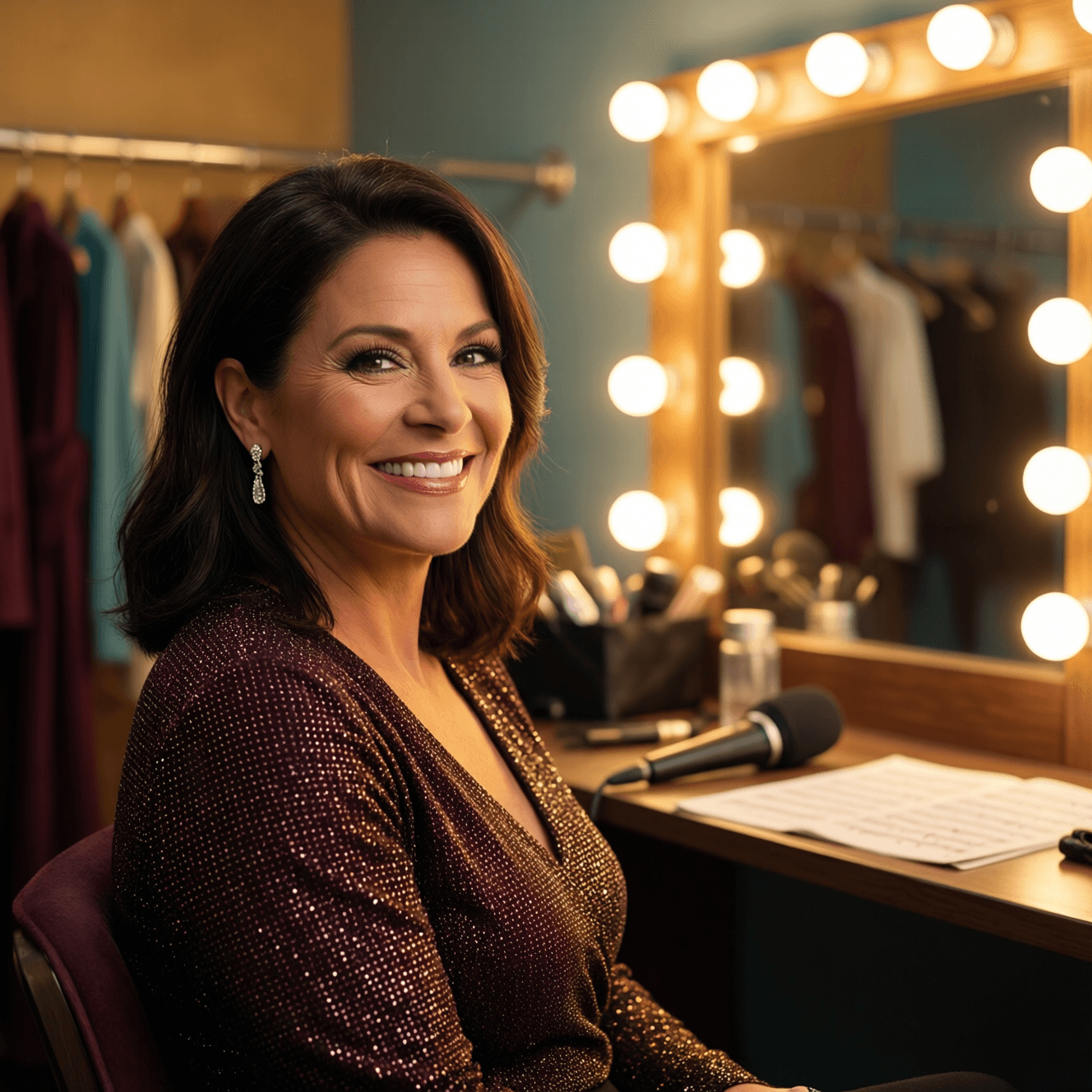
I'm not offended by all the dumb blonde jokes because I know I'm not dumb and I also know I'm not blonde. — Dolly Parton
—What lingers after this line?
Humor as Self-Protection
Dolly Parton’s line works first as a shield: she meets a belittling kind of joke with a sharper joke of her own. Instead of arguing with the premise, she sidesteps it, showing that the insult can’t land where there’s no insecurity to receive it. This is the quiet power of wit—it doesn’t merely entertain; it reclaims control of the moment. That control matters because stereotype-based humor often tries to define someone before they can speak. By choosing laughter on her own terms, Parton signals that she won’t be trapped in an explanation or a defense, and she invites the listener to notice how flimsy the stereotype is in the first place.
Undermining the Logic of Stereotypes
The punchline hinges on a neat reversal: she rejects both charges at once, not by denying that blondes can be smart, but by pointing out how arbitrary the whole category is. The structure exposes the shaky logic behind “dumb blonde” jokes—the way they pretend a superficial trait predicts intelligence. From there, the quote nudges the audience to question why certain groups become comedic targets. If a stereotype can be dodged with a technicality (“I’m not blonde”), then the stereotype was never about truth; it was about convenience. Parton’s phrasing makes that realization feel effortless, almost inevitable.
Confidence Without Combativeness
What’s striking is how confidently she asserts her intelligence while still sounding light, not defensive. She doesn’t posture or scold; she simply states what she knows about herself. That tone is crucial because it prevents the exchange from escalating into a moral lecture while still delivering a clear message: her identity isn’t up for others to caricature. In that way, the humor becomes an example of social grace. Rather than shaming the joke-teller outright, she models a response that preserves dignity and keeps the upper hand—a tactic many public figures adopt when they need to be resilient without becoming brittle.
Playing With Image and Persona
Parton has long understood that appearance can become a costume people mistake for the whole person. This quote plays with that dynamic: it acknowledges that “blonde” is part of a cultural script while reminding us that scripts aren’t substance. By treating the label as detachable, she highlights that persona can be chosen, performed, and reshaped. That awareness connects to a broader tradition of entertainers using self-aware exaggeration to disarm criticism. Much like Mae West’s famously barbed one-liners or Muhammad Ali’s playful boasts, Parton’s joke turns public perception into material she can handle, bend, and repurpose.
A Commentary on Gendered Mockery
Because “dumb blonde” jokes are often aimed at women, the quote also functions as a critique of gendered dismissal. The stereotype doesn’t just insult intelligence; it polices how women are allowed to look and be taken seriously. Parton’s response refuses that trap by separating appearance from capability, implying that the listener’s assumptions are the real punchline. This matters in everyday life, too, where women frequently navigate double binds: be attractive and risk not being respected, or be serious and risk being labeled unlikable. Parton shows a third route—be both, and make the contradiction visible through humor.
Turning the Joke Back Toward Empathy
Finally, the line can be heard as an invitation to maturity rather than an attack. By not appearing offended, Parton keeps the door open for the listener to laugh and then reconsider what they laughed at. That gentle pivot is often more persuasive than outrage because it allows people to save face while still learning. In the end, her quote demonstrates a social skill that outlasts the moment: when confronted with a stereotype, you can respond in a way that protects your dignity, questions the premise, and nudges the room toward a more thoughtful kind of humor.
One-minute reflection
Why might this line matter today, not tomorrow?
Related Quotes
6 selectedTrue confidence, like deep rivers, flows calmly and silently without the need for continual recognition. — Unknown (Wait: Skipping) -> My limits are not a debate. — Unknown (Wait: Skipping) -> Never bend your head. Always hold it high. Look the world straight in the eye. — Helen Keller
Helen Keller
Helen Keller’s line begins with a physical image, yet it quickly opens into a moral one: to hold one’s head high is to move through the world with unshaken self-respect. In that sense, true confidence does not beg for ap...
Read full interpretation →Every act of self-discipline increases your confidence, trust, and belief in yourself and your abilities. — Brian Tracy
Brian Tracy
Brian Tracy’s statement begins with a simple but powerful chain: when you keep a promise to yourself, you generate evidence that you are dependable. In that sense, self-discipline is not merely about control; rather, it...
Read full interpretation →When you are asked if you can do a job, tell 'em, 'Certainly I can!' Then get busy and find out how to do it. — Theodore Roosevelt
Theodore Roosevelt
At its core, Theodore Roosevelt’s advice champions a decisive kind of confidence: say yes before doubt has time to take control. Rather than waiting for perfect readiness, he urges people to begin with belief in their ow...
Read full interpretation →True ability is undisturbed by pretentious criticism. — Joyce Rachelle
Joyce Rachelle
Joyce Rachelle’s statement begins with a quiet but powerful claim: genuine ability does not need to tremble before showy judgment. Real competence has an inner steadiness because it is built on practice, evidence, and li...
Read full interpretation →The way to develop self-confidence is to do the thing you fear and get a record of successful experiences behind you. — William Jennings Bryan
William Jennings Bryan
William Jennings Bryan’s statement reverses a common assumption: people often wait to feel confident before acting, yet he argues that confidence is actually built afterward. In this view, self-belief does not appear mag...
Read full interpretation →Confidence is knowing who you are and not changing it a bit because someone's version of your reality is not their reality. — Shannon L. Alder
Shannon L. Alder
At its core, Shannon L. Alder’s quote defines confidence not as loudness or display, but as a steady knowledge of one’s own identity.
Read full interpretation →More From Author
More from Dolly Parton →You have to be the first person to believe in your own nonsense. — Dolly Parton
Dolly Parton’s line startles on purpose: calling your dream “nonsense” punctures the solemnity that often surrounds ambition. Yet the joke carries a serious instruction—if your idea sounds improbable, that is exactly whe...
Read full interpretation →I'm not going to limit myself just because people won't accept the fact that I can do something else. — Dolly Parton
Dolly Parton’s statement begins as a clear refusal to outsource her identity to public opinion. Rather than negotiating with other people’s comfort levels, she frames her life as something she authors—choosing action ove...
Read full interpretation →If you see someone without a smile, give them one of yours. — Dolly Parton
Dolly Parton’s line reframes a smile as a gift—portable, renewable, and immediately shareable. Like any small kindness, it operates within a quiet, human gift economy where the value lies not in price but in connection.
Read full interpretation →Find out who you are and do it on purpose. — Dolly Parton
This quote highlights the importance of self-exploration. Knowing who you are means understanding your strengths, weaknesses, passions, and values.
Read full interpretation →