
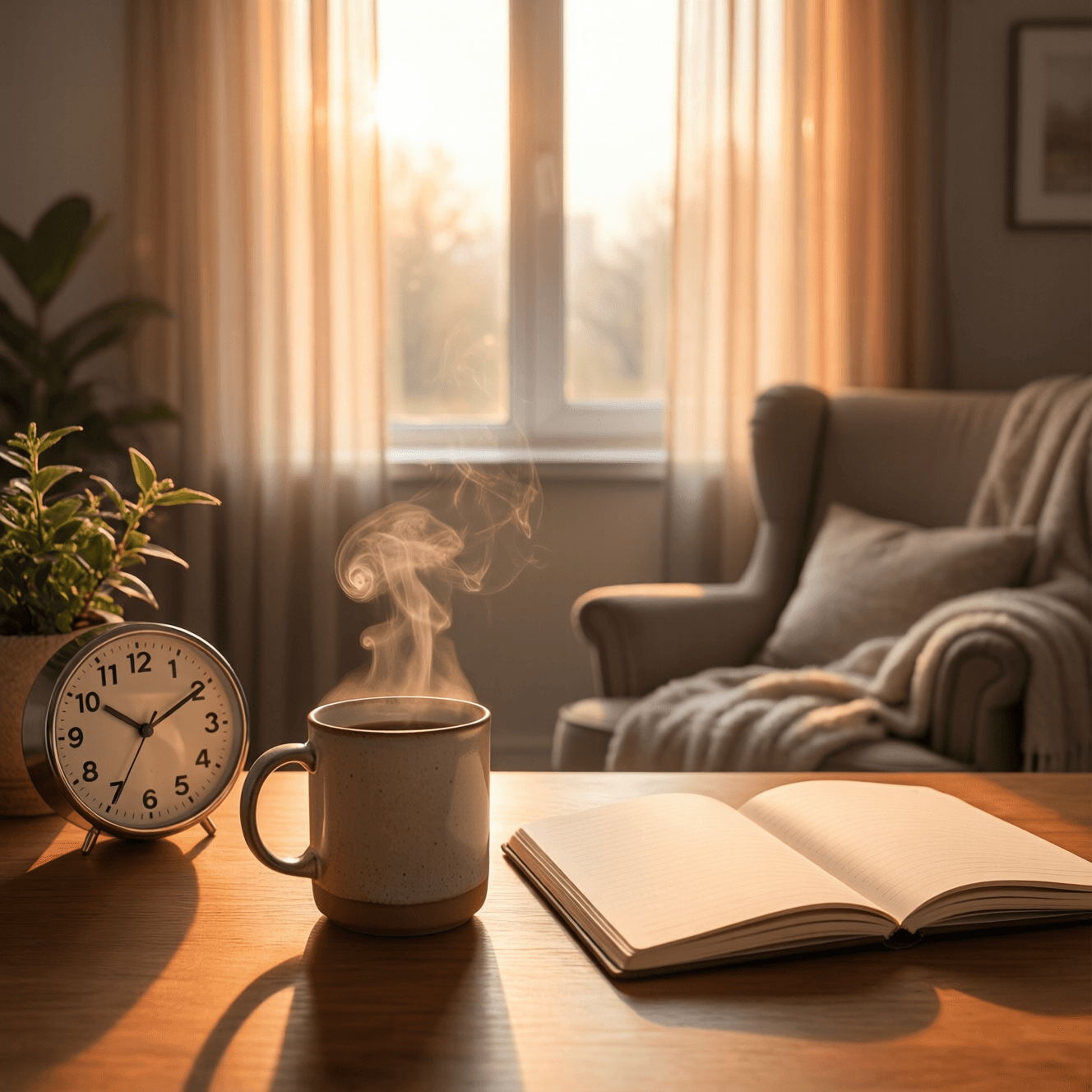
To be slow means that you govern the rhythms of your life. You are in control of deciding how fast you have to go. — Carl Honoré
—What lingers after this line?
Speed as a Default, Not a Destiny
Carl Honoré’s line challenges the modern assumption that faster is automatically better. Instead of treating urgency as an objective requirement, he frames speed as a choice—one that can be accepted, negotiated, or refused. In that sense, “to be slow” is not a failure to keep up, but a deliberate decision about how you want to live. From this starting point, the quote subtly shifts the conversation from time management to self-governance. It’s less about squeezing more into a day and more about deciding what deserves your attention in the first place.
Governing Rhythms Rather Than Minutes
When Honoré talks about “rhythms,” he points to something broader than schedules: the tempo at which you think, work, rest, and relate to others. A life with governed rhythms recognizes that different activities have different natural speeds—deep focus, recovery, learning, and intimacy often resist rushing. Consequently, slowness becomes a form of alignment. You’re not merely delaying tasks; you’re matching your pace to the kind of outcome you want, whether that’s careful judgment, creativity, or simply a calmer nervous system.
Control as a Psychological Boundary
The quote’s emphasis on control highlights that pace is also a boundary. Deciding “how fast you have to go” means distinguishing between true constraints and borrowed pressure—deadlines that are real versus expectations that thrive mainly on fear of disappointing others. This is where slowness turns practical: it gives you room to pause before reacting. That pause can be the difference between an automatic “yes” and a considered commitment, making your time reflect your priorities rather than other people’s urgency.
The Hidden Cost of Constant Acceleration
Honoré’s argument implies that speed carries costs that are easy to ignore until they accumulate—fragmented attention, shallow decisions, and relationships reduced to logistics. What looks like efficiency can quietly become a loss of quality, because many important aspects of life reward continuity and presence more than haste. As a result, slowness is not merely about comfort; it can be a corrective. By easing the pace, you regain the ability to notice, to reflect, and to do fewer things with greater care—often producing better results with less internal strain.
Slow as an Active, Not Passive, Choice
Crucially, “being slow” here is not synonymous with procrastination or avoidance. It’s an active stance: you set the tempo, you sequence demands, and you decide when speed is appropriate. In practice, this might look like working quickly on routine tasks while protecting unhurried time for complex thinking. This distinction matters because it reframes slowness as competence. You’re not surrendering ambition; you’re directing it—choosing when to sprint and when to pace yourself so that effort remains sustainable.
Designing a Life With Intentional Tempo
Once you accept that pace is partly yours to choose, the next step is designing conditions that make that choice real: limiting interruptions, creating buffer time, and resisting calendar overcrowding. Even small changes—such as single-tasking for a set period or keeping transitions between commitments—can restore a sense of rhythm. Ultimately, Honoré’s message lands as an invitation to live deliberately. By choosing your speed rather than inheriting it, you move from coping with life’s tempo to composing it, shaping days that feel not only productive but genuinely your own.
Recommended Reading
As an Amazon Associate, we earn from qualifying purchases.
One-minute reflection
What does this quote ask you to notice today?
Related Quotes
6 selectedThe slow philosophy is not about doing everything in tortoise mode. It's about doing everything at the right speed. — Carl Honoré
Carl Honoré
Carl Honoré begins by dismantling a common caricature: that “slow” living is merely an aesthetic of delay, a kind of self-imposed sluggishness. By saying it’s not “tortoise mode,” he rejects the idea that slowness is a f...
Read full interpretation →When I slow down, I can dive deeper—and that's how I prefer to live. — Carl Honoré
Carl Honoré
At its core, Carl Honoré’s reflection presents slowness not as laziness but as a conscious way of inhabiting life more fully. By saying that slowing down allows him to “dive deeper,” he suggests that speed often keeps us...
Read full interpretation →The great benefit of slowing down is reclaiming the time and tranquility to make meaningful connections. — Carl Honoré
Carl Honoré
Carl Honoré frames slowing down not as laziness but as a practical recovery of something we constantly lose: usable time. When life is lived at full speed, hours get consumed by deadlines, notifications, and “efficient”...
Read full interpretation →You cannot command things, but you can command yourself. — Michael D. Pollock
Michael D. Pollock
At first glance, Michael D. Pollock’s line draws a sharp boundary between the outer world and the inner one.
Read full interpretation →A boundary is not a wall; it is a door with a lock that you control. — Annie Wright
Annie Wright
At first glance, Annie Wright’s quote corrects a common misunderstanding: people often treat boundaries as acts of distance or punishment, when in fact they are tools of intentional relationship. A wall shuts everyone ou...
Read full interpretation →Slow living is not about leaving technology behind, but finding a balance. It is a way of engaging more deeply with whatever it is you are doing. — Carl Honoré
Carl Honoré
At first glance, Carl Honoré’s statement challenges a common misunderstanding: slow living is not laziness, nostalgia, or a rejection of modern life. Instead, it is a deliberate shift in attention.
Read full interpretation →More From Author
More from Carl Honoré →There is a kind of vitality that is not about speed, but about the depth of our attention to the things we choose to cultivate. — Carl Honoré
At first glance, vitality is often mistaken for motion, speed, or constant productivity. Carl Honoré challenges that assumption by suggesting that real aliveness comes not from rushing through life, but from how fully we...
Read full interpretation →When I slow down, I can dive deeper—and that's how I prefer to live. — Carl Honoré
At its core, Carl Honoré’s reflection presents slowness not as laziness but as a conscious way of inhabiting life more fully. By saying that slowing down allows him to “dive deeper,” he suggests that speed often keeps us...
Read full interpretation →Slow living is not about leaving technology behind, but finding a balance. It is a way of engaging more deeply with whatever it is you are doing. — Carl Honoré
At first glance, Carl Honoré’s statement challenges a common misunderstanding: slow living is not laziness, nostalgia, or a rejection of modern life. Instead, it is a deliberate shift in attention.
Read full interpretation →The way to capture the moment is to slow down and look within, to simplify and celebrate the everyday. — Carl Honoré
Carl Honoré’s quote begins with a gentle but radical suggestion: if we want to truly capture a moment, we must first stop rushing through it. Rather than treating life as a sequence of tasks to be completed, he asks us t...
Read full interpretation →