
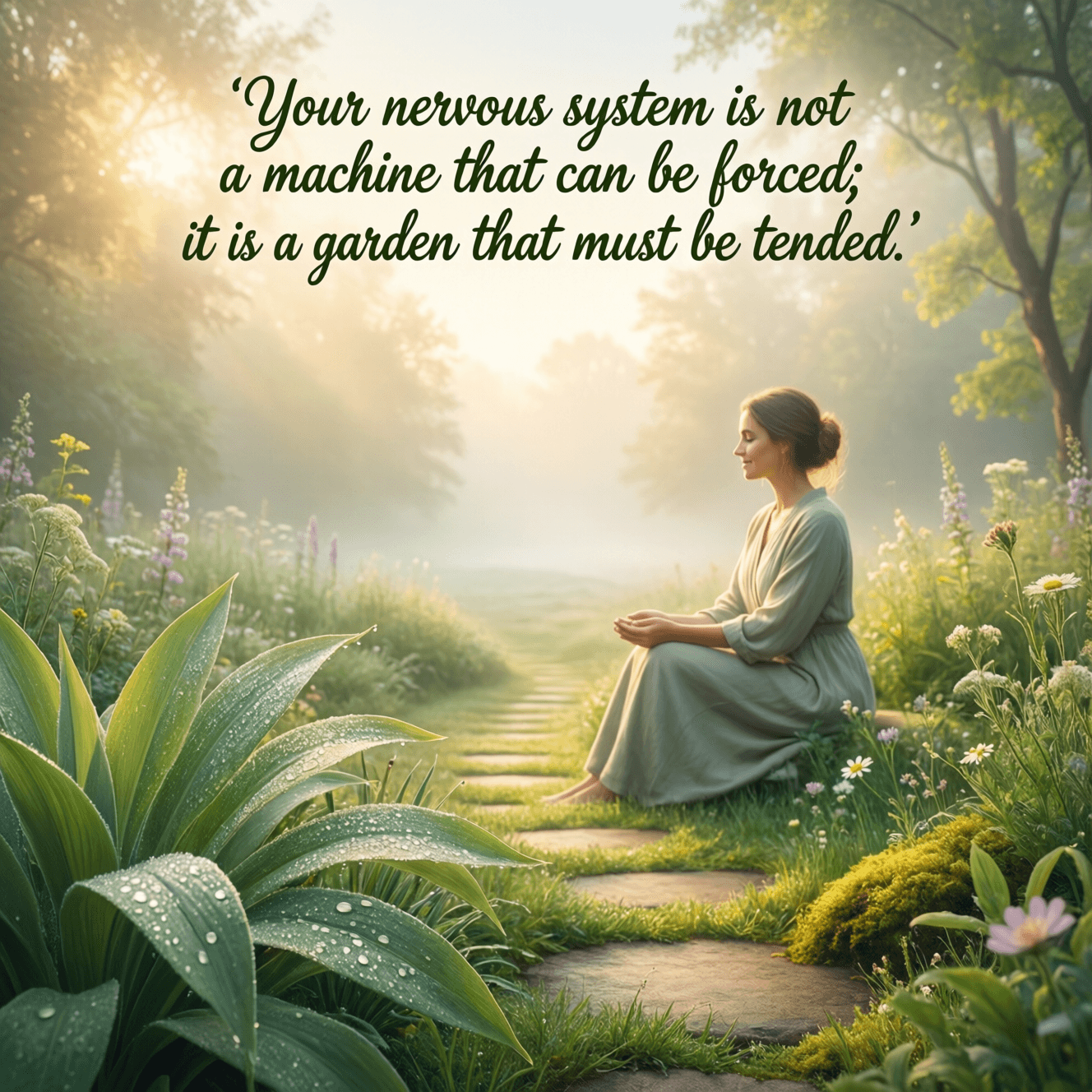
Your nervous system is not a machine that can be forced; it is a garden that must be tended. — Bessel van der Kolk
—What lingers after this line?
From Control to Care
Bessel van der Kolk’s metaphor immediately shifts the way we think about the body. Instead of imagining the nervous system as a machine to be pushed harder, repaired quickly, or disciplined into obedience, he presents it as something organic, responsive, and alive. That change matters, because a machine is expected to perform on command, while a garden responds to conditions, rhythms, and patient attention. In that sense, the quote gently challenges modern habits of self-management. Many people try to overpower exhaustion, anxiety, or trauma responses through sheer will, yet van der Kolk suggests that force often worsens dysregulation. By contrast, tending implies observation first: noticing what is depleted, what is overstimulated, and what kind of environment might allow recovery.
Why the Garden Metaphor Fits
The image of a garden works because the nervous system, like soil and roots, is shaped by its surroundings. Safety, rest, connection, and predictable routines nourish it, while chronic stress can leave it barren or overgrown with alarm. Van der Kolk’s broader work in The Body Keeps the Score (2014) repeatedly emphasizes that trauma is not merely a memory in the mind; it is a lived state in the body, affecting breath, vigilance, and emotional regulation. Therefore, healing rarely comes from command alone. Just as a gardener cannot shout a flower into bloom, a person cannot simply order the body to calm down. Recovery depends on creating the conditions in which regulation becomes possible, little by little, through repeated experiences of safety.
Trauma and the Limits of Force
This metaphor becomes especially powerful when applied to trauma. People who have endured overwhelming experiences often find that their bodies react before their thoughts can intervene: the heart races, muscles tense, sleep fractures, and danger seems everywhere. In such moments, advice like “just relax” or “move on” treats the nervous system like faulty machinery, as though the right instruction should fix it instantly. However, van der Kolk argues that trauma reshapes bodily responses at a deep level. As a result, healing must respect the pace of the organism itself. The task is not to dominate the system but to help it relearn safety, much as damaged soil must be restored before anything stable can grow there again.
What Tending Actually Looks Like
Once the metaphor is taken seriously, it leads naturally to practical questions: how does one tend a nervous system? Often it begins with small, repeatable acts that signal steadiness to the body—regular sleep, slower breathing, movement, supportive relationships, and moments of sensory calm. Practices discussed in trauma research, including yoga, mindful awareness, and body-based therapies, are valuable not because they force change, but because they invite regulation through experience; van der Kolk’s The Body Keeps the Score (2014) cites such approaches as important complements to talk therapy. Furthermore, tending requires consistency rather than intensity. A garden does not thrive because of one dramatic day of care; it grows through ongoing nourishment. Likewise, the nervous system often responds best to gentle repetition, not heroic self-pressure.
Patience, Seasons, and Setbacks
Another strength of the garden image is that it makes room for time. Gardens have seasons of visible growth and seasons that look quiet, even lifeless, though important changes are still happening beneath the surface. In much the same way, emotional healing is rarely linear. There are setbacks, dormant periods, and unexpected flare-ups that can make progress feel fragile. Even so, the metaphor encourages patience instead of self-blame. A struggling garden is not evidence of moral failure; it is a sign that conditions need adjusting. This perspective can soften shame, especially for people who feel frustrated that they cannot simply ‘function normally.’ The nervous system, van der Kolk implies, is not defective for responding to what it has endured—it is adaptive, and therefore capable of new growth.
A More Humane View of Healing
Ultimately, the quote offers more than a poetic comparison; it proposes an ethic of self-treatment. If the nervous system is a garden, then healing asks for stewardship rather than domination, curiosity rather than judgment, and partnership with the body rather than war against it. That idea stands in quiet opposition to cultures of productivity that reward pushing through pain at any cost. Consequently, van der Kolk’s words feel both compassionate and corrective. They remind us that well-being is cultivated, not extracted. When people learn to tend their inner conditions with care, they do not become weaker or less disciplined; rather, they become more attuned to the living system that makes endurance, connection, and genuine recovery possible.
One-minute reflection
What does this quote ask you to notice today?
Related Quotes
6 selectedYour nervous system is a landscape, not a machine; it requires the soft rain of rest, not the constant lightning of urgency. — Proverb
Proverb
The proverb begins by rejecting the idea that the nervous system is a simple machine with replaceable parts and predictable outputs. Instead, it frames the body as a landscape—complex, interconnected, and shaped over tim...
Read full interpretation →Nervous system regulation is the new mental fitness. You cannot pour from an empty cup, nor can you build a sanctuary while the world is still burning. — April Koh
April Koh
April Koh’s quote reframes wellness by suggesting that mental fitness is no longer just about discipline, productivity, or positive thinking. Instead, it begins with the body’s capacity to return to steadiness after stre...
Read full interpretation →The most important work you will ever do is to curate the state of your own nervous system. — Deb Dana
Deb Dana
Deb Dana’s statement reframes personal growth at its foundation: before productivity, relationships, or even insight, there is the state of the body that makes all of those possible. By using the word “curate,” she impli...
Read full interpretation →Sometimes the most productive thing you can do is step back and breathe. Your nervous system is not a machine. — Bessel van der Kolk
Bessel van der Kolk
At first glance, Bessel van der Kolk’s remark sounds like permission to pause, yet it is really a deeper claim about how human performance works. When he says the nervous system is not a machine, he reminds us that effor...
Read full interpretation →Stop trying to optimize your life for productivity and start nurturing your nervous system for peace; you are a human, not a machine. — Erica Diamond
Erica Diamond
Erica Diamond’s quote begins by confronting a modern habit: treating life as something to optimize endlessly. In that mindset, every hour must be efficient, every routine must produce measurable results, and even rest be...
Read full interpretation →The goal is not to become superhuman, but to feel less overstimulated and stop forcing your nervous system to live in constant emergency mode. Calm is a skill in its own right. — Kettj Talon
Kettj Talon
At first glance, Kettj Talon’s quote rejects a familiar modern fantasy: the idea that growth means becoming endlessly efficient, invulnerable, or somehow superhuman. Instead, it reframes personal progress as the quieter...
Read full interpretation →More From Author
More from Bessel van der Kolk →Your anxiety is not a failure; it is a signal. Stop trying to silence it and start listening to what it is trying to teach you about your boundaries. — Bessel van der Kolk
At first glance, anxiety often feels like evidence that something is wrong within us. Yet Bessel van der Kolk reverses that assumption, suggesting that anxiety is not simply a defect to erase but a message to interpret.
Read full interpretation →Sometimes the most productive thing you can do is step back and breathe. Your nervous system is not a machine. — Bessel van der Kolk
At first glance, Bessel van der Kolk’s remark sounds like permission to pause, yet it is really a deeper claim about how human performance works. When he says the nervous system is not a machine, he reminds us that effor...
Read full interpretation →Healing is learning to feel again. — Bessel van der Kolk
At its core, Bessel van der Kolk’s statement reframes healing as more than symptom reduction or survival. It suggests that recovery involves regaining access to emotions that trauma, stress, or grief may have shut down.
Read full interpretation →