#Nervous System
Quotes tagged #Nervous System
Quotes: 6

Rest as Rain in a Nervous Landscape
The proverb ultimately invites a practical redesign of how we move through time. If the nervous system is a landscape, then days need varied weather: periods of effort followed by genuine easing. This might look like building “buffers” between obligations, setting boundaries around response times, or choosing a slower morning to prevent the day from starting in a sprint. Small structures matter because they reduce the number of lightning strikes before they accumulate into chronic strain. Finally, the image offers compassion. Landscapes aren’t morally judged for needing rain; they simply respond to conditions. Likewise, needing rest is not a personal failure but an organism’s requirement. When we honor that requirement—consistently, gently—the nervous system regains its capacity for creativity, patience, and connection, and urgency returns to its proper place: occasional and purposeful rather than constant and consuming. [...]
Created on: 2/6/2026

Calm as the Foundation of True Performance
When Tolentino says you can’t “out-supplement” dysregulation, she’s challenging the idea that physiology is a simple input-output equation. Supplements may support deficiencies or specific pathways, but they rarely address the broader state of alarm that changes sleep, digestion, inflammation, and emotional reactivity all at once. In practice, someone may add magnesium, adaptogens, or nootropics while their sleep remains fragmented and their baseline tension stays high. The result is often chasing the next product rather than stabilizing the system that determines how any product is metabolized and experienced. This transition highlights a key point: state-setting behaviors often matter more than additional substances. [...]
Created on: 2/6/2026

Saying No as Nervous System Self-Protection
Building on that idea, an unwanted “yes” often requires the body to override its own warning signals—tightness in the chest, shallow breathing, a spike of adrenaline, or a sinking feeling in the stomach. Even when the mind rationalizes compliance, the body may register it as threat or constraint, preparing to endure rather than to engage. Over time, repeated small overrides can accumulate into chronic tension and irritability, because the system stays mobilized to meet demands it never consented to. Seen this way, saying no is not merely a preference; it can be the difference between living in a steady baseline and living in continual, low-grade activation. [...]
Created on: 2/6/2026

Healing as Teaching the Body Safety
To see why this teaching takes time, it helps to remember that the nervous system is designed to prioritize survival over comfort. When danger has been frequent—through chronic stress, illness, unstable relationships, or trauma—the brain and body can become biased toward detecting threat, a pattern described in stress research such as allostatic load (McEwen, 1998). Consequently, even neutral situations may feel “off,” because the body is scanning for cues that confirm old predictions. Healing, then, means revising those predictions through repeated experiences of safety, not just through intellectual reassurance. [...]
Created on: 1/25/2026

Wise Rest Over Relentless Productivity After Exhaustion
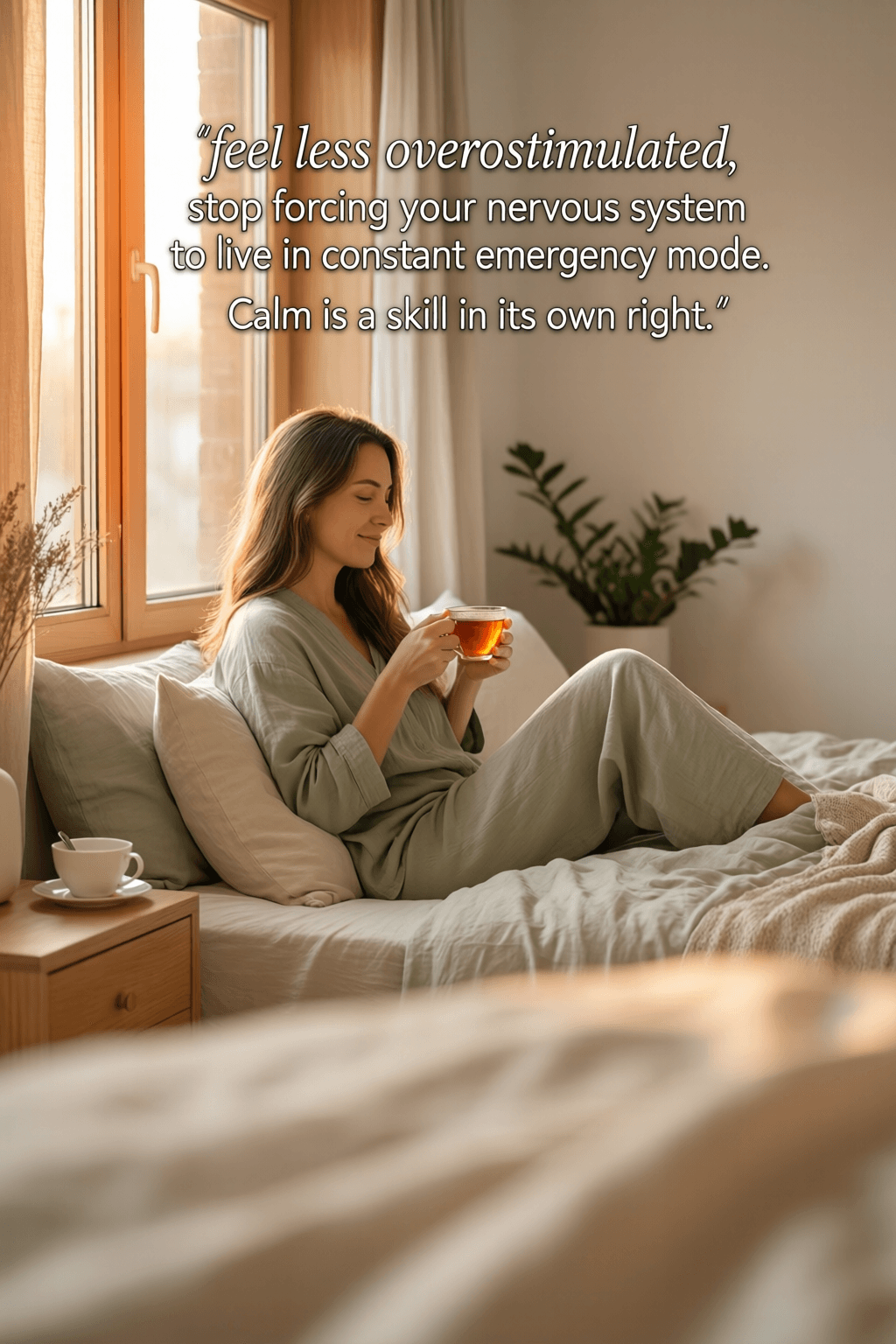
Wise rest is active in its discernment. It includes sleep, certainly, but also parasympathetic-friendly practices: slow walks, stretching, time in nature, gentle social connection, and periods without screens or performance pressure. Unlike collapse, wise rest is structured enough to feel safe and nourishing rather than chaotic. Importantly, it is calibrated. A person might choose a quiet evening and a protected bedtime rather than a “treat” that overstimulates. In that sense, wise rest isn’t indulgence; it is targeted recovery designed to restore baseline functioning. [...]
Created on: 1/23/2026

Guarding Your Inner Home From Noise
Importantly, the quote doesn’t argue against caring or staying informed; it argues for discernment. Keeping doors closed to unnecessary noise is a way of respecting your capacity—acknowledging that attention is finite and that constant exposure to urgency can distort priorities. This discernment also improves relationships. When you’re less flooded, you can listen more deeply to what truly matters, respond instead of react, and show up with steadier presence. In other words, limiting noise isn’t withdrawal from life; it’s creating the conditions to meet life with clarity. [...]
Created on: 1/20/2026