
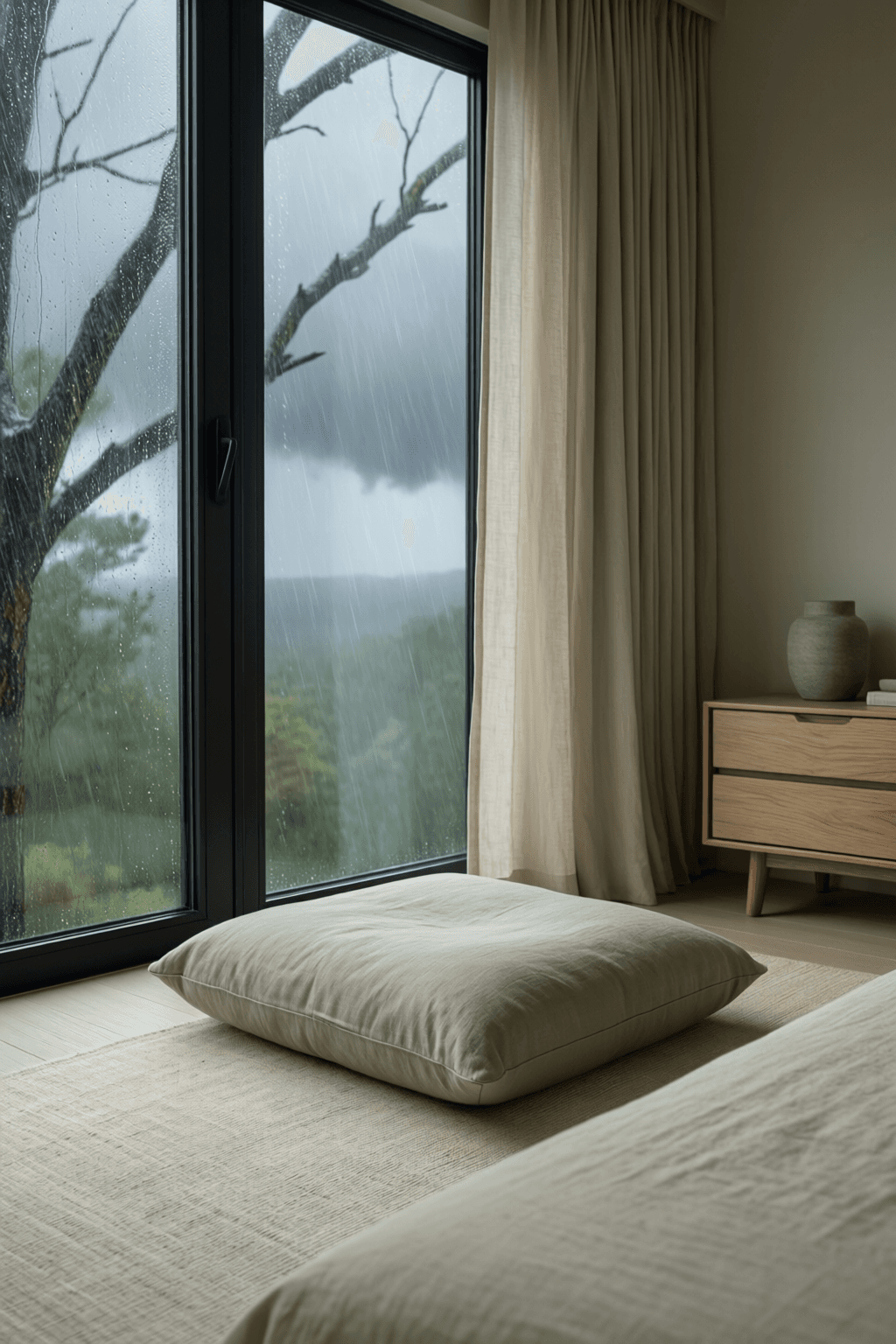
Peace is not the absence of trouble, but the presence of inner peace. — J. Donald Walters
—What lingers after this line?
Redefining What Peace Means
At first glance, peace is often imagined as a life free from conflict, noise, or disappointment. Yet J. Donald Walters overturns that expectation by suggesting that real peace does not depend on perfect circumstances. Instead, it arises from an inward steadiness that remains intact even when life becomes difficult. In this way, the quote shifts attention from controlling the outer world to cultivating the inner one. Troubles may still come—loss, uncertainty, frustration—but peace, Walters implies, is a quality of consciousness rather than a reward granted by favorable events.
The Limits of External Control
From there, the quote invites a practical realization: much of life will always remain beyond our command. Illness appears unexpectedly, relationships change, and plans fail despite our best efforts. If peace depends entirely on external order, then it will always be fragile and temporary. By contrast, traditions from Stoicism to Buddhism argue that freedom begins when we stop tying our well-being to conditions we cannot fully manage. Epictetus’s Enchiridion (c. 125 AD) similarly teaches that serenity grows from attending to what lies within our power—our judgments, responses, and character.
Inner Peace as a Trained Capacity
Consequently, inner peace should not be mistaken for passivity or natural good fortune. It is often a discipline, developed through reflection, prayer, meditation, or deliberate self-restraint. Much like physical strength, it deepens through repeated practice under strain rather than in total comfort. A simple example appears in daily life: two people may face the same setback, such as losing a job, yet respond very differently. One collapses into panic, while the other grieves but remains centered enough to act wisely. The difference is not the absence of trouble, but the presence of an inner anchor.
Calm Without Denial
Importantly, Walters does not suggest that peace means ignoring pain or pretending everything is fine. Genuine inner peace makes room for sorrow, anger, and fear without letting those emotions take complete control. It is a calm that coexists with reality, not an escape from it. This distinction matters because false peace often depends on avoidance. By comparison, Viktor Frankl’s Man’s Search for Meaning (1946) shows how even under extreme suffering, people can preserve an inward freedom of attitude. Such examples give Walters’s claim moral weight: peace can survive where comfort cannot.
A More Durable Way to Live
Finally, the quote offers a durable philosophy for ordinary life. Since trouble is inevitable, waiting for a flawless future before feeling peaceful leads to constant postponement. Inner peace, however, can be practiced now—in traffic, during conflict, in uncertainty, and through disappointment. Seen this way, peace becomes less a destination than a way of moving through the world. Walters’s insight is ultimately hopeful: although we cannot remove every hardship, we can cultivate the inward clarity that keeps hardship from ruling us.
Recommended Reading
As an Amazon Associate, we earn from qualifying purchases.
One-minute reflection
Where does this idea show up in your life right now?
Related Quotes
6 selectedThe mind is a sanctuary of calm thoughts, and you hold the keys. You are the architect of your own inner peace. — Akiroq Brost
Akiroq Brost
At its core, Akiroq Brost’s quote imagines the mind not as a battlefield but as a sanctuary—a protected space where calm thoughts can dwell. This metaphor immediately shifts responsibility inward: peace is not merely fou...
Read full interpretation →Sometimes you need to scorch everything to the ground and start over. After the flames come the ashes, and from the ashes, grow the new trees. — Neil Young
Neil Young
Neil Young’s image begins with a stark truth: sometimes renewal does not emerge from careful adjustment but from total rupture. To scorch everything to the ground is to admit that certain structures—habits, systems, even...
Read full interpretation →Inner calm is not a state you wait for, but a space you build within the daily noise. — Pico Iyer
Pico Iyer
At its core, Pico Iyer’s line shifts calm from something passive to something made. Rather than imagining peace as a rare mood that descends when life finally becomes quiet, he presents it as an inner architecture built...
Read full interpretation →You cannot find peace by avoiding life. You must engage with the friction of your own growth. — Henri Nouwen
Henri Nouwen
At first glance, Henri Nouwen’s insight overturns a common fantasy: that peace can be reached by retreating from difficulty, conflict, or responsibility. Instead, he argues that genuine inner calm is not the reward of av...
Read full interpretation →Perspective is the ability to see the bigger picture rather than being focused on the immediate pain. — Robert Greene
Robert Greene
Robert Greene’s line begins with a simple but demanding claim: perspective is not the denial of pain, but the capacity to place pain within a wider frame. In other words, the moment may hurt intensely, yet it does not al...
Read full interpretation →To be at home in oneself is the most revolutionary act in an age of constant distraction. — Pico Iyer
Pico Iyer
Pico Iyer’s remark begins with a deceptively simple image: being at home in oneself. Yet this inner home is not a place of withdrawal so much as a state of ease, where a person can sit with thoughts, feelings, and silenc...
Read full interpretation →More From Author
More from J. Donald Walters →