
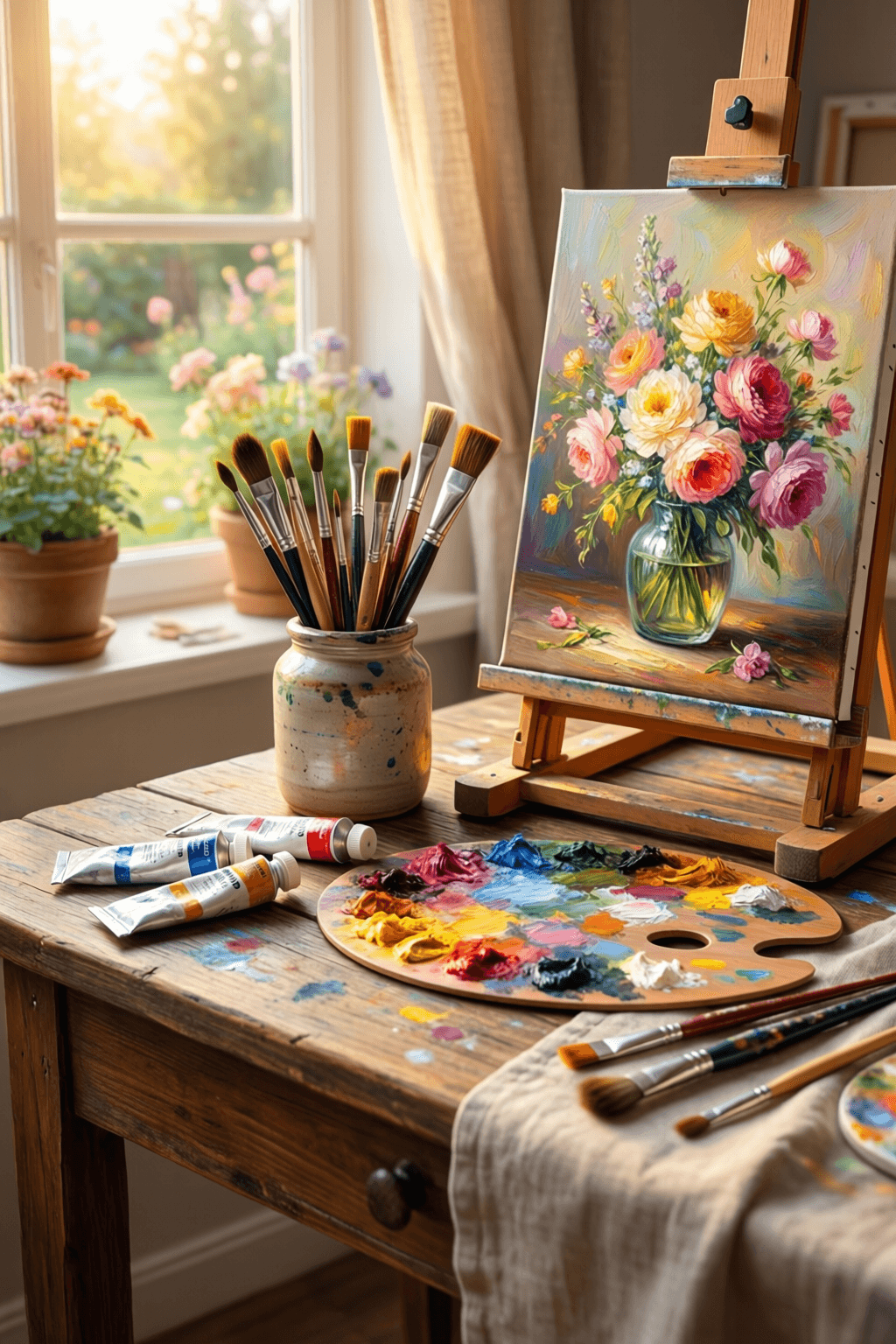
The more I paint, the more I like everything. — Pierre-Auguste Renoir
—What lingers after this line?
Seeing Through the Act of Painting
Renoir’s remark suggests that painting is not merely a way of recording the world but a way of learning to love it. As he paints, his attention slows, and ordinary things begin to disclose unexpected richness—light on skin, color in shadows, movement in a crowd. In this sense, artistic practice becomes an education in appreciation rather than a search for perfection. From this starting point, the quote also implies that liking ‘everything’ grows out of disciplined looking. What appears casual in the sentence is actually profound: the more deeply one studies form, texture, and atmosphere, the less easily one dismisses the world as dull or familiar.
Attention Turns into Affection
Building on that idea, Renoir links perception to feeling. To paint something well, one must stay with it long enough to notice its subtleties, and that sustained attention often softens judgment into affection. A face, a garden path, or a simple vase of flowers becomes interesting not because it is extraordinary, but because it has been truly seen. This helps explain the warmth associated with Renoir’s own work. Paintings such as Luncheon of the Boating Party (1881) do not merely depict pleasant scenes; they embody the pleasure of attending to human presence, light, fabric, fruit, and gesture until each element feels worthy of delight.
Impressionism and Everyday Beauty
The quote also fits squarely within the spirit of Impressionism. Rather than reserving beauty for heroic subjects, Renoir and his contemporaries found it in modern leisure, fleeting weather, and the changing effects of sunlight. As a result, painting became a way to honor transient experience. Renoir’s statement sounds personal, yet it also expresses a broader artistic revolution in how beauty was defined. For example, Claude Monet’s series paintings, including Haystacks (1890–1891), show how repeated observation can transform an ordinary object into an inexhaustible source of wonder. In that same tradition, Renoir suggests that making art enlarges one’s sympathy for the visible world.
Creation as a Practice of Gratitude
Moving beyond art history, the quote reads almost like a philosophy of life. To create is to enter into cooperation with reality instead of standing apart from it. Each brushstroke becomes a small acknowledgment that the world offers more than we first notice. In that way, painting resembles gratitude: both depend on recognizing abundance where haste sees only routine. This idea recalls John Ruskin’s arguments in Modern Painters (1843–1860), where careful observation of nature was treated as both artistic discipline and moral exercise. Although Renoir’s tone is lighter, the underlying insight is similar: attention can refine character by teaching us to value what is already around us.
Why Making Art Expands Joy
Finally, Renoir’s sentence explains why artistic practice can make life feel larger. The more one paints, the less one moves through the world numb or selective; colors intensify, surfaces speak, and even common scenes become charged with interest. What begins as technique gradually turns into a habit of receptivity. That may be the quote’s most enduring lesson. Renoir is not only describing his own pleasure but hinting at a universal experience: when we engage creatively and attentively with the world, our range of enjoyment grows. In the end, painting changes not just the canvas but the painter, making admiration easier and life more vivid.
Recommended Reading
As an Amazon Associate, we earn from qualifying purchases.
One-minute reflection
What feeling does this quote bring up for you?
Related Quotes
2 selectedWrite a brave line each day; someday your chapters will astonish you — Virginia Woolf
Virginia Woolf
Virginia Woolf’s line reads like a gentle instruction and a dare at once: write something brave today, not someday. The emphasis on “each day” shifts artistry away from rare bursts of inspiration and toward a lived pract...
Read full interpretation →Ideas are like rabbits. You get a couple and learn how to handle them, and pretty soon you have a dozen. — John Steinbeck
John Steinbeck
Steinbeck’s rabbits capture a truth creatives learn early: ideas reproduce. Once you have a couple and know how to tend them, they start multiplying almost on their own.
Read full interpretation →More From Author
More from Auguste Renoir →