
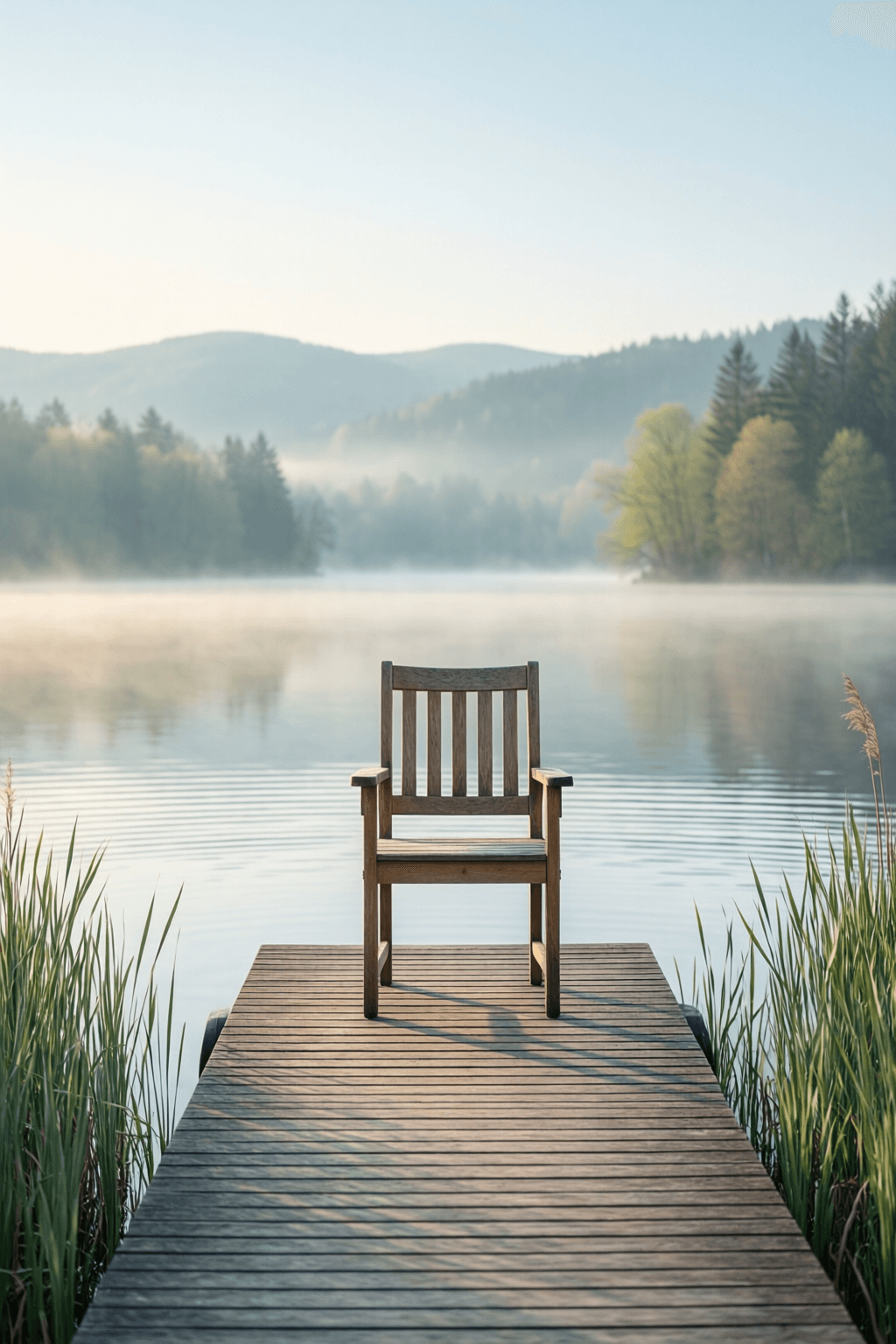
Sometimes doing nothing is the most important thing you can do to reclaim your life. — Anne Lamott
—What lingers after this line?
The Hidden Power of Stillness
At first glance, Anne Lamott’s line sounds contradictory: how can doing nothing be important? Yet that tension is precisely the point. In a culture that treats busyness as virtue, deliberate stillness becomes a radical act. By stepping back from constant motion, a person can finally hear what exhaustion, grief, or desire has been trying to say beneath the noise. In this sense, ‘nothing’ does not mean apathy or surrender. Rather, it suggests a pause that interrupts compulsive activity. Only then can life be reclaimed, because what has been lost is often not time alone, but attention, agency, and the ability to choose one’s next step with clarity.
A Quiet Rebellion Against Busyness
From there, Lamott’s quote can be read as a critique of modern productivity culture. Many people fill every empty space with work, scrolling, errands, or self-improvement, assuming that movement equals progress. However, nonstop doing often masks a deeper alienation: one becomes efficient at living a life that no longer feels fully one’s own. By contrast, choosing not to act for a moment can be a form of resistance. Henry David Thoreau’s Walden (1854) similarly argues that stepping away from society’s frantic expectations allows a person to recover what is essential. Lamott’s insight follows that tradition, reminding us that reclaiming life sometimes begins not with acceleration, but with refusal.
Rest as a Way of Seeing Clearly
Once that refusal creates space, something else becomes possible: perception. Fatigue narrows attention, making every demand feel urgent and every choice feel reactive. Rest, even in the form of unstructured idleness, restores perspective. Problems that seemed impossible can look manageable after a quiet hour, a walk, or an afternoon free from obligation. Neuroscience often supports this intuition. Research on the brain’s default mode network suggests that when people are not focused on a task, the mind continues important work related to memory, identity, and reflection. Therefore, doing ‘nothing’ is not always empty; it may be the condition under which deeper understanding quietly assembles itself.
Reclaiming the Self From Overextension
Moreover, Lamott’s wording—‘reclaim your life’—implies that life can be taken over by forces both external and internal. Responsibilities, other people’s expectations, perfectionism, and fear can gradually occupy so much space that the self becomes secondary. In such moments, stopping is not laziness but recovery of ownership. A familiar anecdote appears in many burnout stories: someone becomes ill, misses deadlines, and then discovers that the world continues anyway. That uncomfortable revelation can also be freeing. It shows that constant usefulness is not the same as meaningful living. By doing nothing for a while, one begins to separate genuine obligation from habitual overgiving.
Spiritual and Emotional Renewal
In addition, the quote carries a spiritual undertone common in Lamott’s writing, where grace often arrives through surrender rather than control. Religious traditions have long treated silence and Sabbath as sacred practices. The Hebrew Bible’s Sabbath commandment, for example, frames rest not as reward after productivity but as a fundamental rhythm of human dignity. Seen this way, doing nothing becomes emotionally reparative as well. It allows sorrow to surface, joy to return, and inner life to become audible again. Instead of proving one’s worth through relentless effort, a person learns to inhabit life as something received, not merely managed.
The Courage to Pause
Finally, Lamott’s insight is demanding because doing nothing can feel frightening. Stillness removes distraction, and without distraction people may meet uncertainty, loneliness, or truths they have postponed. That is why the pause requires courage: it asks a person to trust that worth is not erased by inactivity. Yet this is also where reclaiming begins. A brief pause before answering a demand, a day without filling every hour, or a season of deliberate rest can shift the course of a life. In the end, Lamott suggests that the most transformative action is sometimes the one that appears inactive from the outside but restores freedom within.
One-minute reflection
Why might this line matter today, not tomorrow?
Related Quotes
6 selectedIn the stillness of our home, we find the clarity that the world tries to steal from us. — Anne Lamott
Anne Lamott
Anne Lamott’s line begins with a simple but profound contrast: the home is imagined as a place of stillness, while the wider world is cast as noisy, demanding, and disruptive. In that quiet domestic space, clarity become...
Read full interpretation →Don't underestimate the value of Doing Nothing, just going along, listening to all the things you can't hear, and not bothering. — A.A. Milne
A. A. Milne
At first glance, A.A. Milne’s line sounds playful, almost like permission to be lazy.
Read full interpretation →Quiet is a superpower in a world that thrives on noise. — Susan Cain
Susan Cain
At first glance, Susan Cain’s remark elevates something easily overlooked: quiet. In cultures that often reward speed, volume, and constant self-display, silence can seem passive.
Read full interpretation →Stillness is not the absence of energy. It is the consolidation of it. — Seneca
Seneca
At first glance, Seneca’s line challenges a common assumption: that stillness means passivity, emptiness, or retreat from life. Instead, he reframes it as a disciplined state in which energy is not scattered but drawn in...
Read full interpretation →Stillness is the birthplace of strength. — Epictetus
Epictetus
At first glance, Epictetus turns a common assumption upside down: strength does not begin in noise, force, or visible struggle, but in stillness. The Stoic philosopher suggests that real power is born when the mind becom...
Read full interpretation →You do not need to leave your room. Remain sitting at your table and listen. Do not even listen, simply wait, be quiet, still and solitary. The world will freely offer itself to you to be unmasked. — Franz Kafka
Franz Kafka
Kafka begins with a striking command: do not chase the world, but remain in place. At first, this seems to reject ordinary habits of ambition and movement, yet that reversal is precisely his point.
Read full interpretation →More From Author
More from Anne Lamott →Recovery is not a race. You don't have to feel guilty if it takes you longer than you thought it would. — Anne Lamott
Anne Lamott’s reminder begins by challenging one of the quiet cruelties of recovery: the belief that healing should follow a predictable schedule. Whether the wound is physical, emotional, or spiritual, people often comp...
Read full interpretation →Do not mistake your digital silence for peace. Real strength is found in the courage to speak the truth to the people who hold your heart. — Anne Lamott
At first glance, Anne Lamott’s quote challenges a familiar illusion: silence can resemble peace without actually creating it. Choosing not to speak may keep conflict out of sight, yet beneath that quiet surface, hurt, co...
Read full interpretation →Your worth is not a spreadsheet. You are not a project to be completed, but a life to be experienced. Stop measuring and start breathing. — Anne Lamott
Anne Lamott’s quote begins by confronting a habit many people barely notice: treating human value as if it could be tabulated. A spreadsheet symbolizes order, productivity, and comparison, yet it also reduces complexity...
Read full interpretation →The art of living is not about being a finished masterpiece; it is about being a work in progress that still knows how to laugh at its own paint spills. — Anne Lamott
At its heart, Anne Lamott’s remark reframes life from a quest for perfection into an ongoing act of creation. Instead of imagining ourselves as polished masterpieces, she invites us to see our days as brushstrokes still...
Read full interpretation →