
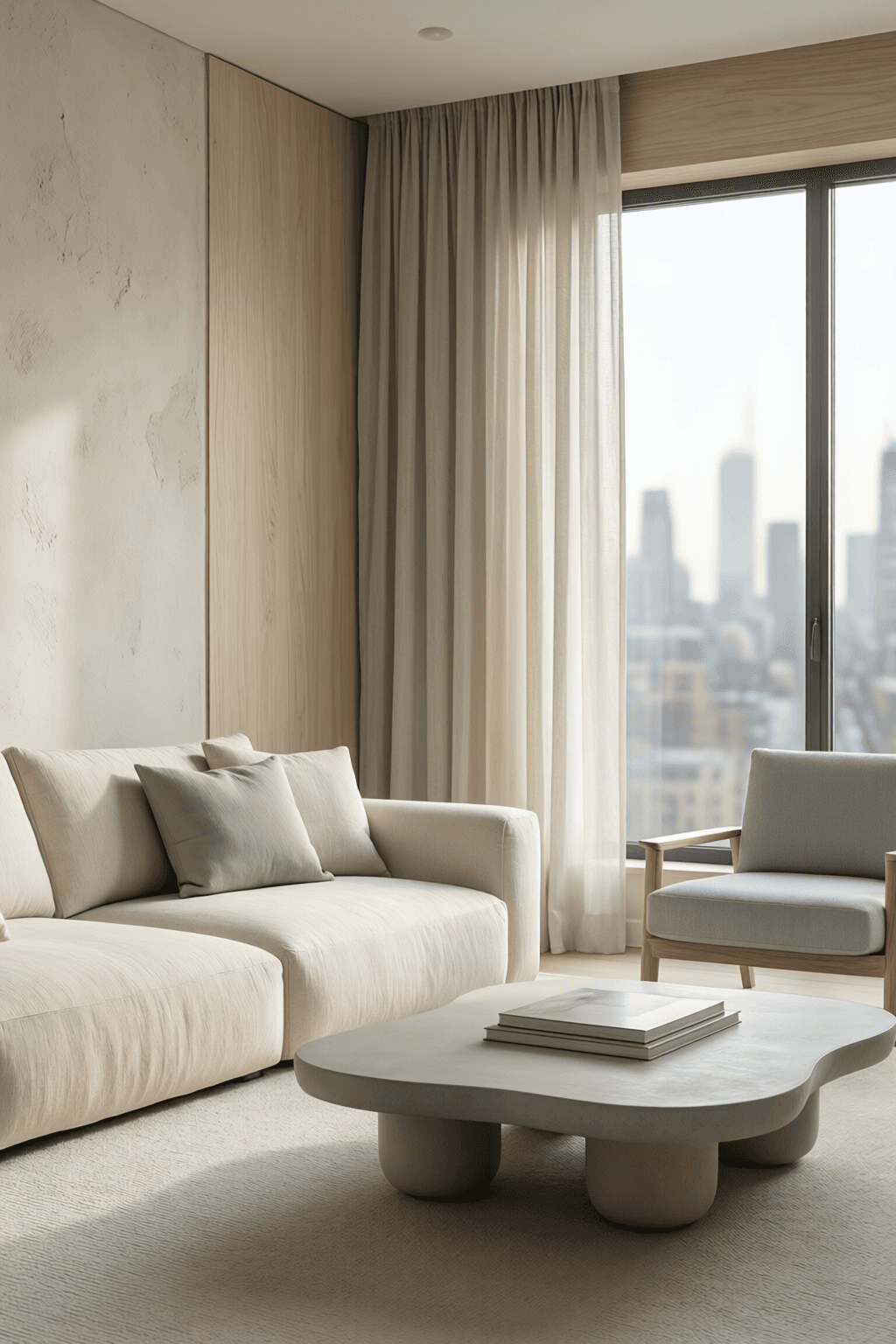
The louder the world becomes, the quieter the home must be. It is not just shelter; it is a filter. — East Zen Living
—What lingers after this line?
Home as a Necessary Counterbalance
At its core, the quote proposes that home should respond to the pressures of the outside world by becoming their opposite. As public life grows faster, louder, and more demanding, the private sphere gains a new purpose: not merely to house us, but to restore us. In this sense, home is less a backdrop to life than an active corrective to it. This idea feels especially relevant in an age of constant alerts, crowded schedules, and unbroken commentary. Rather than mirroring that intensity, a meaningful home softens it. The phrase “the quieter the home must be” suggests intention, implying that peace is not accidental but carefully made.
Beyond Shelter Into Emotional Design
From there, the quote deepens its claim by rejecting the idea that home is “just shelter.” Shelter protects the body from weather and danger, but a true home also protects the mind from overstimulation. It becomes an emotional environment, shaping how we think, feel, and recover after exposure to the wider world. In this way, the statement aligns with design philosophies that treat space as a form of care. Japanese aesthetics, for example, often value simplicity, negative space, and restraint, while Gaston Bachelard’s The Poetics of Space (1958) reflects on the home as a vessel for intimacy and inner life. Together, these perspectives reinforce the notion that domestic space can nurture psychological balance.
The Meaning of Home as a Filter
The quote’s most striking image, however, is the idea of home as a “filter.” A filter does not deny the world exists; instead, it regulates what enters and what remains outside. That subtle distinction matters. The ideal home is not an escape built on total withdrawal, but a boundary that allows rest, discernment, and selective engagement. Seen this way, the home becomes a mediator between self and society. News, noise, conflict, and social pressures may be unavoidable, yet they need not dominate every room. Much like monasteries or tea houses were historically designed to cultivate calm through enclosure and ritual, the modern home can filter chaos by setting limits on sound, clutter, and intrusion.
Silence as a Form of Protection
Once home is understood as a filter, quiet itself begins to look less like emptiness and more like protection. Silence here does not mean coldness or isolation; rather, it signals space for thought, conversation, and recovery. In a culture that often equates stimulation with vitality, the quote gently argues for a different measure of well-being. Modern research supports this intuition. Studies on environmental stress, including work summarized by the World Health Organization’s noise guidelines, have shown that persistent noise can affect sleep, mood, and cardiovascular health. Against that backdrop, a quieter home becomes not a luxury but a practical safeguard, preserving the conditions in which attention and peace can return.
Creating Rituals That Soften the Outside World
Naturally, such quiet is not achieved by architecture alone. It is also built through ritual: removing shoes at the door, dimming lights in the evening, limiting screens in certain rooms, or sharing meals without interruption. These simple habits tell the nervous system that one world has ended for the day and another, gentler one has begun. This is why the quote resonates beyond décor. East Zen Living’s wording suggests a philosophy of daily living in which the home actively edits experience. Even small practices can perform that filtering function, turning ordinary domestic routines into transitions from public strain to private calm.
A Moral Vision of Domestic Peace
Finally, the quote hints at something larger than comfort: it presents quiet home life as a moral and cultural choice. To make home calmer than the world is to refuse the assumption that speed, volume, and constant access should govern every part of human existence. It is a way of protecting attention, tenderness, and presence. As a result, the home becomes not only a retreat but a statement about what deserves preservation. In noisy times, a peaceful household affirms that rest is valuable, boundaries are healthy, and interior life matters. The quote therefore leaves us with a gentle but firm conclusion: the quieter home is not an indulgence, but a necessary form of wisdom.
One-minute reflection
Why might this line matter today, not tomorrow?
Related Quotes
6 selectedIn the stillness of our home, we find the clarity that the world tries to steal from us. — Anne Lamott
Anne Lamott
Anne Lamott’s line begins with a simple but profound contrast: the home is imagined as a place of stillness, while the wider world is cast as noisy, demanding, and disruptive. In that quiet domestic space, clarity become...
Read full interpretation →Home is where the heart is. — Pliny the Elder
Pliny the Elder
At its simplest, “Home is where the heart is” shifts the idea of home from a physical address to an emotional center. Pliny the Elder, the Roman naturalist associated with this saying, points toward a truth that outlasts...
Read full interpretation →In the embrace of family, we find our true home, where love wraps around us like a warm, familiar blanket. — Mitch Albom
Mitch Albom
At first glance, Mitch Albom’s reflection shifts the meaning of home away from walls, roofs, and addresses toward something more intimate: the emotional shelter created by family. In this view, home is not merely where w...
Read full interpretation →Don't underestimate the value of Doing Nothing, just going along, listening to all the things you can't hear, and not bothering. — A.A. Milne
A. A. Milne
At first glance, A.A. Milne’s line sounds playful, almost like permission to be lazy.
Read full interpretation →Home is the place where one finally allows the armor to drop and the spirit to breathe. — Maya Angelou
Maya Angelou
At its core, Maya Angelou’s reflection defines home not merely as a structure but as a sanctuary of emotional safety. The image of letting “the armor drop” suggests that daily life often requires protection—composure, re...
Read full interpretation →A home should be an anchor, a port in a storm, a refuge, a happy place in which to dwell. — Marvin J. Ashton
Marvin J. Ashton
Marvin J. Ashton’s statement presents home not merely as a physical structure but as a place of emotional and spiritual grounding.
Read full interpretation →More From Author
More from East Zen Living →