
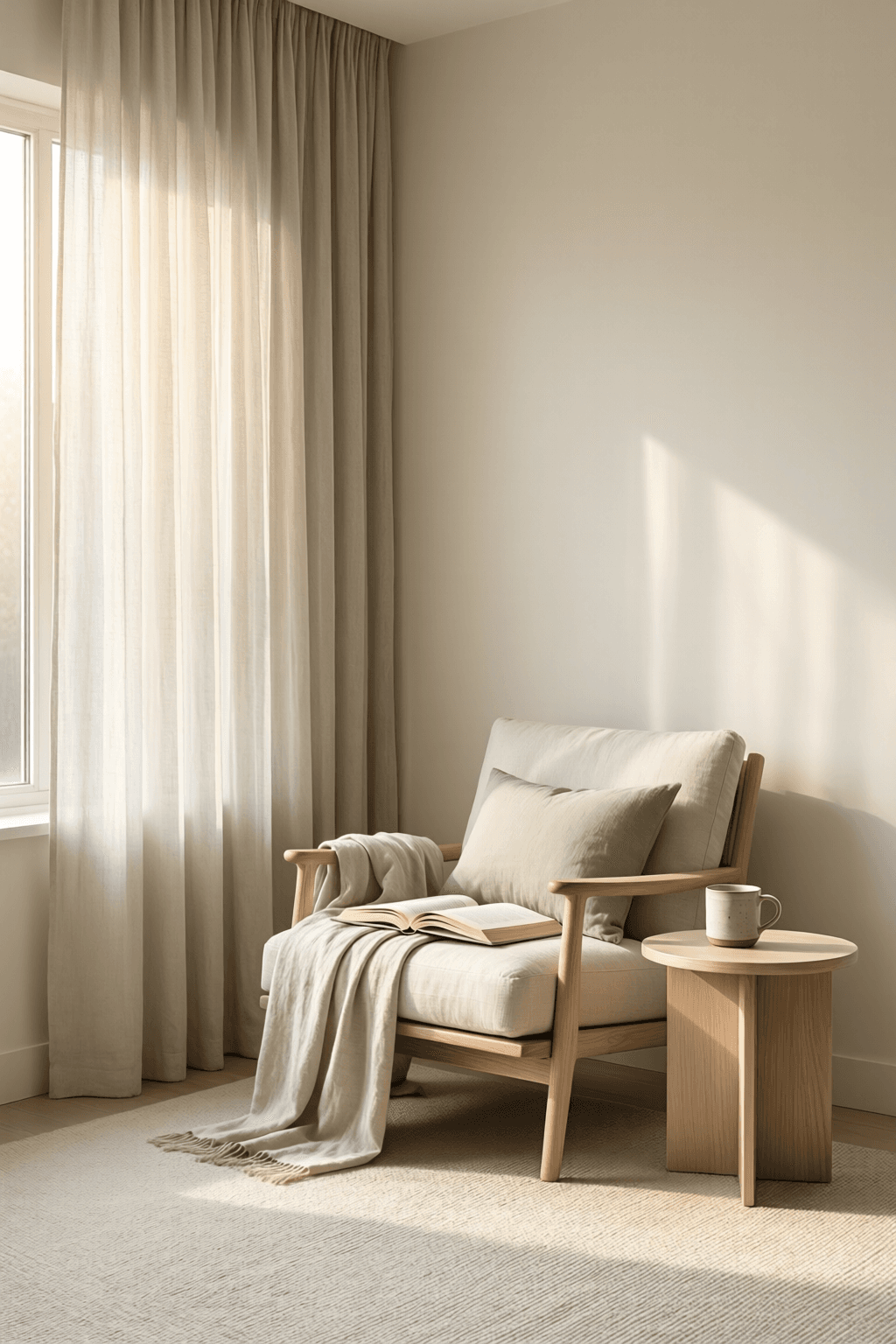
In the stillness of our home, we find the clarity that the world tries to steal from us. — Anne Lamott
—What lingers after this line?
The Meaning of Stillness at Home
Anne Lamott’s line begins with a simple but profound contrast: the home is imagined as a place of stillness, while the wider world is cast as noisy, demanding, and disruptive. In that quiet domestic space, clarity becomes possible—not because life’s problems disappear, but because the mind can finally hear itself think. Her phrasing suggests that peace is not merely decorative; it is restorative. From this starting point, the quote invites us to see home less as a physical structure and more as an emotional condition. A home can be modest or grand, crowded or spare, yet what matters is its ability to shelter attention, reflection, and truth from the constant pressures outside.
What the World Tries to Steal
Moving from the sanctuary of home to the threat beyond it, Lamott identifies something subtle that modern life often erodes: clarity. The world steals it through speed, comparison, obligation, and endless distraction. News cycles, social expectations, and digital noise can leave people reacting constantly rather than understanding deeply. In this sense, her quote names a common experience of fragmentation. We do not always lose our values dramatically; more often, they are diluted by interruption. Therefore, the stillness of home becomes a defense against confusion, allowing us to recover priorities that public life tends to scatter.
Home as a Place of Return
Because the world can disorient us, home emerges in Lamott’s thought as a place of return. This return is not only geographic but psychological: we come back to ourselves there. Many spiritual and literary traditions echo this idea. For instance, T.S. Eliot’s “Little Gidding” (1942) famously ends with the recognition that we return to where we started and know the place for the first time, suggesting that arrival and self-understanding are deeply linked. Seen this way, home becomes the setting where scattered thoughts gather into coherence. After the noise of public roles and external performance, the private sphere offers the possibility of remembering who we are when no audience is watching.
The Emotional Architecture of Safety
Yet Lamott’s insight goes further, because clarity rarely appears without safety. A home that nurtures stillness is one where judgment softens, where vulnerability is permitted, and where a person can pause without needing to prove anything. Psychologically, this resembles what attachment theorists such as John Bowlby described in the twentieth century: secure environments help people regulate emotion and explore the world with greater confidence. As a result, the quote implies that clarity is relational as much as solitary. Even in silence, we think more clearly when we feel held, protected, or understood. The calm of home is therefore not empty quiet, but a form of emotional shelter.
A Quiet Resistance to Modern Life
From there, Lamott’s words can also be read as quietly defiant. To preserve stillness at home is to resist a culture that rewards overstimulation, productivity, and perpetual availability. Choosing rest, conversation, prayer, reading, or even shared silence becomes an act of reclaiming inner life from external demands. This resistance has strong cultural echoes. Henry David Thoreau’s Walden (1854), though centered on solitude rather than family home, similarly argues that deliberate simplicity restores perception. Lamott adapts that insight to domestic life, suggesting that ordinary spaces—a kitchen table, a lamp-lit room, an evening without interruption—can protect the soul from dispersal.
Why Clarity Matters in Daily Life
Finally, the quote matters because clarity is not an abstract luxury; it shapes daily choices. When people find mental and spiritual steadiness at home, they are better able to face conflict, make decisions, and recognize what deserves their attention. The private calm of the household then spills outward into public life, strengthening rather than weakening one’s engagement with the world. In the end, Lamott offers more than praise for domestic peace. She presents home as a necessary counterweight to chaos, a place where perception is restored and identity is reassembled. Through that stillness, we regain the clarity that lets us live intentionally rather than merely react.
Recommended Reading
As an Amazon Associate, we earn from qualifying purchases.
One-minute reflection
Why might this line matter today, not tomorrow?
Related Quotes
6 selectedThe things that really matter are the things that stay when the house is empty. — Anne Lamott
Anne Lamott
Anne Lamott’s line begins with a quiet test: imagine the house emptied of furniture, noise, possessions, and display. What remains, she suggests, is the truest measure of value.
Read full interpretation →Sometimes doing nothing is the most important thing you can do to reclaim your life. — Anne Lamott
Anne Lamott
At first glance, Anne Lamott’s line sounds contradictory: how can doing nothing be important? Yet that tension is precisely the point.
Read full interpretation →The louder the world becomes, the quieter the home must be. It is not just shelter; it is a filter. — East Zen Living
East Zen Living
At its core, the quote proposes that home should respond to the pressures of the outside world by becoming their opposite. As public life grows faster, louder, and more demanding, the private sphere gains a new purpose:...
Read full interpretation →Home is where laughter and gratitude grow. — Melody Beattie
Melody Beattie
At first glance, Melody Beattie’s line reframes home as something more living than a building. Instead of focusing on property, décor, or permanence, it suggests that home is recognized by what flourishes inside it: laug...
Read full interpretation →You do not need to leave your room. Remain sitting at your table and listen. Do not even listen, simply wait, be quiet, still and solitary. The world will freely offer itself to you to be unmasked. — Franz Kafka
Franz Kafka
Kafka begins with a striking command: do not chase the world, but remain in place. At first, this seems to reject ordinary habits of ambition and movement, yet that reversal is precisely his point.
Read full interpretation →To move forward, you must first give yourself permission to be still. — Yung Pueblo
Yung Pueblo
At first glance, Yung Pueblo’s line seems contradictory: how can stillness help us move forward? Yet that tension is precisely the point.
Read full interpretation →More From Author
More from Anne Lamott →In the middle of all the mess, there's a quiet kind of magic waiting for you. — Anne Lamott
At first glance, Anne Lamott’s line suggests a contradiction: how can ‘magic’ exist in the middle of a mess? Yet that tension is precisely the point.
Read full interpretation →By choosing to be yourself, you have already won the most important battle. — Anne Lamott
At its core, Anne Lamott’s statement reframes victory in deeply personal terms. Rather than measuring success by status, approval, or comparison, she suggests that the most important win happens the moment a person stops...
Read full interpretation →Give your heart the space it needs to breathe; you do not have to carry everything all at once. — Anne Lamott
Anne Lamott’s line begins with a gentle permission: the heart, like the body, needs space, rhythm, and rest. Rather than treating emotional strength as endless endurance, she reframes care as breathing room—something nec...
Read full interpretation →The things that really matter are the things that stay when the house is empty. — Anne Lamott
Anne Lamott’s line begins with a quiet test: imagine the house emptied of furniture, noise, possessions, and display. What remains, she suggests, is the truest measure of value.
Read full interpretation →