
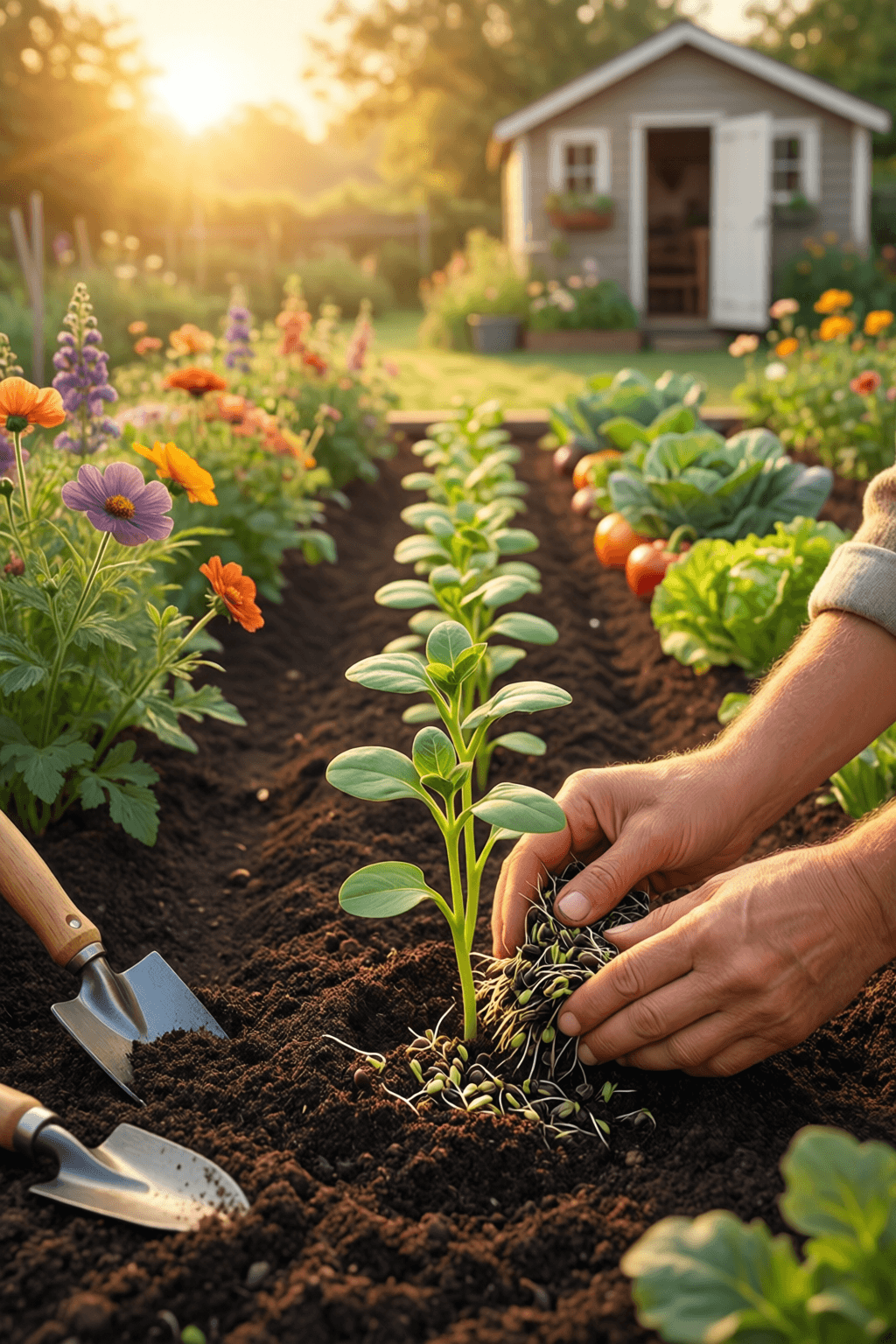
You plant, then you cultivate, and finally you harvest. In today's world, everyone wants to go directly from plant to harvest. — Jeff Olson
—What lingers after this line?
The Logic of Natural Progress
Jeff Olson’s quote turns to agriculture to explain a wider truth about achievement: nothing meaningful moves straight from beginning to reward. First comes planting, which is the act of starting; then cultivation, which requires patience, repetition, and care; only after that does harvest appear. In this way, the metaphor reminds us that progress is not a single event but a sequence. Seen this way, the real target of Olson’s criticism is modern impatience. Many people admire results while overlooking the long middle stage that makes those results possible. Yet the invisible season of tending is often where success is actually built.
The Forgotten Middle
What makes the quote especially sharp is its emphasis on cultivation, the stage people most often try to skip. Planting is exciting because it feels full of possibility, and harvesting is satisfying because it offers visible payoff. By contrast, cultivation is repetitive, quiet, and uncertain, which is precisely why it tests character. Therefore, Olson highlights a psychological weakness of contemporary life: we are drawn to beginnings and endings, but we resist maintenance. Whether in business, fitness, or learning, the middle period rarely looks dramatic from the outside, yet it is where discipline slowly turns intention into outcome.
A Culture of Immediate Results
From there, the quote broadens into a critique of modern culture. Digital life constantly presents finished products—viral success, sudden wealth, dramatic transformations—while hiding the years of preparation behind them. As a result, people can begin to believe that rapid success is normal and that delay signals failure. However, history suggests otherwise. Thomas Edison’s long experimentation before developing practical electric light, as described in many biographical accounts of his work in the late nineteenth century, illustrates how repeated adjustment precedes breakthrough. Olson’s point, then, is not merely moralistic; it is a correction to the illusions created by a speed-obsessed age.
Discipline as Daily Tending
Once the agricultural image is taken seriously, cultivation becomes a model for everyday discipline. Farmers do not force crops to grow overnight; instead, they water, weed, protect, and wait. In a similar way, personal development depends less on dramatic effort than on sustained care repeated over time. This idea echoes Aristotle’s *Nicomachean Ethics* (4th century BC), where character is formed through habitual action rather than isolated intention. Olson’s statement fits that tradition neatly: the harvest people desire is usually the visible expression of habits they either patiently nurtured or neglected.
Why Patience Produces Better Outcomes
At the same time, patience in Olson’s sense is not passive resignation. Cultivation involves active attention—adjusting methods, correcting mistakes, and staying committed when results are not yet obvious. That distinction matters, because real patience is a form of intelligent persistence rather than mere waiting. Consequently, those who accept gradual growth often build stronger and more durable success. A quickly gained result may be fragile, but something developed through steady practice usually has deeper roots. Olson’s metaphor suggests that time is not an obstacle to growth; instead, time is one of its essential ingredients.
A Practical Lesson for Modern Ambition
Ultimately, the quote asks people to rethink ambition itself. Wanting the harvest is natural, but expecting it without cultivation is a recipe for frustration. The wiser approach is to respect the order of things: begin, tend, improve, and trust that results come from process rather than wishful urgency. In that sense, Olson offers more than a warning—he offers a method. If people can make peace with the slow middle, they become far less vulnerable to distraction, envy, and discouragement. The harvest may still take time, but it will no longer feel mysterious, because they will understand exactly how it was grown.
One-minute reflection
Why might this line matter today, not tomorrow?
Related Quotes
6 selectedSometimes you have to slow down to go fast. — Jeff Olson
Jeff Olson
Jeff Olson’s line begins with a practical paradox: speed is not always created by rushing. Sometimes the quickest path forward requires pausing long enough to see the road clearly, correct mistakes early, and choose acti...
Read full interpretation →To cultivate anything—a garden, a skill, a soul—requires the courage to wait for what you have planted. — Wendell Berry
Wendell Berry
At first glance, Wendell Berry’s quote seems to praise patience, yet it goes further by naming patience as courage. To plant anything—a seed, a habit, a belief in oneself—is to act without immediate proof of success.
Read full interpretation →Everything that is great in life is the product of slow growth; the newer, and greater, and higher, and nobler the work, the slower is its growth. — William George Jordan
William George Jordan
William George Jordan’s reflection begins with a quiet but demanding truth: the most meaningful achievements rarely arrive quickly. He suggests that greatness is not manufactured in sudden bursts but cultivated through t...
Read full interpretation →You cannot force ideas. Successful ideas are the result of slow growth. — Alexander Graham Bell
Alexander Graham Bell
Alexander Graham Bell’s statement begins with a quiet warning against impatience: ideas cannot be commanded into maturity simply because we desire results. Like plants, they require conditions, time, and repeated attenti...
Read full interpretation →The moments between your milestones are not filler. — Nelou Keramati
Nelou Keramati
Nelou Keramati’s line challenges the habit of treating life as a sequence of major checkpoints: graduations, promotions, weddings, moves, and visible successes. At first glance, everything between these events can seem l...
Read full interpretation →Roses do not bloom hurriedly; for beauty, like any masterpiece, takes time to blossom. — Matshona Dhliwayo
Matshona Dhliwayo
At its heart, Matshona Dhliwayo’s quote reminds us that true beauty cannot be forced. A rose does not rush toward bloom, nor does it apologize for the time required to unfold.
Read full interpretation →More From Author
More from Jeff Olson →Sometimes you have to slow down to go fast. — Jeff Olson
Jeff Olson’s line begins with a practical paradox: speed is not always created by rushing. Sometimes the quickest path forward requires pausing long enough to see the road clearly, correct mistakes early, and choose acti...
Read full interpretation →Successful people do what unsuccessful people are not willing to do. — Jeff Olson
This quote highlights that success often requires consistent effort and discipline. Successful people are willing to take on challenges, endure discomfort, and go the extra mile, which many others avoid.
Read full interpretation →