
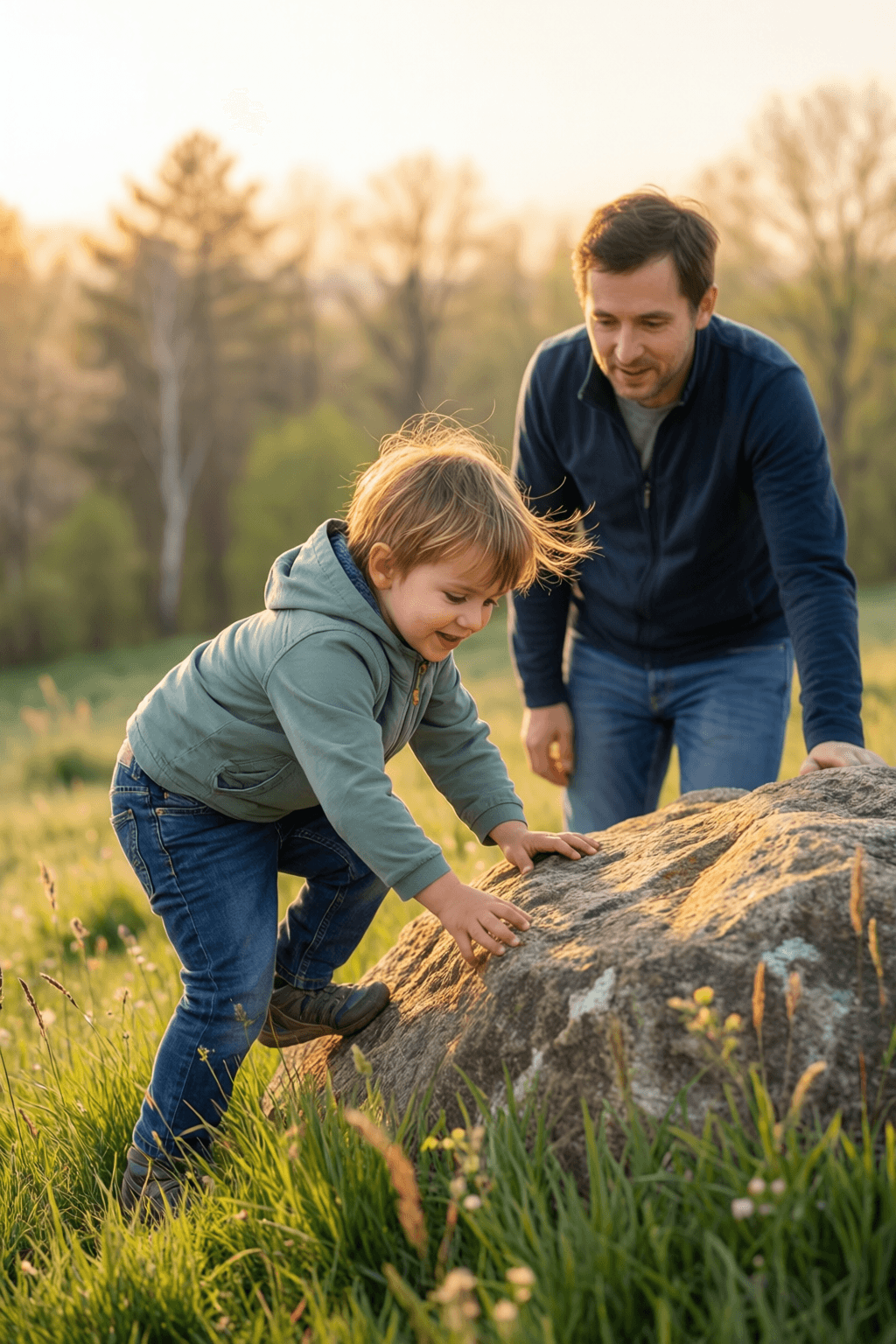
If you never let your child struggle, you never let them grow strong. — T.D. Jakes
—What lingers after this line?
The Hidden Cost of Overprotection
At its core, T.D. Jakes’s statement argues that shielding children from every hardship may feel loving, yet it can quietly weaken them. When adults remove all discomfort, disappointment, and difficulty, children miss the chance to discover what they can endure. In that sense, protection without challenge becomes a barrier to growth rather than a path toward it. This idea does not celebrate suffering for its own sake. Instead, it suggests that manageable struggle teaches the inner lessons comfort cannot: patience, problem-solving, and perseverance. As a result, what looks like a small frustration in childhood often becomes the training ground for strength in adult life.
Strength Is Built Through Resistance
Much like muscles develop through resistance, character often develops through effort. A child who must try again after failure, resolve a conflict, or sit with temporary frustration gradually learns that difficulty is survivable. Therefore, struggle becomes less a punishment and more a form of preparation. This principle appears in educational and psychological thought as well. Lev Vygotsky’s theory of the “zone of proximal development” suggests that children grow best when challenged just beyond what they can already do, especially with guidance. In other words, growth happens not in effortless ease, but in the space where support and struggle meet.
Resilience Begins With Small Hardships
From there, the quote points toward resilience, which rarely appears all at once in a crisis. More often, it is formed through ordinary setbacks: losing a game, facing a hard assignment, or hearing “no.” These moments seem minor, yet they teach children how to recover, adapt, and continue without collapsing under disappointment. Psychologist Ann Masten famously called resilience “ordinary magic” in her 2001 research, emphasizing that it arises from everyday developmental processes rather than extraordinary traits. Seen this way, Jakes’s insight becomes practical: letting children face age-appropriate difficulty helps create the steady emotional habits that later sustain them in much larger trials.
Guidance Without Rescue
However, the quote does not imply abandonment. The goal is not to leave children alone in struggle, but to resist rescuing them too quickly. Good parenting often means staying near enough to encourage and instruct, while stepping back enough to let a child wrestle with the task. This balance transforms hardship from harm into growth. A familiar example appears when a parent watches a child struggle to tie a shoe. Finishing the knot for them is faster, yet coaching them through the awkward attempts builds confidence. Thus, the child learns a deeper lesson than the skill itself: “I can do hard things, and I am not alone while doing them.”
Preparing Children for Real Life
Ultimately, Jakes’s words point beyond childhood toward adulthood. Life will inevitably bring rejection, uncertainty, responsibility, and loss. If children have never practiced facing difficulty in smaller doses, larger struggles may feel overwhelming. By contrast, children who have worked through challenges often enter adulthood with a sturdier sense of capability. For that reason, the quote offers a long-term vision of love. Real care is not merely making life easy today; it is helping a child become strong enough for tomorrow. In the end, allowing struggle—wisely, safely, and with support—is one of the most practical ways to help a child grow into a resilient human being.
One-minute reflection
Where does this idea show up in your life right now?
Related Quotes
6 selectedIf you never let yourself struggle, you never let yourself grow strong. Resilience is not the absence of difficulty; it is the integration of it. — Annie Wright
Annie Wright
At its core, Annie Wright’s quote argues that strength is not formed in comfort but in contact with resistance. If a person is never tested, their capacities remain largely theoretical, much like an unused muscle that ne...
Read full interpretation →Just because your light flickers does not mean it is about to go out. — Yohancé Salimu
Yohancé Salimu
At first glance, Yohancé Salimu’s line separates appearance from reality. A flicker suggests instability, fatigue, or interruption, yet it does not automatically signal extinction.
Read full interpretation →When something in your life dies—whether it be a job, a hobby, or a dream—I encourage you not to focus on what could have been but instead to look for the new life and the new opportunities that result. — Ryan Hall
Ryan Hall
Ryan Hall frames loss as a kind of death, and that metaphor immediately broadens the quote beyond grief in the literal sense. A job can end, a cherished hobby can fade, and a long-held dream can collapse; yet in each cas...
Read full interpretation →Dreams are made of sturdy stuff. — William Carlos Williams
William Carlos Williams
At first glance, William Carlos Williams’s line reverses a familiar assumption: dreams are often treated as airy, fleeting, and insubstantial, yet he insists they are made of “sturdy stuff.” In that compact phrase, he gi...
Read full interpretation →Confidence is not absence of fear; it is the quiet recognition that you have survived every hard day so far. — Michelle Obama
Michelle Obama
At first glance, confidence is often mistaken for boldness without hesitation, yet Michelle Obama’s words gently overturn that myth. She frames confidence not as the absence of fear, but as a steadier inner knowledge: yo...
Read full interpretation →The art of life is more like the wrestler's art than the dancer's; stand ready and firm to meet sudden and unexpected onsets. — Marcus Aurelius
Marcus Aurelius
Marcus Aurelius contrasts two arts to clarify what living well demands. A dancer suggests elegance, rhythm, and practiced beauty; a wrestler, by contrast, suggests balance under pressure, resistance, and constant readine...
Read full interpretation →More From Author
More from T.D. Jakes →Your setback is just a setup for a comeback. — T.D. Jakes
This quote highlights the importance of resilience. It suggests that experiencing setbacks is not the end, but rather a necessary part of the journey that can lead to greater successes and comebacks.
Read full interpretation →Your best life will not be found in comfort. It will be found in the midst of challenges. — T.D. Jakes
This quote emphasizes that personal growth and the best experiences in life come through facing and overcoming challenges rather than staying in comfortable or familiar situations.
Read full interpretation →The place where you are right now is critical. It’s the launching pad for your next move. — T.D. Jakes
This quote emphasizes the significance of your current situation, no matter where you find yourself. It highlights that the present gives you the foundation to prepare for what comes next in life.
Read full interpretation →Your limitations—it's not your identity. — T.D. Jakes
This quote highlights the idea that one's personal limitations, obstacles, or shortcomings do not define their entire identity or worth as a person.
Read full interpretation →