
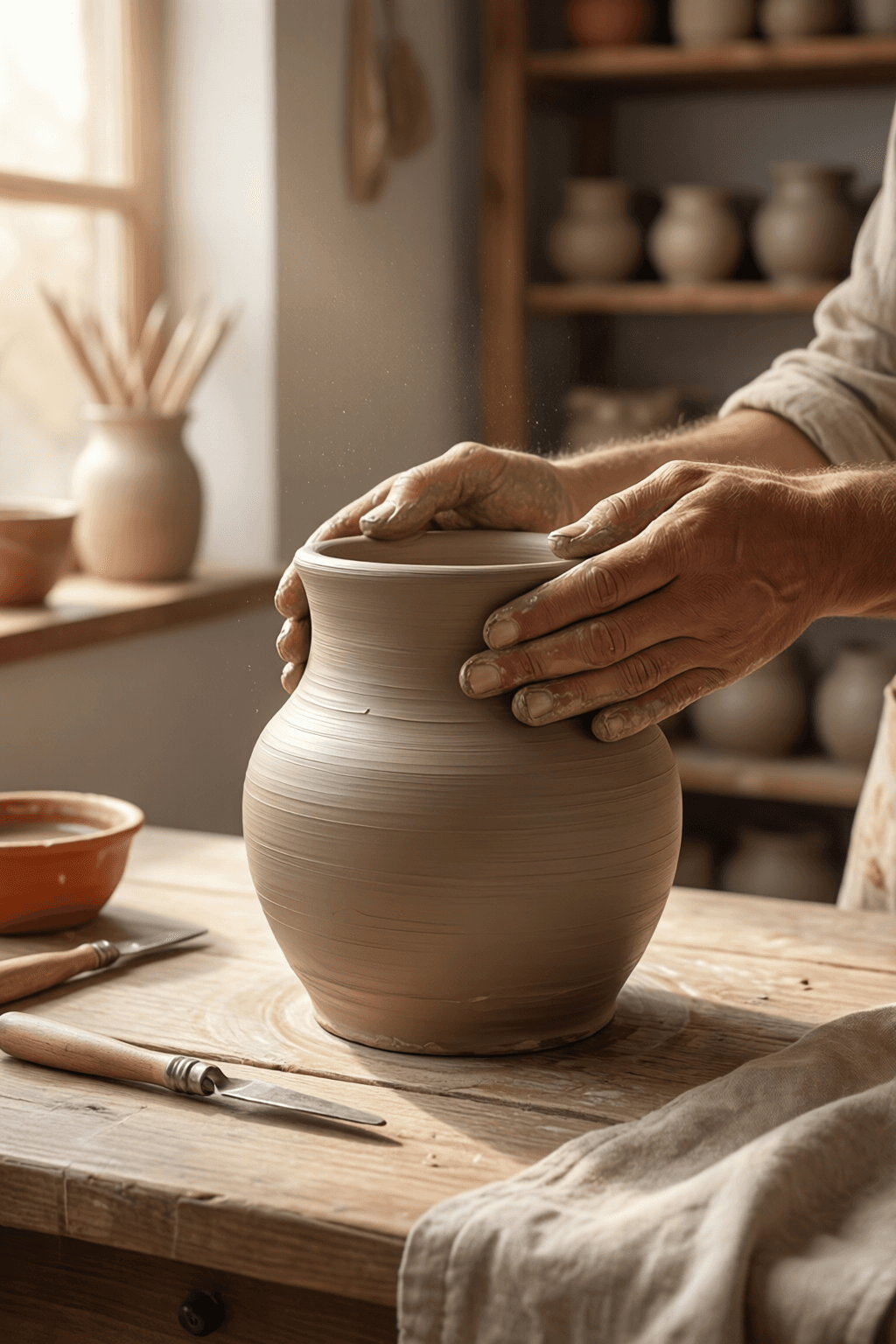
The craft is not in holding tight, but in release: letting the work reveal its own nature. — Lloyd Alexander
—What lingers after this line?
Creation as an Act of Release
At first glance, Lloyd Alexander’s line reframes craftsmanship in a surprising way: the maker’s skill does not lie in controlling every outcome, but in knowing when to loosen the grip. Rather than forcing a work into a predetermined shape, the artist allows its inner logic to emerge. In this sense, creation becomes less an act of domination and more a partnership with the material, the story, or the idea itself. This perspective subtly challenges the common belief that mastery means absolute command. Instead, Alexander suggests that true craft includes restraint, patience, and attentiveness. By releasing excessive control, the creator makes room for discovery, and what appears to be surrender becomes a higher form of discipline.
Listening to the Work Itself
From there, the quote invites us to imagine the work as something with its own character waiting to be uncovered. A novelist may begin with an outline only to find that a minor character grows unexpectedly central; similarly, a sculptor may notice that a flaw in stone suggests a new form. Michelangelo famously wrote in a 1549 letter that the sculptor’s task was to free the figure already living in the marble, an image that closely echoes Alexander’s thought. Consequently, artistic progress often depends on listening rather than insisting. The maker pays attention to what the work is becoming, and each revision becomes less a correction of failure than an answer to what the piece is asking to be.
The Wisdom of Surrender in Art
This idea also belongs to a wider artistic tradition that prizes receptivity over rigid control. In John Keats’s 1817 letters, his notion of “Negative Capability” praises the capacity to remain in uncertainty without rushing toward fixed conclusions. Likewise, Alexander’s statement values the artist who can endure ambiguity long enough for the work’s real nature to appear. As a result, surrender is not passivity but a cultivated openness. It demands confidence to revise, to discard cherished plans, and to admit that the first intention may not be the truest one. What seems like letting go, then, becomes the very means by which deeper coherence is achieved.
A Lesson Beyond the Studio
Yet the wisdom of the quote extends beyond art and writing. In teaching, leadership, or parenting, the same principle often applies: growth rarely comes from tightening control indefinitely. A teacher may design a lesson carefully, but the richest discussion can arise when students take it in an unforeseen direction. In much the same way, gardeners guide conditions for growth without commanding each branch into bloom. Thus, Alexander’s insight speaks to any human practice involving development. We shape beginnings, certainly, but then we must allow life, thought, or talent to unfold according to its own pattern. The craft lies in discerning when guidance helps and when it begins to suffocate.
Discipline Hidden Inside Letting Go
Finally, the quote reminds us that release is not the opposite of effort; it is often effort refined. Beginners tend to cling tightly because uncertainty feels like failure, whereas experienced creators recognize that overworking can flatten vitality. In Zen aesthetics, especially as described by D. T. Suzuki in Essays in Zen Buddhism (1927), the highest skill often appears effortless precisely because ego-driven strain has fallen away. Seen in this light, Alexander is describing a mature kind of mastery. The artist prepares, studies, and labors intensely, but then knows how to step back so the work can breathe. What remains is not negligence, but trust: a disciplined faith that the truest form of making sometimes arrives through release.
One-minute reflection
Why might this line matter today, not tomorrow?
Related Quotes
6 selectedThe creative process is a process of surrender, not control. — Bruce Lee
Bruce Lee
At first glance, Bruce Lee’s statement seems to overturn a common assumption: that great work comes primarily from discipline, mastery, and strict command. Instead, he argues that creativity emerges through surrender—the...
Read full interpretation →To create something new, one must first learn to be comfortable with the mess of the process. — Yayoi Kusama
Yayoi Kusama
At first glance, Yayoi Kusama’s insight reframes creativity as something far less polished than people often imagine. To create something truly new, she suggests, one must stop fearing confusion, failed attempts, and unf...
Read full interpretation →We are not meant to carry the weight of the world on our shoulders. It is okay to set down what you were never designed to hold. — Brené Brown
Brené Brown
At its heart, Brené Brown’s quote challenges the quiet belief that strength means carrying everything alone. By saying we are not meant to bear the world’s weight, she reframes exhaustion not as failure but as evidence o...
Read full interpretation →The creative process is a sanctuary for healing, a space where resilience is transformed into art that speaks to our shared humanity. — Ben Okri
Ben Okri
At its heart, Ben Okri’s statement imagines the creative process as more than production; it becomes a refuge. A sanctuary is a place of shelter, and by choosing that word, Okri suggests that making art offers protection...
Read full interpretation →The day I knew peace was the day I let everything go. — C. JoyBell C.
C. JoyBell C.
At its core, C. JoyBell C.’s line presents peace not as something won through control, but as something discovered through surrender.
Read full interpretation →It is through the process of creating that we discover who we are, not by waiting for a finished masterpiece to tell us. — Twyla Tharp
Twyla Tharp
Twyla Tharp’s insight begins with a reversal of a common assumption: we often imagine that identity arrives fully formed and then expresses itself through art, work, or achievement. Instead, she argues that we come to kn...
Read full interpretation →More From Author
More from Lloyd Alexander →