
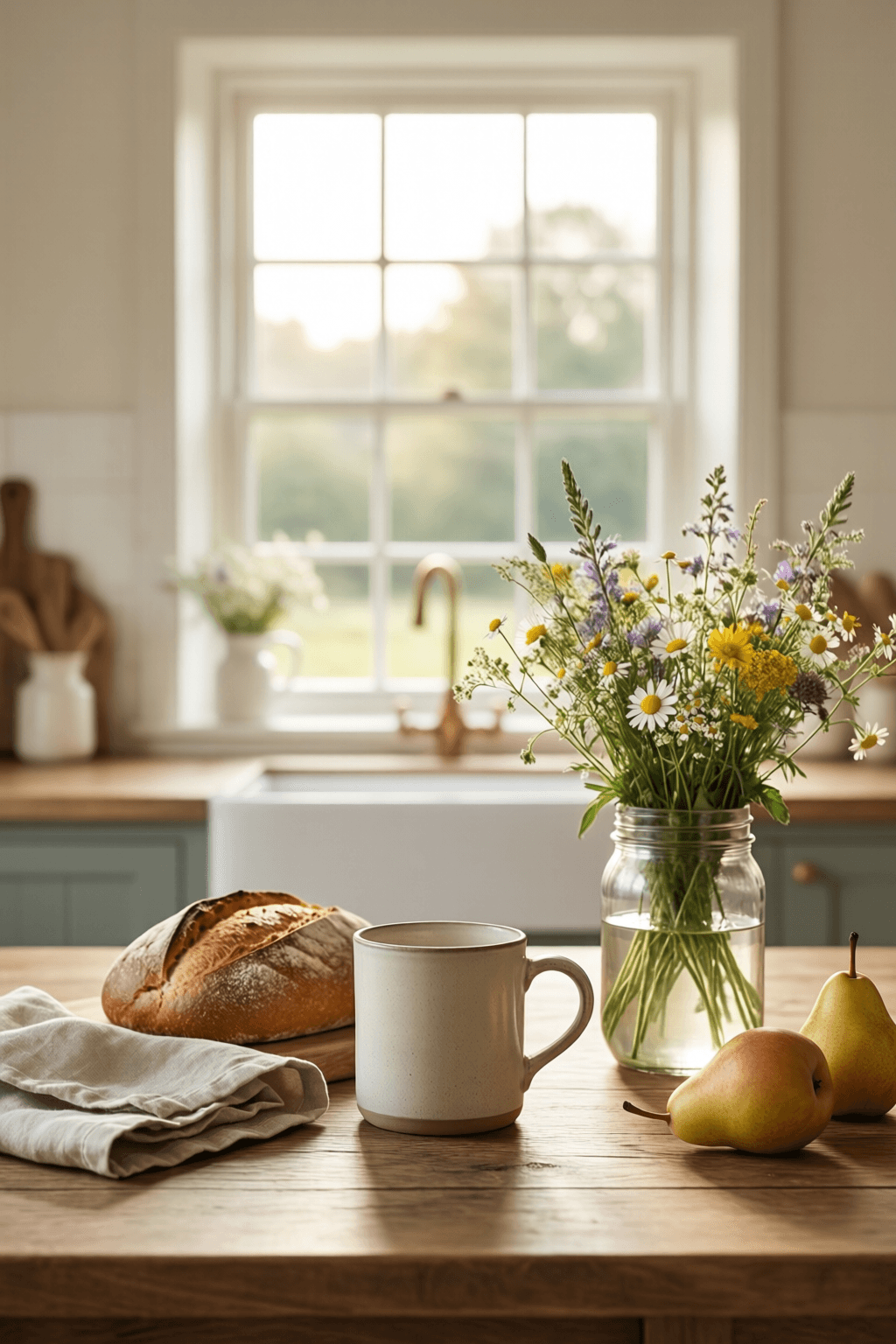
I am beginning to learn that it is the sweet, simple things of life which are the real ones after all. — Laura Ingalls Wilder
—What lingers after this line?
A Quiet Realization
Laura Ingalls Wilder’s words capture a mature discovery rather than a sudden slogan: what is most real in life is often what is most ordinary. By calling simple things “sweet,” she adds emotional warmth to what might otherwise sound like mere modesty. In other words, she suggests that truth is not always found in spectacle, but in the daily experiences that steadily sustain the heart. This insight feels especially powerful because it begins with “I am beginning to learn,” a phrase of humility and growth. Rather than claiming perfect wisdom, Wilder presents gratitude as something slowly earned. As a result, the quote invites readers to notice their own lives more carefully, where meaning may already be present in unnoticed forms.
The Frontier Roots of the Idea
That realization becomes even richer when placed beside Wilder’s own life and writing. In the Little House books, especially Little House in the Big Woods (1932), joy often arises not from abundance but from shared meals, handmade gifts, firelight, music, and family closeness. Consequently, her quote reflects lived experience: on the American frontier, survival depended on recognizing the value of small comforts. Yet this is not simply nostalgia. Wilder’s world included hardship, uncertainty, and labor, which makes her praise of simple pleasures feel tested rather than sentimental. Precisely because life could be difficult, the sweet and simple things became more visibly real—anchors of stability in a demanding world.
Against the Illusion of More
From there, the quote also serves as a gentle correction to the habit of chasing significance through wealth, status, or constant novelty. Modern culture often teaches that fulfillment lies just beyond the next purchase, achievement, or experience. Wilder’s insight quietly resists that promise by implying that reality itself is closer at hand than we think. In this way, her words echo older wisdom traditions. Henry David Thoreau’s Walden (1854) argues that a meaningful life can emerge through simplification rather than accumulation. Likewise, Wilder suggests that when distractions fall away, the essential parts of living—love, work, rest, beauty, companionship—appear more clearly.
Emotional Depth in Ordinary Moments
Moreover, the quote reminds us that simple things are not shallow things. A cup of tea shared at the end of a hard day, the sound of rain at night, a child’s laughter, or bread made at home may seem small in scale, yet they often carry deep emotional weight. Therefore, what is “real” is not necessarily what is grand, but what leaves a lasting imprint on memory and feeling. Psychological research supports this perspective. Studies on gratitude and well-being, such as work popularized by Robert Emmons in The Little Book of Gratitude (2016), show that attention to modest daily blessings can increase life satisfaction. Thus, Wilder’s observation is both poetic and practical: paying attention changes what we experience as valuable.
Learning to See Life Clearly
Just as importantly, Wilder implies that simplicity is not only a feature of life but also a way of seeing. The real things may already surround us, yet they are easy to miss when we are hurried, restless, or preoccupied. Her quote, then, becomes an invitation to perception—to slow down enough for ordinary life to reveal its richness. This idea connects naturally to many spiritual and philosophical traditions that prize attentiveness. Brother Lawrence’s The Practice of the Presence of God (1692) finds holiness in everyday tasks, while contemporary mindfulness teachings similarly stress full awareness of the present moment. In each case, the lesson is similar: reality becomes more vivid when we stop overlooking it.
A Gentle Rule for Living
Finally, Wilder’s sentence endures because it offers not merely comfort but guidance. If the sweet, simple things are the real ones, then a wise life is built by protecting time for them: family dinners, walks, honest conversation, meaningful work, and moments of rest. Such choices may appear modest from the outside, yet they often create the strongest foundation for contentment. For that reason, the quote feels less like retreat from ambition than a reordering of values. It asks us to measure life not only by what dazzles, but by what endures. In the end, Wilder suggests that reality is often tender, quiet, and close enough to touch.
One-minute reflection
Where does this idea show up in your life right now?
Related Quotes
5 selectedSometimes it is the smallest thing that saves us: the weather growing cold, a child's smile, and a cup of excellent coffee. — Jonathan Carroll
Jonathan Carroll
Jonathan Carroll’s line begins with a modest but profound claim: what rescues us is often not a grand revelation, but something small and immediate. By naming cold weather, a child’s smile, and a cup of excellent coffee,...
Read full interpretation →The essence of life is not in the great victories and grand failures, but in the simple joys. — R. N. Tagore
R. N. Tagore
Tagore’s observation invites us to look past the extremes of success and failure that often dominate our narratives about life. While history books and cultural lore may highlight spectacular achievements or catastrophic...
Read full interpretation →Home is the nicest word there is. — Laura Ingalls Wilder
Laura Ingalls Wilder
Laura Ingalls Wilder’s line elevates an ordinary word into something deeply emotional. By calling home “the nicest word there is,” she suggests that its power lies not in sound alone, but in everything it gathers around...
Read full interpretation →Peace is not freedom from the storm, but peace within it. — Laura Ingalls Wilder
Laura Ingalls Wilder
Laura Ingalls Wilder’s line immediately shifts the meaning of peace away from perfect circumstances and toward an inner steadiness. Rather than promising a life without conflict, grief, or uncertainty, it suggests that c...
Read full interpretation →The world is full of small joys; the art is in knowing how to recognize them.
Unknown
This quote emphasizes the importance of finding happiness in the little things that occur daily. It suggests that joy is often found in simple, everyday experiences that we might otherwise overlook.
Read full interpretation →More From Author
More from Laura Ingalls Wilder →Home is the nicest word there is. — Laura Ingalls Wilder
Laura Ingalls Wilder’s line elevates an ordinary word into something deeply emotional. By calling home “the nicest word there is,” she suggests that its power lies not in sound alone, but in everything it gathers around...
Read full interpretation →Peace is not freedom from the storm, but peace within it. — Laura Ingalls Wilder
Laura Ingalls Wilder’s line immediately shifts the meaning of peace away from perfect circumstances and toward an inner steadiness. Rather than promising a life without conflict, grief, or uncertainty, it suggests that c...
Read full interpretation →