
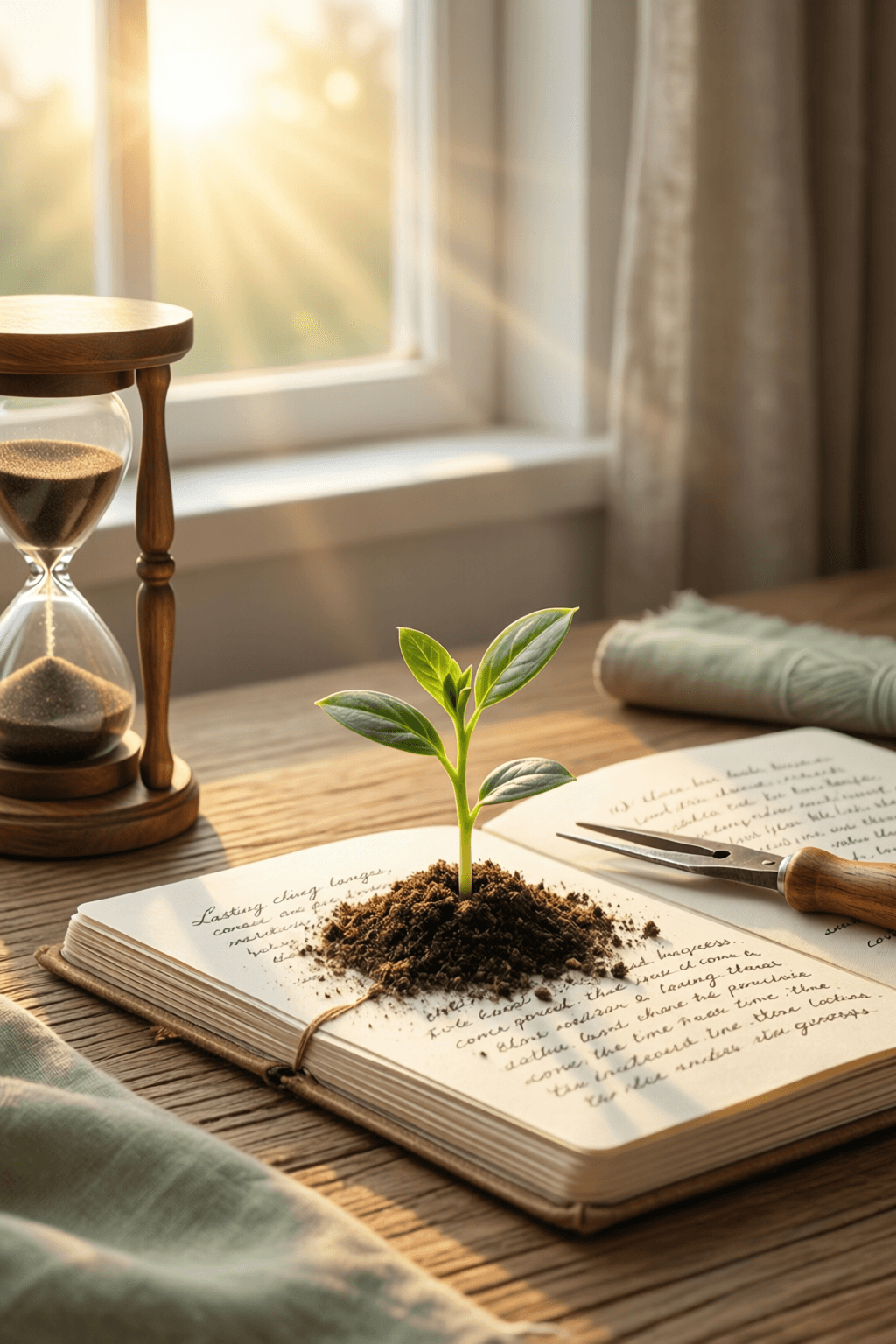
The secret of making lasting change is to acknowledge and accept that real change takes time and patience. — Rick Warren
—What lingers after this line?
The Wisdom in Slow Transformation
Rick Warren’s quote begins with a simple but demanding truth: meaningful change rarely happens overnight. In a culture drawn to quick fixes and dramatic breakthroughs, his words redirect attention to the slower rhythms of human growth. Lasting change, he suggests, is not just about effort but about accepting the pace at which real transformation unfolds. This acceptance matters because impatience often sabotages progress. When people expect immediate results, they may mistake normal setbacks for failure. By contrast, recognizing that change takes time creates the emotional space needed to continue, even when progress feels almost invisible.
Why Acceptance Comes Before Progress
From there, Warren’s emphasis on acknowledgment and acceptance becomes especially important. Before people can sustain change, they must first stop resisting reality—namely, that habits, beliefs, and emotional patterns are deeply rooted. Acceptance is not surrender; rather, it is a clear-eyed recognition of the starting point. In this sense, psychology supports his insight. James Prochaska and Carlo DiClemente’s stages-of-change model (1983) shows that transformation usually unfolds in phases, from contemplation to maintenance, rather than through a single decisive moment. Seen this way, patience is not passive at all; it is an active commitment to remain engaged through each stage.
The Hidden Work of Habit Formation
Moreover, real change often happens in ways that are too gradual to notice day by day. A person learning to exercise regularly, speak more kindly, or recover from harmful habits may feel stagnant for weeks, only to realize later that a new pattern has quietly taken root. What appears slow on the surface is often deep structural work underneath. This idea echoes Aristotle’s *Nicomachean Ethics* (4th century BC), where character is shaped through repeated actions rather than sudden declarations. Likewise, contemporary writers such as James Clear in *Atomic Habits* (2018) argue that small repeated behaviors accumulate into remarkable outcomes. Warren’s quote fits neatly into this tradition: enduring change is built, not burst into existence.
Patience as a Form of Discipline
As the quote unfolds in practice, patience emerges not merely as a feeling but as a discipline. It requires resisting the urge to abandon a goal just because results are delayed. In that way, patience becomes a stabilizing force, helping people remain faithful to the process when enthusiasm fades. Consider the common experience of learning a new skill: at first, effort seems to produce little reward. Yet musicians, athletes, and language learners know that persistence through plateaus is often what separates temporary interest from real mastery. Similarly, personal change demands the discipline to trust the process long before the evidence becomes obvious.
Setbacks Do Not Cancel Growth
Just as importantly, Warren’s perspective helps reframe failure. If change truly takes time, then setbacks are not proof that transformation is impossible; they are part of the terrain. A relapse, a bad week, or a return to old habits may be discouraging, but it does not erase the progress already made. This more compassionate view appears in many recovery and counseling traditions, which often stress that growth is nonlinear. The point is not flawless performance but renewed commitment. Once people accept that imperfection belongs to the journey, they are less likely to give up and more likely to continue changing in durable ways.
A Hopeful Vision of Enduring Change
Ultimately, Warren’s quote offers a hopeful rather than discouraging message. By admitting that real change takes time, he removes the shame of not changing instantly. He invites people to measure progress not by speed but by steadiness, not by dramatic moments but by sustained direction. Therefore, the secret of lasting change may be less glamorous than many expect, yet far more realistic: accept the process, practice patience, and keep moving. In that steady persistence, transformation becomes possible—not as a sudden event, but as a quiet and enduring re-formation of life.
Recommended Reading
As an Amazon Associate, we earn from qualifying purchases.
One-minute reflection
What does this quote ask you to notice today?
Related Quotes
6 selectedA farmer is helpless to grow grain; all he can do is provide the right conditions for the growing of grain. — Richard J. Foster
Richard J. Foster
At first glance, Foster’s farming metaphor shifts attention away from control and toward humility. A farmer cannot command a seed to sprout, just as a person cannot force true growth—whether spiritual, personal, or relat...
Read full interpretation →It is easy finding reasons why other folks should be patient. — George Eliot
George Eliot
George Eliot’s remark turns on a quiet but piercing irony: patience is a virtue we readily prescribe when someone else must practice it. In other words, distance makes endurance look simple.
Read full interpretation →Learning is a lifelong process of unlearning the need for immediate results. Patience is the discipline of trusting the slow, quiet compounding of your efforts. — Confucius
Confucius
At its core, this saying presents learning not as a race toward instant achievement, but as a gradual reshaping of expectation. The phrase “unlearning the need for immediate results” suggests that education is not only a...
Read full interpretation →If you want to move forward, you must first give yourself permission to stand still. Perspective is often the result of stopping long enough to actually see. — Alain de Botton
Alain de Botton
At first glance, Alain de Botton’s line seems contradictory: how can standing still help us move forward? Yet that tension is precisely his point.
Read full interpretation →Everything that is made is made by slow, steady effort. — Mary Oliver
Mary Oliver
Mary Oliver’s line distills a quiet truth: meaningful things rarely appear all at once. Instead, they emerge through repetition, patience, and attention, whether one is writing a poem, raising a family, or restoring a ga...
Read full interpretation →To do anything to a high standard, you must be prepared to be bored for long periods of time. — James Clear
James Clear
James Clear’s observation cuts against the modern preference for constant stimulation. At first glance, high achievement looks exciting from the outside, yet the path toward it is usually repetitive, slow, and uneventful...
Read full interpretation →More From Author
More from Rick Warren →We are products of our past, but we don't have to be prisoners of it. — Rick Warren
Rick Warren’s statement begins with a realistic concession: our past undeniably leaves its mark. Family patterns, childhood wounds, cultural expectations, and old successes all help shape how we think and behave.
Read full interpretation →Transformation is a process, and as life happens, there are tons of ups and downs. It's a journey of discovery. — Rick Warren
This quote highlights that transformation is not a one-time event, but a continuous process that unfolds over time. It requires patience and perseverance to navigate the highs and lows of life.
Read full interpretation →The best use of life is love. The best expression of love is time. The best time to love is now. — Rick Warren
Warren places love as the ultimate purpose of human existence. Similarly, in Leo Tolstoy's novella *The Death of Ivan Ilyich* (1886), the protagonist realizes, at the end of his life, that genuine connections and express...
Read full interpretation →