
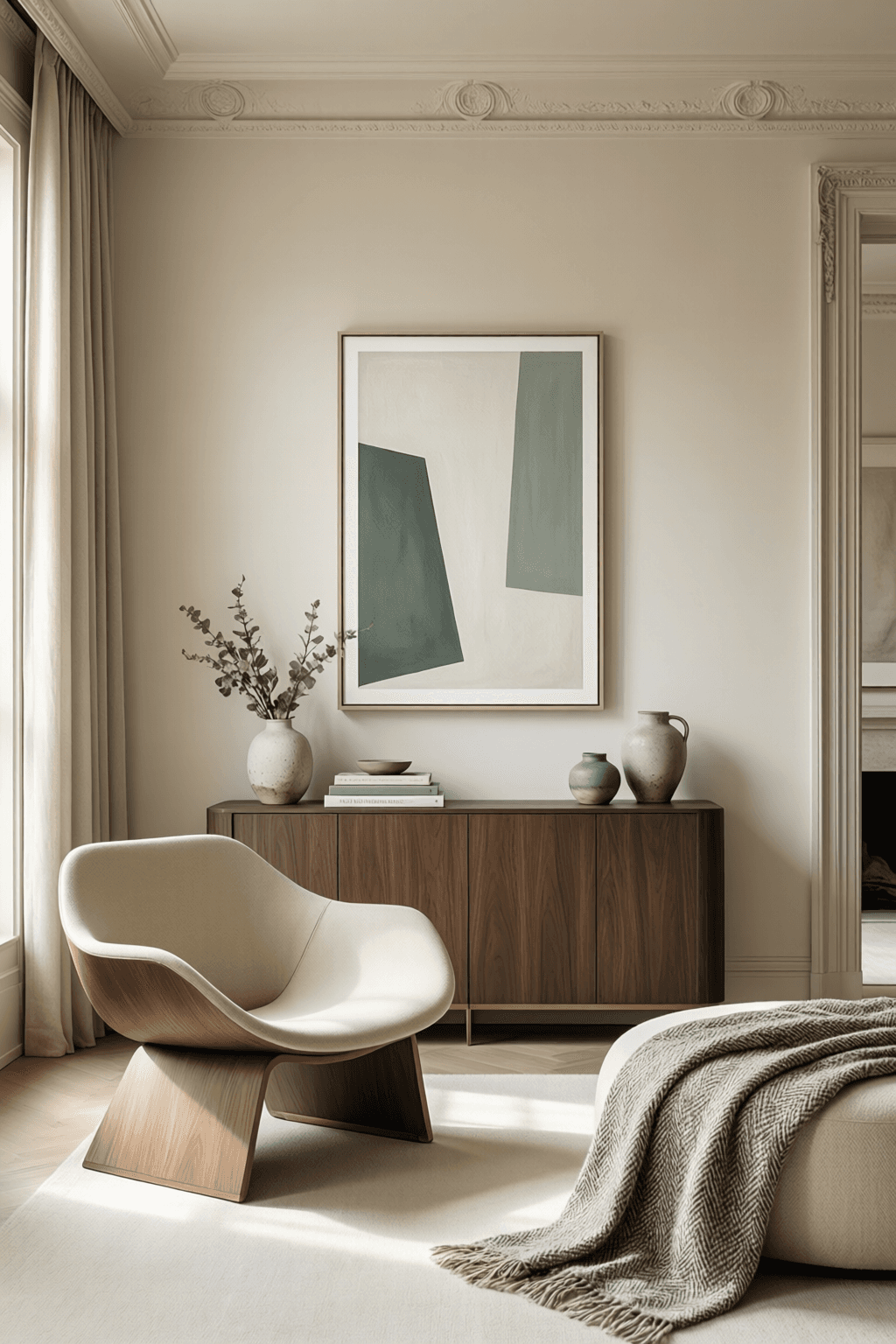
The best rooms have something to say about the people who live in them. — David Hicks
—What lingers after this line?
A Room as Personal Expression
David Hicks’s remark begins with a simple but powerful idea: a room is never merely a container for furniture. Instead, the most memorable interiors communicate something intimate about the people who inhabit them—their tastes, habits, memories, and values. In that sense, decoration becomes a kind of language, and every object contributes to the conversation. From this starting point, the quote shifts our attention away from perfection and toward personality. A technically polished room may impress for a moment, yet it often feels incomplete if it reveals nothing human. By contrast, a space with character invites us to sense a life unfolding within it.
Beyond Fashion and Display
Seen this way, Hicks is also gently criticizing rooms designed only to follow fashion. Trends can create visual coherence, yet when they are copied without reflection, they produce spaces that look current but feel anonymous. The best rooms, by contrast, resist becoming showrooms; they carry traces of decisions made by real people with distinct preferences. This is why deeply appealing interiors often mix polish with idiosyncrasy. A worn reading chair, inherited ceramics, or shelves arranged around genuine interests can say more than expensive uniformity ever could. As Hicks argued throughout his design work in books such as David Hicks on Decoration (1966), style becomes meaningful when it is tied to identity.
Objects as Biographical Clues
Once we accept that rooms speak, the next question is what they are saying. Often, they tell small biographical stories: where someone has traveled, what they love to read, whether they prize order or spontaneity, comfort or ceremony. Even color choices can act as emotional signals, suggesting boldness, restraint, warmth, or serenity. In this sense, an interior functions almost like a portrait. Just as a painted likeness uses posture, clothing, and setting to imply character, a room uses materials, arrangement, and atmosphere. Virginia Woolf’s A Room of One’s Own (1929), though focused on intellectual freedom rather than decoration, similarly recognizes that personal space can express the conditions of a person’s inner life.
Memory, Use, and Authenticity
At the same time, what gives a room its voice is often not luxury but lived experience. Marks of use—a desk piled with work, a kitchen table softened by years of conversation, framed photographs placed without excessive calculation—can make a space feel truthful. These elements suggest that the room has evolved alongside its occupants rather than being frozen for display. Consequently, authenticity matters more than rigid design formulas. A room that reflects actual routines and affections tends to feel richer than one arranged solely for approval. Hicks’s insight reminds us that beauty deepens when it is connected to memory, because rooms become more compelling when they bear witness to life.
Designing for Character
Ultimately, the quote offers a principle for both decorating and living: build spaces that reflect who you are, not merely what is admired. This does not mean abandoning discipline or harmony; rather, it means letting design serve character. The strongest interiors balance aesthetic intelligence with personal truth, so that visitors encounter not just a composition but a presence. Therefore, the best room is one that feels unmistakably inhabited in spirit, even when empty. Its colors, textures, books, and objects combine into a quiet self-portrait. Hicks’s line endures because it captures a lasting truth: our surroundings are at their finest when they speak honestly about us.
One-minute reflection
What feeling does this quote bring up for you?
Related Quotes
6 selectedI look at the artistic process as like experiencing the world, channeling it through your personality and sending it back out there. — David Sanborn
David Sanborn
At its core, David Sanborn’s quote presents art not as isolated invention but as an ongoing exchange between the self and the world. The artist first absorbs life—its sounds, tensions, beauty, and disorder—and then trans...
Read full interpretation →Your home should reflect your values and what fills your heart and soul—not just what looks nice on a screen. — Beth Maricic
Beth Maricic
Beth Maricic’s quote begins by challenging a familiar modern temptation: decorating for appearance alone. In an age shaped by curated feeds and polished interiors, it is easy to mistake visual approval for genuine comfor...
Read full interpretation →The greatest luxury is being able to create a space that feels like a soft, permanent exhale. — Kelly Wearstler
Kelly Wearstler
At first glance, Kelly Wearstler’s quote reframes luxury away from price tags and toward feeling. Rather than defining it by rare materials or grand scale, she locates true luxury in a room’s ability to let the body and...
Read full interpretation →Your life is an expression of your mind; strive to make it beautiful. — Gabrielle Roth
Gabrielle Roth
This quote suggests that our thoughts, beliefs, and mindset shape the way we experience life. A positive and creative mind can lead to a more fulfilling and beautiful life.
Read full interpretation →The quietest part of the room is often where the most important work happens. — Susan Cain
Susan Cain
Susan Cain’s observation reframes silence as a place of consequence rather than absence. At first glance, the quietest corner of a room may seem inactive, overshadowed by louder voices and visible energy.
Read full interpretation →Let your inner voice design a room where your ideas can breathe. — Virginia Woolf
Virginia Woolf
Begin by treating your inner voice as the room’s architect. Before buying a chair or choosing paint, ask what kinds of thoughts you want to host: expansive, analytical, playful, or focused.
Read full interpretation →More From Author
More from David Hicks →