
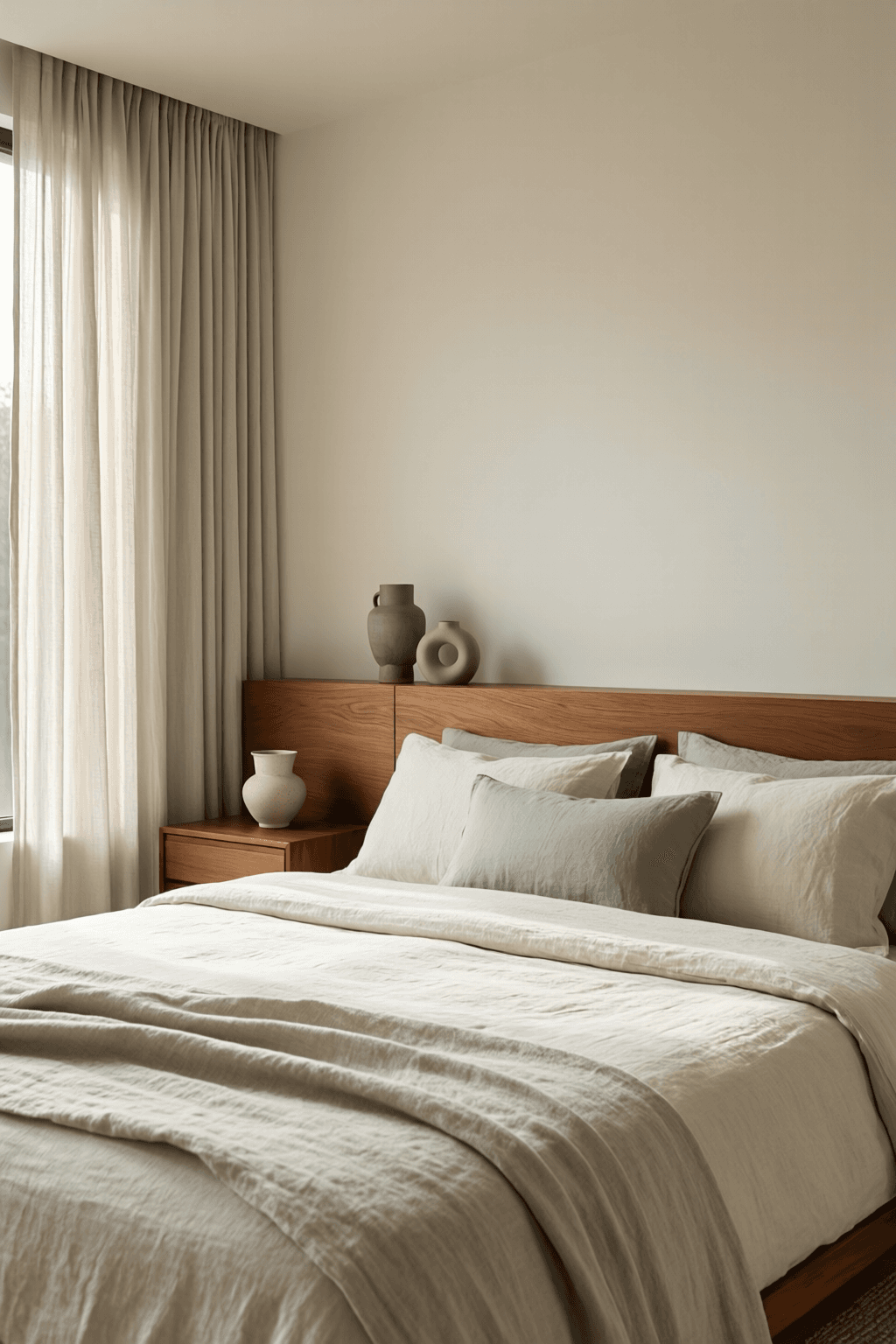
The greatest luxury is being able to create a space that feels like a soft, permanent exhale. — Kelly Wearstler
—What lingers after this line?
Luxury as Emotional Relief
At first glance, Kelly Wearstler’s quote reframes luxury away from price tags and toward feeling. Rather than defining it by rare materials or grand scale, she locates true luxury in a room’s ability to let the body and mind unclench, as if releasing a long-held breath. In that sense, the most valuable space is not the most extravagant one, but the one that makes us feel safe enough to soften. This perspective aligns with a broader shift in design culture toward well-being. As Wearstler’s interiors often suggest in interviews and published work, beauty matters most when it changes how we live inside a room. The idea of a “soft, permanent exhale” captures that transformation perfectly: luxury becomes a sustained experience of ease.
The Body’s Response to Design
From there, the quote invites us to think about how environments affect the nervous system. A space with balanced light, gentle textures, and visual harmony can reduce overstimulation, encouraging a calmer physical state. In environmental psychology, researchers such as Stephen and Rachel Kaplan have shown that restorative settings help replenish attention and reduce mental fatigue, suggesting that design can genuinely alter our sense of strain or relief. Consequently, Wearstler’s metaphor is not merely poetic. Anyone who has entered a quiet room after a chaotic day knows the sensation immediately: shoulders drop, breathing slows, and thoughts become less jagged. The room feels luxurious because it gives something increasingly rare—rest.
Softness as a Design Language
Building on that idea, softness here is not limited to plush fabrics or pale colors, though those may contribute. It also refers to proportion, flow, acoustics, and the absence of visual aggression. A curved chair, muted natural light, or a thoughtfully edited shelf can all participate in this feeling, creating an atmosphere that receives rather than confronts the person within it. Indeed, many enduring interiors work through restraint instead of spectacle. Japanese design traditions, for example, often prize ma, or meaningful emptiness, allowing space itself to breathe. In a similar way, Wearstler’s quote suggests that softness is an active principle: the deliberate shaping of an environment so it holds us gently over time.
Permanence Beyond Temporary Comfort
Yet the word “permanent” adds an important dimension. A scented candle or a tidy corner may provide momentary calm, but Wearstler points to something more lasting—a home or room designed to consistently support exhale rather than demand endurance. This transforms comfort from an occasional indulgence into a daily condition. Seen this way, luxury becomes deeply personal and sustainable. William Morris famously wrote in 1880, “Have nothing in your houses that you do not know to be useful, or believe to be beautiful,” and that principle still resonates. Permanence arises when a space is shaped by repeated care, honest function, and emotional resonance, so that ease is woven into everyday life rather than staged for special moments.
A Philosophy of Living, Not Decorating
Ultimately, the quote expands into a philosophy of how to inhabit the world. To create a space that feels like a soft, permanent exhale is to choose peace over display, intimacy over performance, and nourishment over excess. The room becomes less a showroom and more a form of quiet companionship, supporting the person who returns to it again and again. Therefore, Wearstler’s statement endures because it speaks to a universal longing. In an age defined by speed, noise, and relentless input, the rarest luxury may indeed be a place that asks nothing of us except to arrive. Such a space does not simply look beautiful; it teaches us how to breathe.
Recommended Reading
As an Amazon Associate, we earn from qualifying purchases.
One-minute reflection
Why might this line matter today, not tomorrow?
Related Quotes
5 selectedThe best rooms have something to say about the people who live in them. — David Hicks
David Hicks
David Hicks’s remark begins with a simple but powerful idea: a room is never merely a container for furniture. Instead, the most memorable interiors communicate something intimate about the people who inhabit them—their...
Read full interpretation →A home should be a place where the soul feels at ease, not a showroom for someone else's expectations. — Kelly Wearstler
Kelly Wearstler
Kelly Wearstler’s quote begins by shifting the meaning of home away from performance and toward feeling. A home, in this view, is not primarily a stage for impressing visitors but a sanctuary where the inner self can fin...
Read full interpretation →True luxury is not about more; it is about the space to breathe and the peace to simply be. — Marie Kondo
Marie Kondo
Marie Kondo’s quote quietly overturns a common assumption: luxury is not endless accumulation, but relief from excess. Rather than linking wealth to possession, she associates it with spaciousness, calm, and the rare abi...
Read full interpretation →The ultimate luxury is being able to relax and enjoy your home. — Billy Baldwin
Billy Baldwin
Billy Baldwin’s remark shifts the idea of luxury away from expensive objects and toward a deeply personal experience: ease. Rather than defining wealth by grand décor or rare materials, he suggests that true refinement a...
Read full interpretation →The quietest part of the room is often where the most important work happens. — Susan Cain
Susan Cain
Susan Cain’s observation reframes silence as a place of consequence rather than absence. At first glance, the quietest corner of a room may seem inactive, overshadowed by louder voices and visible energy.
Read full interpretation →More From Author
More from Kelly Wearstler →