
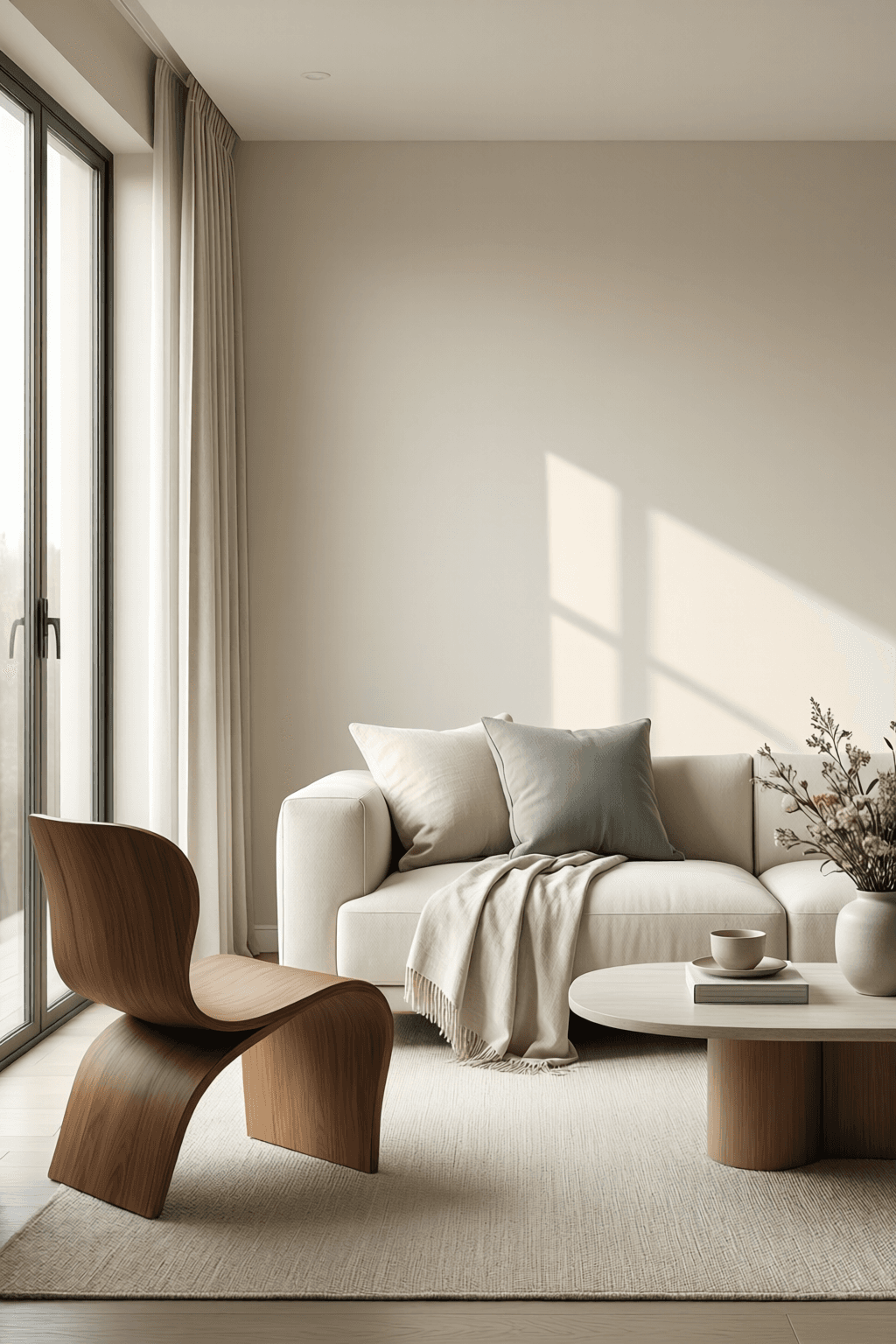
The ultimate luxury is being able to relax and enjoy your home. — Billy Baldwin
—What lingers after this line?
Luxury Beyond Possessions
Billy Baldwin’s remark shifts the idea of luxury away from expensive objects and toward a deeply personal experience: ease. Rather than defining wealth by grand décor or rare materials, he suggests that true refinement appears when a home allows its inhabitants to exhale. In that sense, comfort becomes more meaningful than display. From this starting point, the quote quietly challenges modern habits of performance. A beautiful house that cannot be lived in, touched, or enjoyed may impress visitors, yet it fails its most important purpose. Baldwin, the influential American interior decorator whose work shaped mid-20th-century taste, repeatedly favored rooms that felt elegant but usable, reminding us that luxury is ultimately measured by how life feels inside a space.
Home as Emotional Refuge
Building on that idea, the home emerges as more than a structure; it becomes a refuge from the noise of the world. To relax at home is to experience psychological safety, a sense that one can set aside public roles and private strain. In this way, Baldwin’s quote connects luxury with restoration rather than status. This perspective has deep cultural roots. Roman writers praised the private household as a place of ordered peace, while later thinkers such as Gaston Bachelard in The Poetics of Space (1958) described the home as a shelter for memory, imagination, and intimacy. Baldwin’s insight belongs to this tradition: the richest home is one that softens the pressures of life and welcomes the self back in.
Design That Supports Living
If relaxation is the goal, then design must serve human behavior rather than dominate it. Comfortable seating, warm lighting, practical layouts, and materials that invite use all contribute to the kind of home Baldwin celebrates. The point is not carelessness but harmony—rooms arranged so naturally that they support conversation, rest, reading, and everyday rituals. Consequently, good design often becomes almost invisible. Baldwin himself was known for interiors that looked polished without seeming stiff, proving that sophistication need not feel ceremonial. A well-placed chair near a window or a lamp that makes evening feel gentle may do more for daily happiness than any ostentatious centerpiece. The highest luxury, then, is thoughtful ease.
The Quiet Wealth of Time and Ease
Seen from another angle, Baldwin’s statement is also about time. To enjoy one’s home requires moments of unhurried presence, and in a culture that often glorifies busyness, such time can feel rare. Luxury here is not merely spatial but temporal: the freedom to linger over coffee, read in silence, or sit with family without urgency pressing in. This is why the quote feels so enduring. It recognizes that abundance means little if one is too exhausted or distracted to inhabit it. Contemporary wellness research often emphasizes the restorative effect of restful environments, but Baldwin expressed the idea more elegantly: a home becomes luxurious when it gives back energy instead of draining it.
A Personal Standard of Beauty
Finally, the quote suggests that the finest homes are not those that satisfy external trends, but those that genuinely suit the people who live in them. Relaxation is personal; what calms one household may not calm another. Therefore, true domestic luxury depends on authenticity—spaces shaped by habit, affection, and individual taste rather than by spectacle. In the end, Baldwin offers a humane definition of elegance. The home is not a museum for perfection but a setting for lived pleasure. When a room invites you to settle in, forget self-consciousness, and feel wholly at ease, it achieves something rarer than opulence. It becomes, in the fullest sense, a luxury.
Recommended Reading
As an Amazon Associate, we earn from qualifying purchases.
One-minute reflection
What's one small action this suggests?
Related Quotes
6 selectedThere is nothing like staying at home for real comfort. — Jane Austen
Jane Austen
At first glance, Jane Austen’s line seems simple, yet its force lies in its calm certainty: no pleasure, status, or novelty quite matches the comfort of home. Rather than praising luxury, she points to a deeper ease—the...
Read full interpretation →Your home should be the place where the day softens around the edges. — Unknown (removed per constraints) -> Let's use: "Home is not a place; it is a feeling of being able to handle whatever the world throws at you." — Cheryl Richardson
Cheryl Richardson
At first glance, Cheryl Richardson’s quote shifts the meaning of home away from geography and architecture. Home is no longer merely a house, apartment, or hometown; instead, it becomes an emotional condition—a steady in...
Read full interpretation →It is nice when I have days off to go home and relax and literally take the weight off my shoulders and enjoy the simple things. — Michael B. Jordan
Michael B. Jordan
At its heart, Michael B. Jordan’s reflection presents rest not as laziness, but as a vital form of release.
Read full interpretation →It is a good idea always to do something relaxing prior to making an important decision in your life. — Paulo Coelho
Paulo Coelho
Paulo Coelho’s remark begins with a simple but powerful premise: important decisions are rarely improved by agitation. When the mind is tense, it tends to confuse urgency with clarity, pushing us toward choices made out...
Read full interpretation →There is a special kind of peace that comes from being home alone, where you can truly be yourself. — John Ed Pearce
John Ed Pearce
At its heart, John Ed Pearce’s reflection captures a calm that is difficult to reproduce anywhere else: the peace of having a space entirely to oneself. Home alone, a person is briefly released from social performance, e...
Read full interpretation →It is not my wish to stay home so much that I become isolated, but to use the comforting influence of my home to restore and gather myself. — Maureen Brady
Maureen Brady
Maureen Brady draws an important distinction at the very beginning: staying home is not necessarily an act of avoidance. Instead, she frames home as a place of renewal, where a person can recover energy and emotional cla...
Read full interpretation →More From Author
More from Billy Baldwin →