
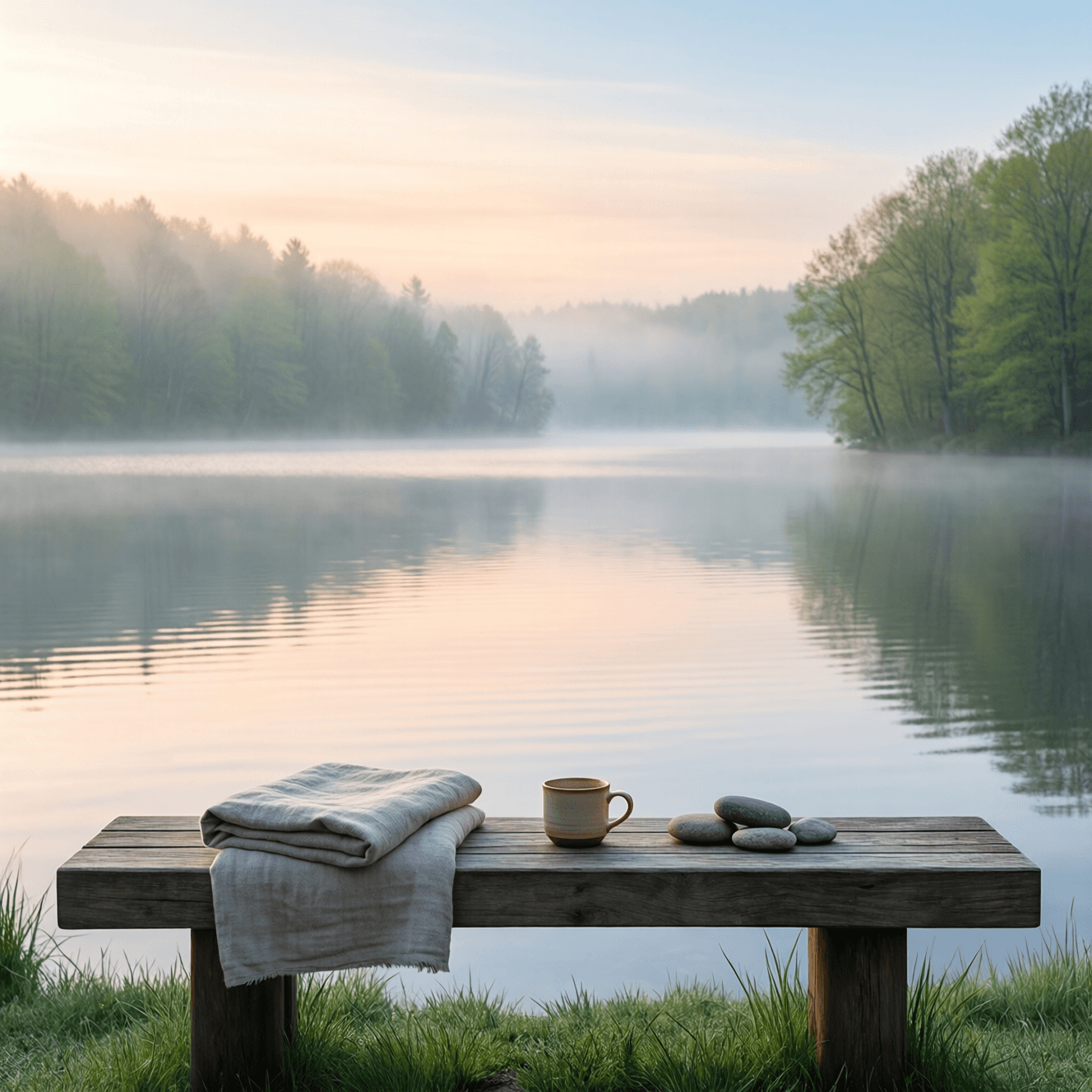
It is very important that we re-learn the art of resting and relaxing. It allows us to clear our minds. — Thich Nhat Hanh
—What lingers after this line?
Rest as a Forgotten Skill
Thich Nhat Hanh frames resting and relaxing not as luxuries but as arts—skills that can be lost and recovered. In a culture that rewards constant activity, many people come to treat stillness as unproductive or even guilt-inducing, which quietly turns rest into something we postpone rather than practice. From this perspective, his message is an invitation to retrain our attention: instead of collapsing into distraction when exhausted, we can learn deliberate rest. That shift matters because it suggests relaxation is not merely the absence of work; it is a cultivated capacity that supports the way we think, feel, and meet daily life.
Clearing the Mind Through Pause
Once rest is understood as a practice, the idea of “clearing our minds” becomes more concrete. When we pause, we interrupt the momentum of worries, plans, and unresolved conversations that keep looping in the background. Over time, even brief moments of genuine relaxation can create mental space where thoughts are seen more clearly rather than automatically obeyed. In Thich Nhat Hanh’s broader teaching, this clearing is less about forcing silence and more about letting the mind settle naturally. As a glass of muddy water becomes clear when left undisturbed, the mind often becomes more workable when we stop agitating it with constant input and urgency.
Mindfulness as Rest, Not Effort
Building on that, his tradition emphasizes a kind of attention that is gentle rather than strenuous. Mindfulness is often misunderstood as intense concentration, but Thich Nhat Hanh frequently described it as coming home to the present moment—feeling the breath, noticing the body, and allowing experience to be simple. This orientation turns mindfulness into a form of rest. A small anecdote common in his communities is practicing “washing dishes to wash dishes,” where the point is not speed but calm presence. The task remains the same, yet the mind is less scattered. In this way, relaxing becomes compatible with ordinary life instead of requiring a special retreat or perfect conditions.
Why Overwork Clouds Judgment
As the mind grows fatigued, clarity tends to shrink. Stress and continuous stimulation narrow attention, making it easier to overreact, miss details, or mistake urgency for importance. Thich Nhat Hanh’s emphasis on rest therefore has an ethical dimension: a clearer mind is less likely to speak harshly, act impulsively, or project frustration onto others. Modern psychology also supports this general arc—sleep deprivation and chronic stress are linked to reduced cognitive flexibility and poorer emotional regulation. Although his quote is spiritual in tone, it points to an everyday reality: when we never truly rest, we pay for it with confusion, irritability, and decisions that don’t reflect our deeper values.
Relaxation as Compassion for Self and Others
From clarity, the next step is compassion. When we are internally rushed, we often treat ourselves as machines and others as obstacles. Relearning relaxation softens that posture, making room for patience and a more accurate reading of what is happening in a moment. In Thich Nhat Hanh’s engaged Buddhism, inner peace is not separate from how we relate; it shapes the quality of our listening, speech, and care. This is why rest is not selfish in his view. By tending to the mind’s need for quiet, we reduce the spillover of tension into relationships. The simple act of breathing and pausing can become a small, repeatable way of protecting others from our unprocessed stress.
Practical Ways to Relearn the Art
Finally, treating rest as an art suggests experimentation and repetition. One approach is to create small “islands” of rest: a few mindful breaths before opening a message, a short walk without headphones, or a deliberate pause before responding in conflict. These brief practices train the nervous system to recognize safety and stillness, rather than only relaxing when forced by exhaustion. Over time, such habits make mental clearing more accessible. The goal is not to eliminate thought but to relate to it with more space and steadiness. In that sense, Thich Nhat Hanh’s quote offers a quiet form of discipline: relearn rest, and the mind becomes a clearer instrument for living well.
One-minute reflection
What does this quote ask you to notice today?
Related Quotes
6 selectedEverything you do can be done better from a place of relaxation. — Stephen C. Paul
Stephen C. Paul
At its heart, Stephen C. Paul’s quote argues that relaxation is not laziness but a higher state of effectiveness.
Read full interpretation →To keep the body in good health is a duty, otherwise we shall not be able to keep our mind strong and clear. — Buddha
Buddha
At its core, this saying presents physical care not as vanity or indulgence, but as a duty. The body is treated as the necessary ground on which mental clarity stands, so neglecting it becomes more than a personal lapse—...
Read full interpretation →It is nice when I have days off to go home and relax and literally take the weight off my shoulders and enjoy the simple things. — Michael B. Jordan
Michael B. Jordan
At its heart, Michael B. Jordan’s reflection presents rest not as laziness, but as a vital form of release.
Read full interpretation →It is a good idea always to do something relaxing prior to making an important decision in your life. — Paulo Coelho
Paulo Coelho
Paulo Coelho’s remark begins with a simple but powerful premise: important decisions are rarely improved by agitation. When the mind is tense, it tends to confuse urgency with clarity, pushing us toward choices made out...
Read full interpretation →The ultimate luxury is being able to relax and enjoy your home. — Billy Baldwin
Billy Baldwin
Billy Baldwin’s remark shifts the idea of luxury away from expensive objects and toward a deeply personal experience: ease. Rather than defining wealth by grand décor or rare materials, he suggests that true refinement a...
Read full interpretation →The capacity to remain clear-eyed in the midst of chaos is the greatest skill you can cultivate for the modern world. — Matt Norman
Matt Norman
Matt Norman’s statement frames clarity not as a passive gift but as a discipline deliberately cultivated under pressure. In a world saturated with crises, notifications, and competing demands, the ability to see things a...
Read full interpretation →More From Author
More from Thich Nhat Hanh →If we are facing in the right direction, all we have to do is keep walking. — Thích Nhất Hạnh
Thích Nhất Hạnh’s words begin with a simple but profound premise: progress depends first on direction, not speed. If a person is turned toward compassion, clarity, healing, or truth, then each modest step becomes meaning...
Read full interpretation →You must love in such a way that the person you love feels free. — Thich Nhat Hanh
At its core, Thich Nhat Hanh’s statement redefines love as an act of care that does not confine. To love someone so that they feel free means offering affection without turning it into control, guilt, or dependence.
Read full interpretation →We are not islands; we are threads in a tapestry. To pull away from the weave is to lose the very texture that makes life hold together. — Thich Nhat Hanh
At its core, Thich Nhat Hanh’s image of threads in a tapestry rejects the fantasy of total self-sufficiency. A single thread may exist on its own, yet it gains meaning, strength, and beauty only through its relation to o...
Read full interpretation →When you learn how to suffer, you suffer far less. Resilience is not about avoiding the fire; it is about becoming fireproof. — Thich Nhat Hanh
At first glance, Thich Nhat Hanh’s quote appears paradoxical: how could learning to suffer make suffering lighter? Yet his point is that pain intensifies when we resist it, fear it, or treat it as a personal failure.
Read full interpretation →