
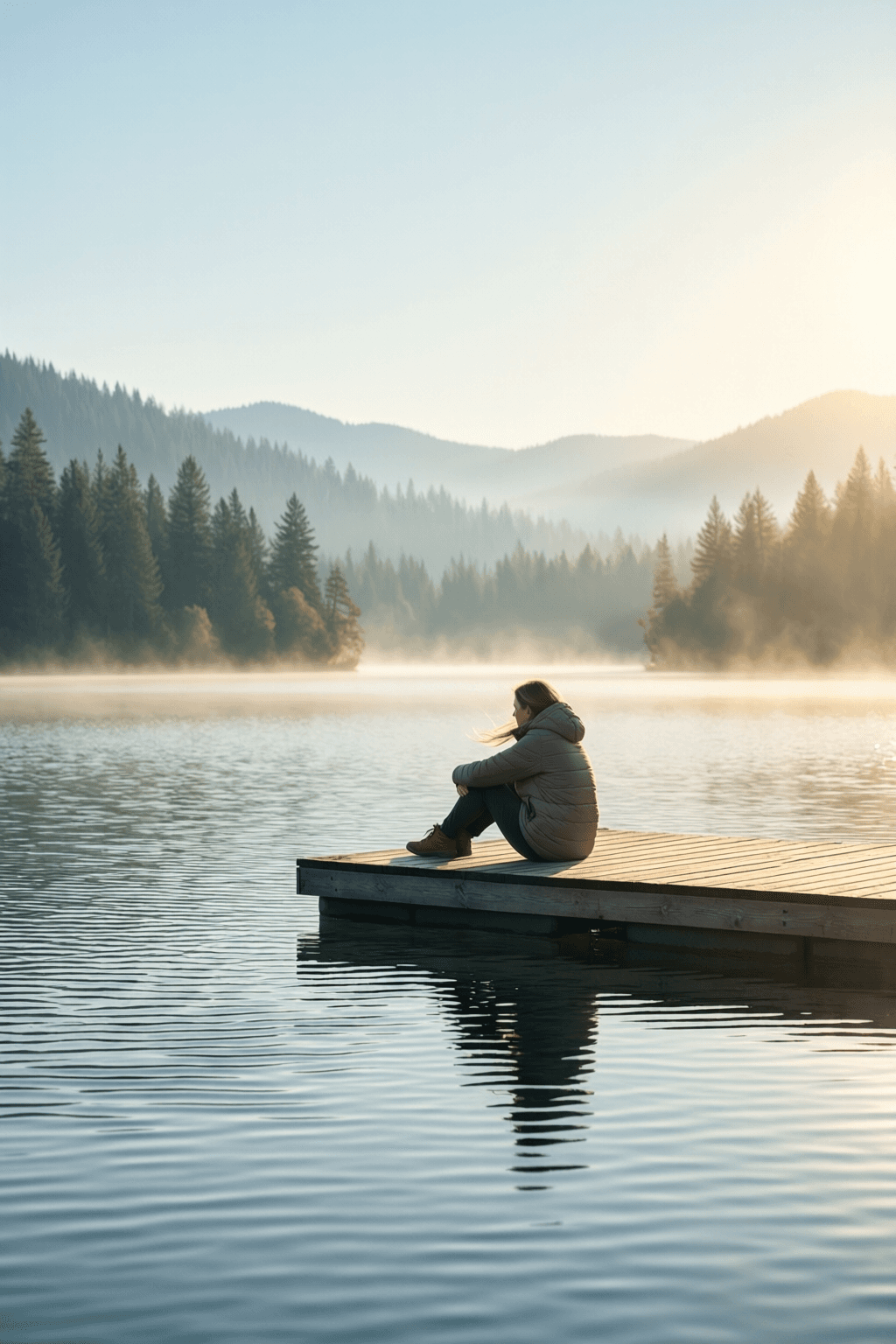
It is a good idea always to do something relaxing prior to making an important decision in your life. — Paulo Coelho
—What lingers after this line?
Why Calmness Matters First
Paulo Coelho’s remark begins with a simple but powerful premise: important decisions are rarely improved by agitation. When the mind is tense, it tends to confuse urgency with clarity, pushing us toward choices made out of fear, pride, or exhaustion rather than insight. By suggesting relaxation first, Coelho reframes decision-making as an act that benefits from inner stillness. From this starting point, the quote implies that wisdom is not merely a matter of thinking harder. Instead, it often depends on creating the right mental condition for thought itself. A calmer state allows emotion to settle, making it easier to distinguish what truly matters from what merely feels pressing in the moment.
The Mind Under Pressure
Seen more closely, stress narrows attention and encourages reactive judgment. Modern psychology has repeatedly shown that heightened anxiety can impair memory, patience, and risk assessment; Daniel Kahneman’s Thinking, Fast and Slow (2011) describes how people under pressure often fall back on quick, intuitive shortcuts rather than careful reflection. Coelho’s advice therefore carries practical psychological weight. As a result, relaxing before a major choice is not avoidance but preparation. A walk, quiet breathing, prayer, or even a few moments away from noise can interrupt the momentum of panic. In that pause, the decision does not disappear; rather, it becomes more proportionate, and the person facing it becomes more capable of meeting it well.
Ancient Wisdom in the Pause
This insight also has deep philosophical roots. Stoic writers such as Seneca, in Letters to Lucilius (c. AD 65), urged people not to let turbulent feeling govern action, arguing that a disturbed mind cannot judge rightly. Likewise, Aristotle’s Nicomachean Ethics (c. 340 BC) links good judgment to cultivated balance rather than emotional excess. In that tradition, relaxation is not laziness but a return to self-command. Coelho’s modern phrasing echoes an older belief: before choosing a path, one should become inwardly steady enough to see it. The pause before action is therefore not empty time; it is the space in which discernment takes shape.
Relaxation as a Form of Discernment
Moreover, doing something relaxing can reveal what frantic analysis hides. A person struggling over whether to change careers, end a relationship, or move to a new city may feel trapped in circular thought. Yet after an evening walk or a quiet hour away from screens, the emotional fog often lifts just enough for the real issue to emerge: not “What if everything goes wrong?” but “What kind of life am I trying to build?” In this way, relaxation serves discernment by restoring perspective. It does not magically answer every question, but it helps reorder them. Once the mind is less crowded, values, priorities, and instincts can speak more clearly, allowing the decision to arise from conviction rather than mere mental noise.
A Practical Habit for Big Decisions
Following that logic, Coelho’s quote can be read as practical guidance for everyday life. Before signing a contract, accepting an offer, or confronting a personal crossroads, one might deliberately step back: sleep on it, take a bath, listen to music, meditate, or sit quietly in nature. Such rituals create a buffer between stimulus and response, which is often where better judgment begins. Importantly, the relaxation need not be elaborate. Its purpose is simply to loosen the grip of immediacy. Once that pressure softens, the individual is more likely to choose with intention. The decision may still be difficult, but it will no longer be driven entirely by the body’s alarm signals.
Choosing from Peace, Not Panic
Ultimately, Coelho suggests that the quality of a decision depends partly on the state of the person making it. A peaceful mind does not guarantee a perfect outcome, yet it increases the chance that the choice will reflect one’s deepest understanding rather than a temporary storm of feeling. That distinction matters, especially in life-changing moments whose consequences unfold over years. Thus the quote leaves us with a humane lesson: before deciding the future, attend to the present condition of your mind. Relaxation is not a detour from seriousness but an ally of it. By choosing from peace instead of panic, we give ourselves the best chance of acting with clarity, courage, and self-knowledge.
One-minute reflection
What does this quote ask you to notice today?
Related Quotes
6 selectedEverything you do can be done better from a place of relaxation. — Stephen C. Paul
Stephen C. Paul
At its heart, Stephen C. Paul’s quote argues that relaxation is not laziness but a higher state of effectiveness.
Read full interpretation →Whatever you do in life, choose a theme that grounds your decisions when things feel noisy. — Erica Diamond
Erica Diamond
At its core, Erica Diamond’s quote argues that life becomes clearer when guided by a central theme rather than by scattered impulses. That theme might be integrity, service, creativity, or peace, but its real function is...
Read full interpretation →It is nice when I have days off to go home and relax and literally take the weight off my shoulders and enjoy the simple things. — Michael B. Jordan
Michael B. Jordan
At its heart, Michael B. Jordan’s reflection presents rest not as laziness, but as a vital form of release.
Read full interpretation →The ultimate luxury is being able to relax and enjoy your home. — Billy Baldwin
Billy Baldwin
Billy Baldwin’s remark shifts the idea of luxury away from expensive objects and toward a deeply personal experience: ease. Rather than defining wealth by grand décor or rare materials, he suggests that true refinement a...
Read full interpretation →The hard part isn’t making the decision. It’s living with it. — Michael J. Fox
Michael J. Fox
Michael J. Fox’s line shifts attention away from the dramatic moment of choice and toward the quieter, longer struggle that follows.
Read full interpretation →Clarity about the destination makes everything else negotiable. — Doran Gao
Doran Gao
Doran Gao’s line begins with a simple but powerful claim: once the destination is clear, many other decisions lose their rigidity. In other words, certainty about where one wants to go creates freedom in how to get there...
Read full interpretation →More From Author
More from Paulo Coelho →One doesn't get to be a master of one's own life by rushing. You have to learn the patience of a gardener who knows the harvest cannot be hurried. — Paulo Coelho
At its core, Paulo Coelho’s reflection challenges a modern obsession with speed. He argues that mastery over one’s life does not come from frantic action or constant acceleration, but from learning when to wait, observe,...
Read full interpretation →Your 'yes' has no value until you learn to say 'no'. — Paulo Coelho
Paulo Coelho’s line hinges on a simple contrast: a “yes” only carries weight when an alternative is genuinely available. If you can’t—or won’t—say “no,” agreement becomes automatic rather than chosen, and it starts to re...
Read full interpretation →Dare to begin where fear says to stop; the first step redraws the map — Paulo Coelho
Paulo Coelho’s line treats fear less as a warning and more as a border we mistakenly accept as permanent. When fear says “stop,” it often isn’t pointing to actual danger; it’s signaling uncertainty, inexperience, or the...
Read full interpretation →Maybe the journey isn't so much about becoming anything. Maybe it's about un-becoming everything that isn't really you. — Paulo Coelho
Paulo Coelho’s line reframes personal growth as an act of subtraction. Instead of imagining the self as a project that must be upgraded with new traits, titles, or achievements, he suggests the deeper task is removing wh...
Read full interpretation →