
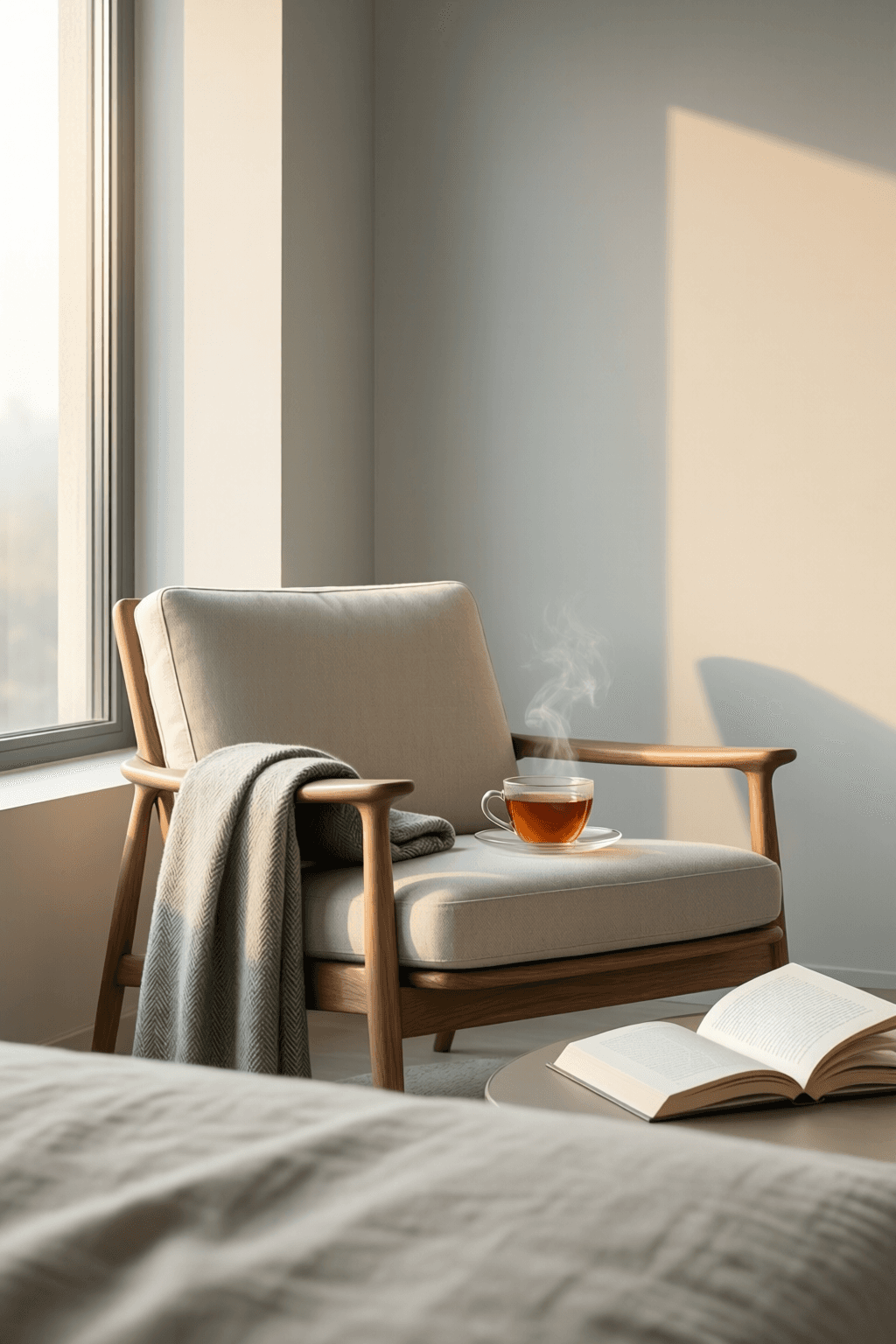
There is a special kind of peace that comes from being home alone, where you can truly be yourself. — John Ed Pearce
—What lingers after this line?
Solitude as a Private Peace
At its heart, John Ed Pearce’s reflection captures a calm that is difficult to reproduce anywhere else: the peace of having a space entirely to oneself. Home alone, a person is briefly released from social performance, expectation, and interruption. What remains is not loneliness, but a softer state of being in which silence feels protective rather than empty. In that sense, the quote suggests that peace is not always found in grand retreats or distant landscapes. Instead, it often emerges in the familiar rooms where no explanation is required. The ordinary home becomes a sanctuary precisely because it allows a person to lower every guard.
The Freedom to Be Unobserved
From there, the quote moves naturally into the idea of authenticity. Being home alone means being unobserved, and that absence of an audience can be liberating. One can sing badly, leave a book open on the floor, eat at odd hours, or sit in complete stillness without needing to justify any of it. These small freedoms reveal how much of daily life is shaped by the presence of others. Erving Goffman’s The Presentation of Self in Everyday Life (1956) famously describes social life as a kind of performance. Pearce’s insight points to the rare backstage moment, when the performance ends and the self can rest. In solitude, identity often feels less constructed and more honest.
Home as an Emotional Refuge
Moreover, the quote gives emotional depth to the idea of home. A house becomes more than shelter when it offers psychological refuge—a place where the mind can unclench. This is why coming home to an empty, quiet space can feel restorative after a demanding day: the environment no longer asks anything of us. Virginia Woolf’s A Room of One’s Own (1929) argues that private space is essential for thought and self-development. Although Woolf wrote about intellectual freedom, the same principle applies here. Pearce’s peaceful solitude reflects how personal space can protect the inner life, allowing feelings and thoughts to settle into clearer form.
Solitude Versus Loneliness
Yet Pearce’s observation also depends on an important distinction: solitude is not the same as loneliness. Loneliness is marked by absence and pain, while chosen solitude carries relief and agency. The peace he describes comes specifically from being able to inhabit one’s own company without discomfort, even with gratitude. This distinction has long interested philosophers. Henry David Thoreau’s Walden (1854) presents solitude not as deprivation but as a path to clarity and self-possession. Similarly, Pearce frames being home alone as a positive condition, suggesting that a healthy relationship with oneself is part of what makes a home feel truly peaceful.
Small Rituals of Selfhood
As the quote settles in, it also evokes the private rituals that become possible in solitude. Making tea and drinking it slowly, pacing while thinking, listening to the same song repeatedly, or doing nothing at all—these seemingly trivial acts are often how people return to themselves. In company, such habits may be edited; alone, they become expressions of genuine temperament. Therefore, the peace of being home alone is not only silence but permission. It is the chance to move at one’s own rhythm and rediscover preferences that public life can blur. Through these small rituals, the self stops adapting and starts simply existing.
Why This Peace Feels So Rare
Finally, Pearce’s words resonate because modern life makes uninterrupted aloneness increasingly scarce. Constant messages, shared spaces, and social obligations can leave little room for interior quiet. As a result, being home alone often feels less like a routine condition and more like a precious reprieve. Seen this way, the quote is both descriptive and gently corrective. It reminds us that peace may depend not only on connection with others but also on moments free from their demands. In the end, the special calm of being home alone comes from recovering something easily lost: the freedom to be fully, effortlessly oneself.
Recommended Reading
As an Amazon Associate, we earn from qualifying purchases.
One-minute reflection
Where does this idea show up in your life right now?
Related Quotes
6 selectedBeing alone at home is like having a sanctuary for your soul, where you can recharge, reflect, and rediscover the beauty of your own company. — Melody Beattie
Melody Beattie
At its core, Melody Beattie’s quote transforms the ordinary idea of being alone at home into something sacred. Rather than framing solitude as emptiness, she presents it as a sanctuary—a place where the self is protected...
Read full interpretation →The mind needs solitude in the same way a forest needs quiet after a storm. It is not because nothing is happening; it is because that is when everything begins to grow. — Pico Iyer
Pico Iyer
Pico Iyer compares the mind to a forest recovering after a storm, and the image immediately shifts our understanding of solitude. Rather than treating aloneness as emptiness, he presents it as a necessary period of renew...
Read full interpretation →The real problem with being alone is that you're stuck with yourself all day. Make sure you're someone you actually like hanging out with. — Maya Angelou
Maya Angelou
Maya Angelou’s line begins with a sharp but compassionate truth: being alone is difficult not merely because others are absent, but because the self becomes unavoidable. In solitude, distraction fades, and our habits, th...
Read full interpretation →If you want to be happy, learn to be alone without being lonely. Learn that being alone does not mean being unhappy. — Michael Josephson
Michael Josephson
Michael Josephson’s remark turns on a subtle but life-changing distinction: being alone is a circumstance, while being lonely is an emotional interpretation of that circumstance. In other words, solitude does not automat...
Read full interpretation →Your home should be the place where the day softens around the edges. — Unknown (removed per constraints) -> Let's use: "Home is not a place; it is a feeling of being able to handle whatever the world throws at you." — Cheryl Richardson
Cheryl Richardson
At first glance, Cheryl Richardson’s quote shifts the meaning of home away from geography and architecture. Home is no longer merely a house, apartment, or hometown; instead, it becomes an emotional condition—a steady in...
Read full interpretation →You do not need to leave your room. Remain sitting at your table and listen. Do not even listen, simply wait, be quiet, still and solitary. The world will freely offer itself to you to be unmasked. — Franz Kafka
Franz Kafka
Kafka begins with a striking command: do not chase the world, but remain in place. At first, this seems to reject ordinary habits of ambition and movement, yet that reversal is precisely his point.
Read full interpretation →More From Author
More from John Ed Pearce →