
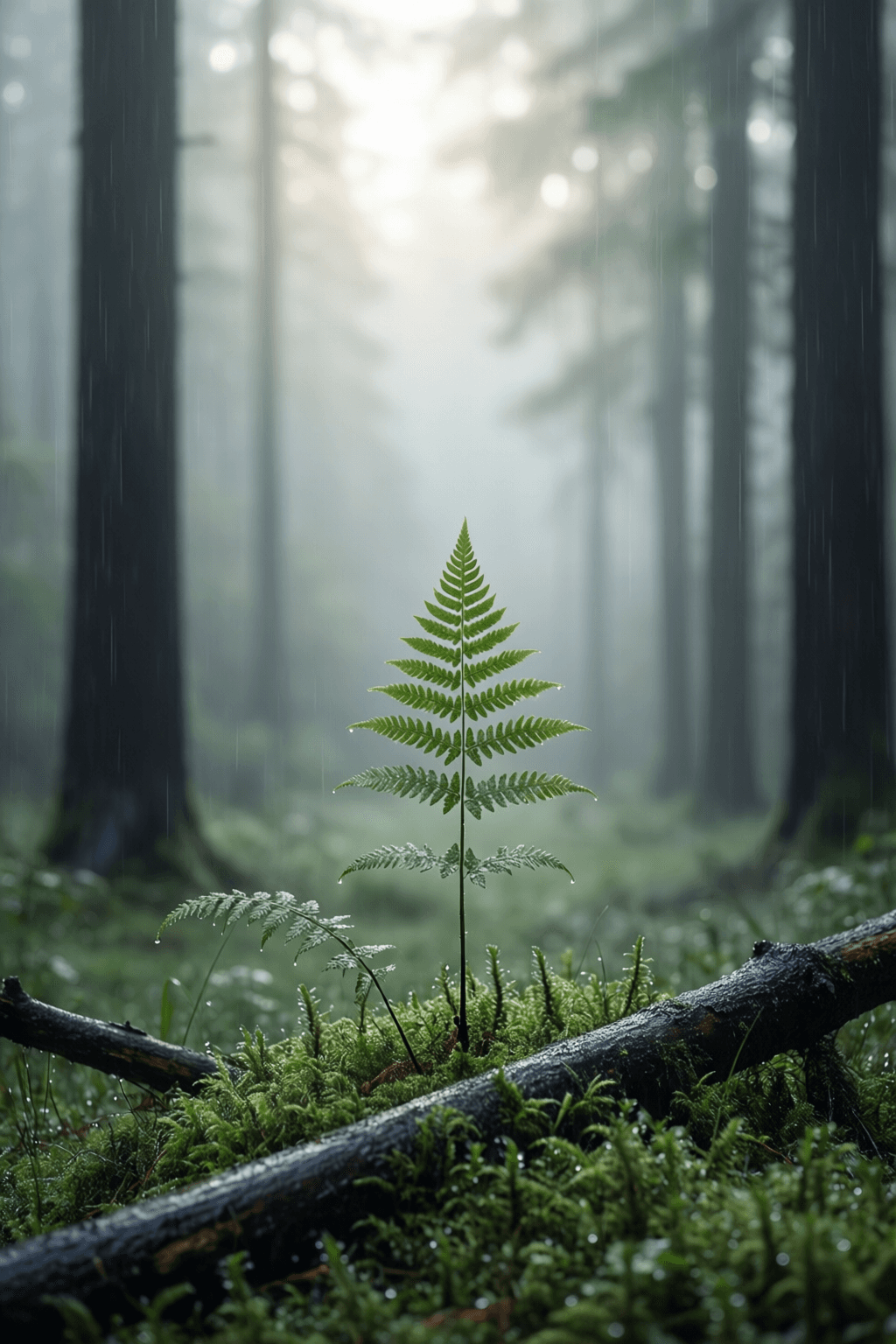
The mind needs solitude in the same way a forest needs quiet after a storm. It is not because nothing is happening; it is because that is when everything begins to grow. — Pico Iyer
—What lingers after this line?
Silence as Renewal
Pico Iyer compares the mind to a forest recovering after a storm, and the image immediately shifts our understanding of solitude. Rather than treating aloneness as emptiness, he presents it as a necessary period of renewal. In a forest, quiet after upheaval is not lifelessness; it is the moment when roots steady, moisture settles, and new growth quietly prepares itself. Likewise, the mind often needs stillness not because activity has ceased, but because deeper forms of activity can finally begin. This idea is especially powerful in a culture that equates constant stimulation with productivity. By contrast, Iyer suggests that silence is not the absence of meaning but the condition that allows meaning to take shape. In that pause, thoughts that were scattered by noise can gather, and what seemed dormant may actually be germinating.
The Aftermath of Inner Storms
From there, the metaphor of the storm adds another layer: solitude becomes most valuable after emotional or mental turbulence. Just as a forest endures wind, breakage, and disruption before returning to balance, the human mind also passes through stress, grief, confusion, or overstimulation. The quiet that follows is not a retreat from life, but a vital response to it. In this sense, solitude serves as a restorative interval. Neuroscientist Mary Helen Immordino-Yang’s work on rest and reflection has emphasized that inward, quiet states help the brain process experience and build meaning. So when Iyer describes growth beginning in silence, he points to a truth many people recognize instinctively: after chaos, the mind does not heal through more noise, but through space.
Growth Hidden From View
Furthermore, the quote insists that the most important kinds of growth are often invisible at first. In a forest, seeds take root underground long before green shoots appear; similarly, the mind’s best developments—clarity, wisdom, emotional resilience—often form beneath the surface. Solitude allows this hidden work to continue without interruption. Writers and thinkers have long relied on this principle. Virginia Woolf’s A Room of One’s Own (1929) argues that interior and physical space are essential for thought and creation. Her point echoes Iyer’s: growth rarely happens when consciousness is constantly invaded. Instead, solitude protects the fragile early stages of insight, giving ideas time to strengthen before they face the demands of the world.
Solitude Versus Isolation
At the same time, Iyer’s image invites an important distinction between solitude and isolation. Isolation suggests deprivation, loneliness, or disconnection, while solitude can be chosen, nourishing, and purposeful. A forest’s quiet is not a dead silence but a living one, full of subtle processes; in the same way, healthy solitude is populated by reflection, memory, imagination, and recovery. This distinction matters because many people fear being alone when what they actually fear is abandonment. Yet traditions from Buddhist meditation to Henry David Thoreau’s Walden (1854) present solitude as a way of returning more fully to life, not escaping it. Seen this way, being alone can become a form of listening—an attentive pause that reconnects us with ourselves and, ultimately, with others.
A Necessary Condition for Creativity
As the quote unfolds, it also becomes a meditation on creativity. New ideas rarely emerge in the loudest moments; more often, they arise after a period of incubation, when the mind is left undisturbed long enough to make unexpected connections. The quiet after the storm is therefore not passive but generative, a threshold where fragments reorganize into form. Many artists describe this process in similar terms. Composer Igor Stravinsky wrote in Poetics of Music (1942) about the discipline required for creation, while contemporary research on incubation in problem-solving shows that stepping back often helps insight emerge. Iyer’s metaphor captures that paradox beautifully: what looks like inactivity from the outside may be the very condition under which the richest inner work is being done.
Learning to Protect Quiet
Finally, the quote carries an ethical and practical lesson: if growth begins in quiet, then quiet must be protected. In modern life, attention is repeatedly shattered by alerts, demands, and perpetual commentary, making solitude feel rare or even indulgent. Yet Iyer reframes it as essential maintenance for the self, much like rest is essential for the body. Therefore, to honor the mind’s need for solitude is not to reject the world but to prepare to meet it more wisely. A walk without devices, a few minutes of silent reflection, or an intentional retreat from noise can create the mental clearing where renewal starts. In that stillness, as in a forest after rain and wind, life does not stop. It gathers strength to grow again.
Recommended Reading
As an Amazon Associate, we earn from qualifying purchases.
One-minute reflection
What feeling does this quote bring up for you?
Related Quotes
6 selectedThe silent traveller finds the loudest lessons. — Pico Iyer
Pico Iyer
Pico Iyer’s quote suggests that travelers who remain silent and observant often gain the deepest insights. Far from being passive, this silence allows an individual to absorb the subtleties of place and people—details lo...
Read full interpretation →Everyone needs a place to retreat; a spot where the world grows quiet enough for the soul to speak. — Angie Wyland Crosby
Angie Wyland Crosby
At its core, Angie Wyland Crosby’s reflection suggests that retreat is not escapism but renewal. A private place—whether physical or emotional—offers relief from noise, pressure, and constant demands.
Read full interpretation →In solitude, the mind gains strength and learns to lean upon itself. — Laurence Sterne
Laurence Sterne
Laurence Sterne’s observation underscores solitude not as a state of loneliness but as an opportunity for personal empowerment. Far from being a void, solitude creates a space in which the mind can detach from external i...
Read full interpretation →The real problem with being alone is that you're stuck with yourself all day. Make sure you're someone you actually like hanging out with. — Maya Angelou
Maya Angelou
Maya Angelou’s line begins with a sharp but compassionate truth: being alone is difficult not merely because others are absent, but because the self becomes unavoidable. In solitude, distraction fades, and our habits, th...
Read full interpretation →If you want to be happy, learn to be alone without being lonely. Learn that being alone does not mean being unhappy. — Michael Josephson
Michael Josephson
Michael Josephson’s remark turns on a subtle but life-changing distinction: being alone is a circumstance, while being lonely is an emotional interpretation of that circumstance. In other words, solitude does not automat...
Read full interpretation →You do not need to leave your room. Remain sitting at your table and listen. Do not even listen, simply wait, be quiet, still and solitary. The world will freely offer itself to you to be unmasked. — Franz Kafka
Franz Kafka
Kafka begins with a striking command: do not chase the world, but remain in place. At first, this seems to reject ordinary habits of ambition and movement, yet that reversal is precisely his point.
Read full interpretation →More From Author
More from Pico Iyer →To do one thing well is the only way to endure a world that demands we do everything at once. — Pico Iyer
At its core, Pico Iyer’s line argues that endurance now depends less on speed than on concentration. In a culture that praises multitasking, constant updates, and endless availability, he reframes survival as an act of d...
Read full interpretation →Inner calm is not a state you wait for, but a space you build within the daily noise. — Pico Iyer
At its core, Pico Iyer’s line shifts calm from something passive to something made. Rather than imagining peace as a rare mood that descends when life finally becomes quiet, he presents it as an inner architecture built...
Read full interpretation →To be at home in oneself is the most revolutionary act in an age of constant distraction. — Pico Iyer
Pico Iyer’s remark begins with a deceptively simple image: being at home in oneself. Yet this inner home is not a place of withdrawal so much as a state of ease, where a person can sit with thoughts, feelings, and silenc...
Read full interpretation →To learn is to admit that you are unfinished, and there is a quiet, profound power in acknowledging that you are still becoming. — Pico Iyer
At its core, Pico Iyer’s reflection turns learning into an act of humility. To learn is not merely to gather information; rather, it is to recognize that one’s present self is partial, evolving, and open to revision.
Read full interpretation →