
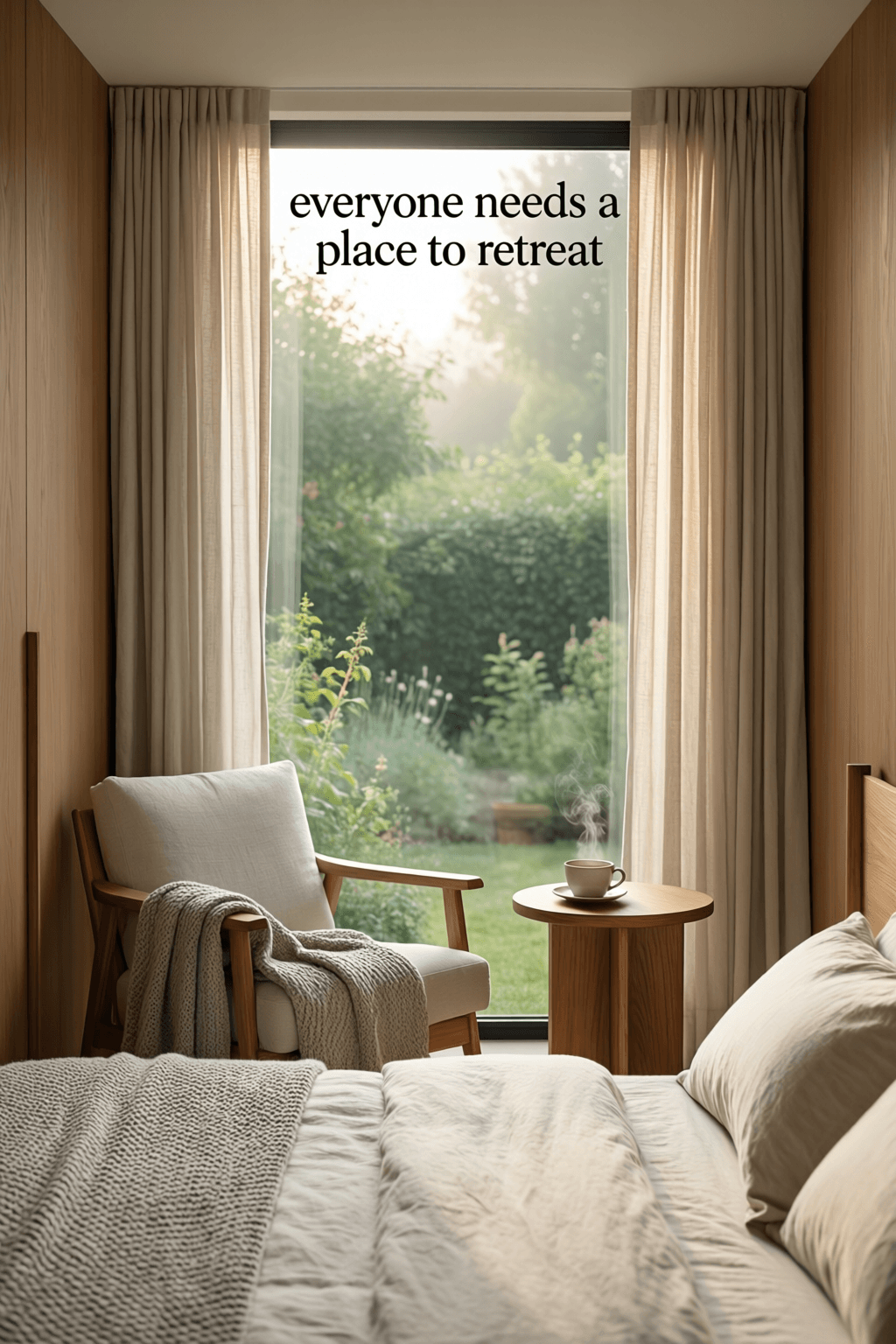
Everyone needs a place to retreat; a spot where the world grows quiet enough for the soul to speak. — Angie Wyland Crosby
—What lingers after this line?
The Need for Inner Refuge
At its core, Angie Wyland Crosby’s reflection suggests that retreat is not escapism but renewal. A private place—whether physical or emotional—offers relief from noise, pressure, and constant demands. In that quiet, people are better able to hear what daily life often drowns out: their fears, hopes, convictions, and deeper needs. From this starting point, the quote frames solitude as a human necessity rather than a luxury. Just as the body requires rest, the inner self needs stillness. Crosby’s language implies that without such refuge, the soul’s voice remains buried beneath the clamor of the world.
Silence as a Form of Listening
Building on that idea, the quote treats silence not as emptiness but as a condition for insight. When the world grows quiet, reflection becomes possible; thoughts settle, emotions clarify, and hidden truths surface. This mirrors Blaise Pascal’s observation in the Pensées (1670) that much human trouble comes from the inability to sit quietly in a room alone. In this sense, retreat is less about withdrawing from life than about learning how to listen within it. Silence becomes an active practice, one that creates space for discernment and helps transform confusion into understanding.
Sacred Spaces in Human Tradition
Moreover, Crosby’s words echo a long tradition of seeking secluded places for restoration. In the Christian Gospels, Jesus repeatedly withdraws to lonely places to pray, while Buddhist monastic practice has long emphasized meditation in quiet settings. Henry David Thoreau’s Walden (1854) likewise portrays retreat into nature as a way to recover clarity and moral perspective. These examples show that the desire for a refuge is neither modern weakness nor personal eccentricity. Rather, across cultures and centuries, people have recognized that wisdom often emerges when distraction recedes and inward attention deepens.
Nature and the Quieting of the Mind
From there, it is easy to see why many people imagine this retreat as a natural place—a porch at dusk, a forest trail, a lakeshore, or a garden bench. Nature has a way of softening mental noise. Even brief encounters with green space, as environmental psychology studies such as Rachel and Stephen Kaplan’s work on Attention Restoration Theory (1989) suggest, can reduce fatigue and restore focused thought. Because of this, the quote carries a gentle sensory truth: certain places do help the soul speak. They slow the pace, loosen the grip of urgency, and remind us that not every answer arrives through effort; some arrive through quiet presence.
Retreat as Emotional Honesty
Yet the place Crosby describes is not valuable only because it is peaceful; it matters because peace allows honesty. In solitude, people often confront feelings they have postponed—grief, longing, uncertainty, gratitude. Virginia Woolf’s A Room of One’s Own (1929), though centered on creative freedom, similarly argues that space and privacy are essential for authentic thought to emerge. Therefore, retreat becomes an encounter with the self. Removed from performance and expectation, a person can notice what is true rather than merely what is urgent. The soul speaks most clearly when it no longer has to compete with the noise of appearance.
Creating Quiet in Modern Life
Finally, the quote speaks with particular force in an age of endless notifications, public commentary, and overstimulation. Many people no longer lack company; they lack uninterrupted interior space. Crosby’s insight gently urges a counterpractice: to make room, deliberately, for silence—through prayer, journaling, walking alone, or simply sitting without devices. In the end, the retreat she describes need not be grand or remote. It may be a chair by a window, an early morning routine, or a few protected minutes at day’s end. What matters is that it becomes a place where noise falls away long enough for the soul to be heard.
One-minute reflection
What feeling does this quote bring up for you?
Related Quotes
6 selectedThe mind needs solitude in the same way a forest needs quiet after a storm. It is not because nothing is happening; it is because that is when everything begins to grow. — Pico Iyer
Pico Iyer
Pico Iyer compares the mind to a forest recovering after a storm, and the image immediately shifts our understanding of solitude. Rather than treating aloneness as emptiness, he presents it as a necessary period of renew...
Read full interpretation →Being alone at home is like having a sanctuary for your soul, where you can recharge, reflect, and rediscover the beauty of your own company. — Melody Beattie
Melody Beattie
At its core, Melody Beattie’s quote transforms the ordinary idea of being alone at home into something sacred. Rather than framing solitude as emptiness, she presents it as a sanctuary—a place where the self is protected...
Read full interpretation →In a world bustling with voices, the solitude of one's own company becomes a sanctuary. — Jonathan Harnisch
Jonathan Harnisch
At its core, Jonathan Harnisch’s quote sets up a vivid contrast: the world is crowded with voices, demands, and distractions, while solitude offers a place of quiet restoration. Rather than depicting aloneness as emptine...
Read full interpretation →In the quiet night, the soul finds its most authentic voice.
Unknown
The quote suggests that in moments of solitude, particularly during the tranquility of night, we are able to connect with our true selves. This quiet time allows for introspection and self-reflection, helping us to under...
Read full interpretation →But many of us seek community solely to escape the fear of being alone. Knowing how to be solitary is central to the art of loving. — bell hooks
bell hooks
Bell hooks begins with a quiet but difficult observation: not every search for community is rooted in love. Sometimes, we reach for others because solitude feels threatening, as though being alone exposes a lack within u...
Read full interpretation →Our deepest wishes are whispers of our authentic self. We must learn to respect them. We must learn to listen. — Sarah Ban Breathnach
Sarah Ban Breathnach
Sarah Ban Breathnach’s quote begins with a gentle but radical claim: our deepest wishes are not random fantasies but signals from the truest part of who we are. Rather than treating longing as weakness or distraction, sh...
Read full interpretation →More From Author
More from Angie Wyland Crosby →