
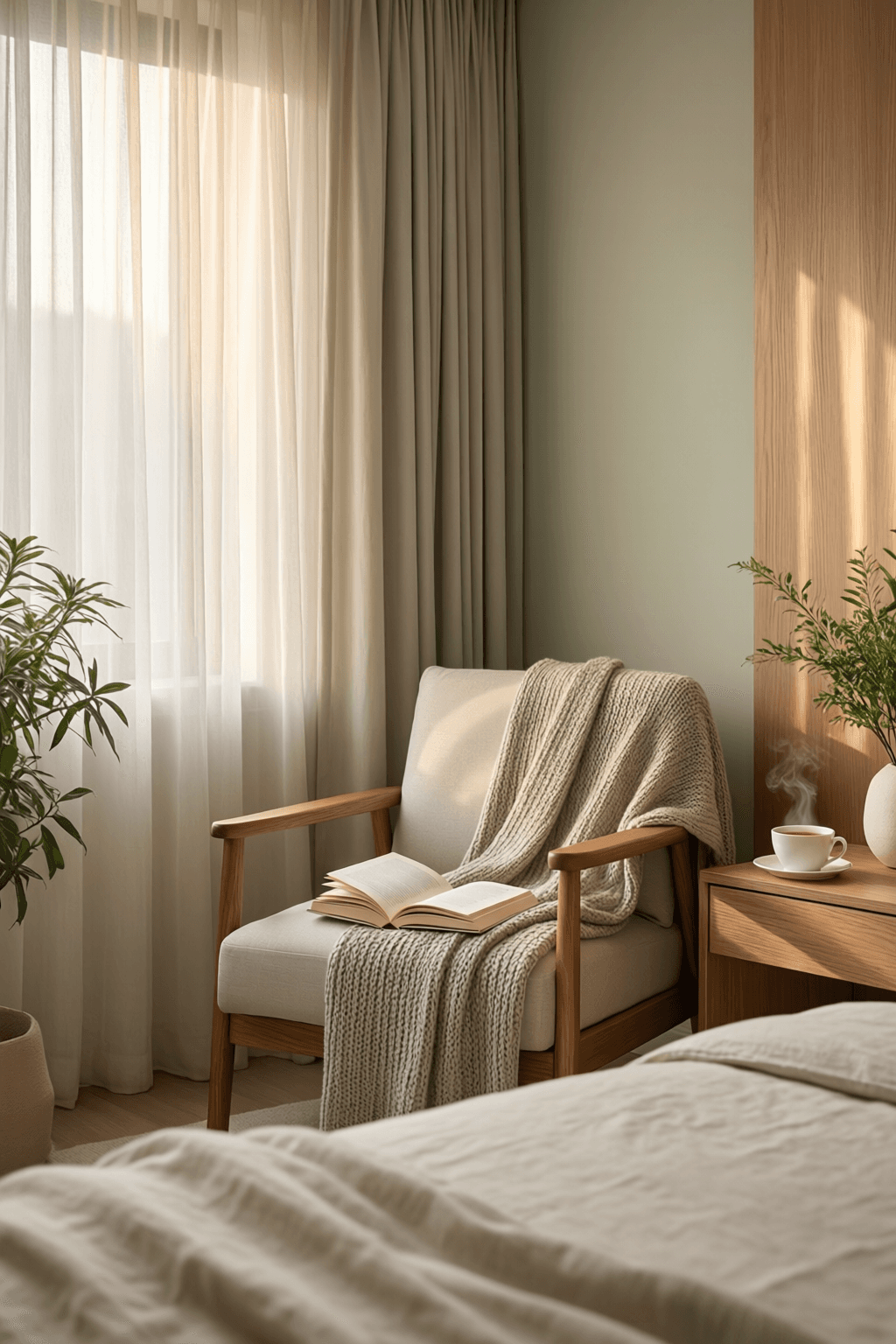
Being alone at home is like having a sanctuary for your soul, where you can recharge, reflect, and rediscover the beauty of your own company. — Melody Beattie
—What lingers after this line?
Home as an Inner Refuge
At its core, Melody Beattie’s quote transforms the ordinary idea of being alone at home into something sacred. Rather than framing solitude as emptiness, she presents it as a sanctuary—a place where the self is protected from noise, obligation, and constant performance. In this light, home becomes more than shelter; it becomes an emotional refuge where the soul can finally exhale. This perspective also challenges the common fear of aloneness. Instead of interpreting silence as lack, Beattie suggests it can be a form of restoration. Much as Virginia Woolf’s A Room of One’s Own (1929) argues for the necessity of personal space, the quote implies that privacy is not indulgence but a condition for inner life.
The Healing Power of Recharging
From that refuge, the next idea naturally emerges: solitude replenishes energy that daily life steadily drains. Social roles, work pressures, and digital interruptions often scatter attention, leaving people mentally frayed. Being alone at home offers a pause in which the nervous system can settle, making rest feel active rather than passive. Modern psychology often supports this intuition. As researchers such as Sherry Turkle note in Reclaiming Conversation (2015), constant connection can diminish our capacity for reflection and recovery. Therefore, the quiet of home is not simply escape; it is a practical means of emotional maintenance, allowing a person to return to the world less depleted and more whole.
Reflection in the Quiet
Once energy begins to return, solitude creates room for reflection. In shared or hurried environments, thought is often reactive, shaped by other people’s demands. By contrast, being alone at home allows memories, worries, and hopes to surface in a gentler rhythm, making self-understanding possible. The sanctuary Beattie describes is therefore not only restful but clarifying. This reflective quality has deep philosophical roots. Marcus Aurelius’s Meditations (c. 180 AD) repeatedly returns to the idea of withdrawing inward to regain order and perspective. Similarly, a quiet evening at home can become a modest form of retreat, where one sorts through feelings, revises priorities, and hears thoughts that everyday noise usually drowns out.
Rediscovering One’s Own Company
From reflection comes perhaps the most intimate gift in the quote: the rediscovery of one’s own company. Many people learn to value themselves through usefulness, approval, or companionship, yet solitude asks a subtler question—can you enjoy being with yourself when no audience is present? Beattie’s answer is gently hopeful, suggesting that alone time can renew self-friendship. This idea appears in Michel de Montaigne’s Essays (1580), where he describes cultivating a private room within the mind and learning to belong to oneself. In everyday terms, this may look simple: making tea, reading in silence, or listening to rain without needing to fill the moment. Such small acts reveal that self-companionship is not loneliness, but a quietly earned form of ease.
Solitude Versus Loneliness
Yet the quote gains depth when we distinguish solitude from loneliness. Loneliness is marked by painful disconnection, whereas solitude, in Beattie’s sense, is chosen and nourishing. The same empty room can feel either desolate or protective depending on whether a person experiences it as abandonment or freedom. That difference is crucial to understanding her message. Consequently, the beauty she names is not automatic; it often requires a shift in perception. The poet Rainer Maria Rilke, in Letters to a Young Poet (1903–1908), urged readers to love their solitude because it can deepen their lives. Beattie echoes that wisdom by implying that when people stop resisting quiet, they may discover that being alone at home is not a deficit to endure but a presence to cherish.
A Gentle Practice of Self-Renewal
Ultimately, the quote reads as an invitation to make a practice of restorative aloneness. In a culture that often praises productivity and constant availability, choosing to be quietly at home can feel almost radical. Yet precisely because the world is so demanding, moments of inward return become essential rather than optional. Thus the sanctuary Beattie describes is both place and practice. It is the living room after the door closes, the kitchen at dusk, the hour with no demands—and it is also the deliberate act of receiving those moments without guilt. By recharging, reflecting, and enjoying one’s own presence, a person does not withdraw from life; instead, they prepare to reenter it with greater steadiness and grace.
One-minute reflection
What's one small action this suggests?
Related Quotes
6 selectedIn a world bustling with voices, the solitude of one's own company becomes a sanctuary. — Jonathan Harnisch
Jonathan Harnisch
At its core, Jonathan Harnisch’s quote sets up a vivid contrast: the world is crowded with voices, demands, and distractions, while solitude offers a place of quiet restoration. Rather than depicting aloneness as emptine...
Read full interpretation →The whole value of solitude depends upon oneself: it may be a sanctuary or a prison, a haven of repose or a place of punishment. — Philip Hamerton
Philip Hamerton
At first glance, Philip Hamerton’s remark presents solitude as neither inherently good nor bad, but profoundly shaped by the person who enters it. To one mind, being alone becomes a sanctuary—a space for restoration, ref...
Read full interpretation →In order to be open to creativity, one must have the capacity for constructive use of solitude. One must overcome the fear of being alone. — Rollo May
Rollo May
Rollo May’s insight begins with a quiet but demanding premise: creativity requires the ability to stand apart from constant noise, approval, and distraction. To be open to new ideas, a person must first become comfortabl...
Read full interpretation →I care for myself. The more solitary, the more friendless, the more unsustained I am, the more I will respect myself. — Charlotte Brontë
Charlotte Brontë
Charlotte Brontë’s words begin as a quiet but forceful act of self-possession. Rather than treating loneliness as proof of failure, the speaker transforms it into evidence of resilience.
Read full interpretation →But many of us seek community solely to escape the fear of being alone. Knowing how to be solitary is central to the art of loving. — bell hooks
bell hooks
Bell hooks begins with a quiet but difficult observation: not every search for community is rooted in love. Sometimes, we reach for others because solitude feels threatening, as though being alone exposes a lack within u...
Read full interpretation →Like water which can clearly mirror the sky and the trees only so long as its surface is undisturbed, the mind can only reflect the true image of the Self when it is tranquil and wholly relaxed. — Indra Devi
Indra Devi
Indra Devi begins with a simple natural image: calm water reflects the sky and trees only when its surface is still. In the same way, she suggests that the mind reveals truth not through strain or agitation, but through...
Read full interpretation →More From Author
More from Melody Beattie →Setting boundaries is the way we care for ourselves. It is not a way to push others away, but a way to keep ourselves whole. — Melody Beattie
At its core, Melody Beattie’s statement reframes boundaries as an act of care rather than rejection. People often fear that saying no, asking for space, or naming limits will appear cold; however, Beattie suggests the op...
Read full interpretation →Home is where laughter and gratitude grow. — Melody Beattie
At first glance, Melody Beattie’s line reframes home as something more living than a building. Instead of focusing on property, décor, or permanence, it suggests that home is recognized by what flourishes inside it: laug...
Read full interpretation →Gratitude makes sense of our past, brings peace for today, and creates a vision for tomorrow. — Melody Beattie
Melody Beattie’s quote presents gratitude not as a polite feeling, but as a way of organizing life itself. At first, she suggests that thankfulness helps us interpret experience with greater coherence, turning scattered...
Read full interpretation →Let gratitude be your compass; it leads to abundance. — Melody Beattie
This quote suggests that gratitude can serve as a guiding force in life, helping individuals make decisions and find direction by focusing on appreciation rather than lack.
Read full interpretation →