
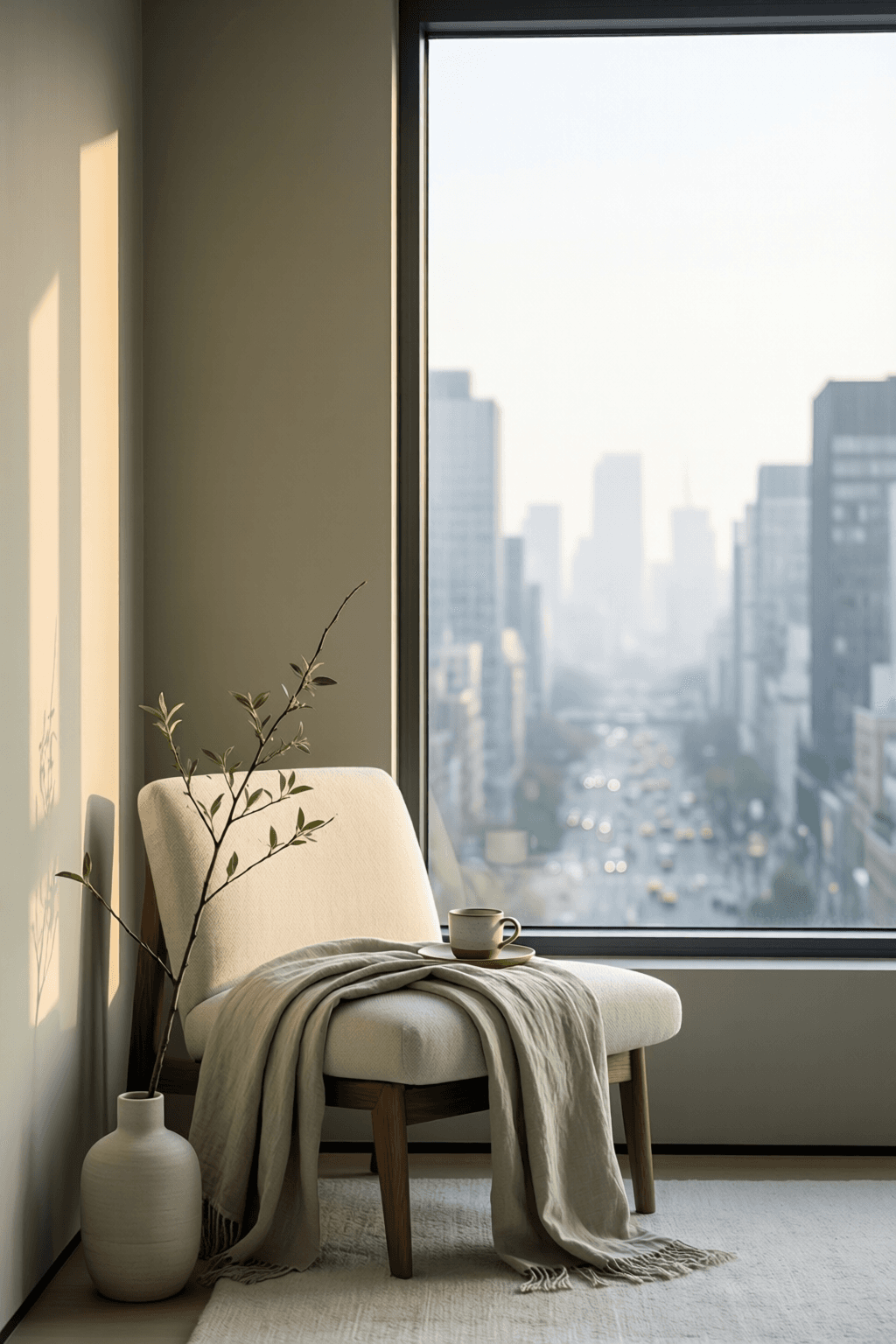
Inner calm is not a state you wait for, but a space you build within the daily noise. — Pico Iyer
—What lingers after this line?
Calm as a Daily Construction
At its core, Pico Iyer’s line shifts calm from something passive to something made. Rather than imagining peace as a rare mood that descends when life finally becomes quiet, he presents it as an inner architecture built amid interruption, pressure, and motion. In that sense, calm is less a reward for perfect circumstances than a practice of shaping one’s response to imperfect ones. This perspective matters because daily life rarely pauses long enough for ideal serenity. Emails arrive, obligations multiply, and the mind keeps generating its own noise. Therefore, Iyer’s insight invites us to stop postponing peace until the world changes and instead begin crafting it within the world as it is.
The Meaning of Noise
From there, the quote becomes even richer when we consider what “daily noise” includes. It is not only literal sound—traffic, notifications, crowded rooms—but also emotional and mental static: worry about the future, replayed conversations, and the pressure to remain constantly available. By naming this ordinary chaos, Iyer acknowledges that disturbance is not an exception to life; it is one of life’s conditions. Consequently, inner calm cannot depend on eliminating every distraction. Buddhist traditions often make a similar point: the mind does not become free merely because the environment grows silent. Instead, freedom begins when one learns to relate differently to agitation itself, allowing noise to exist without surrendering one’s center to it.
An Interior Space of Refuge
As the quote develops in meaning, the phrase “a space you build within” becomes especially powerful. It suggests an inward room—private, durable, and intentionally maintained—where one can return even while the external world remains unsettled. Marcus Aurelius’s Meditations (c. AD 180) offers a striking parallel, describing the mind’s ability to “retreat into itself” and recover composure without fleeing the world. Importantly, this inward refuge is not escapism. Instead, it is a stable base from which clearer action becomes possible. Just as a house protects without stopping the weather, inner calm does not erase conflict or uncertainty; it gives a person somewhere steady to stand while facing them.
Practice Over Passive Hope
Naturally, if calm is built, then it must be built through repeated acts. Small rituals—walking without a phone, taking three deliberate breaths before replying, journaling at day’s end, or sitting in silence for ten minutes—become the tools of construction. Over time, these modest habits lay down an inner foundation stronger than any single moment of stress. This is why Iyer’s idea resists the fantasy of sudden transformation. Lasting calm rarely appears all at once; it accumulates. Much like learning an instrument, the change is gradual and often invisible day by day, yet unmistakable over months. In this way, peace becomes less an accident of temperament than a result of disciplined attention.
Stillness in Motion
Furthermore, the quote challenges the assumption that calm requires withdrawal from active life. Iyer, whose travel writing often reflects on silence and stillness, repeatedly suggests that inner quiet can coexist with movement. One might be raising children, managing work, or navigating a crowded city and still cultivate a measured interior rhythm that prevents outer speed from becoming inner panic. That idea recalls Thich Nhat Hanh’s teachings in Peace Is Every Step (1991), where mindfulness is practiced while walking, washing dishes, or answering the phone. The lesson is continuous: stillness need not wait for retreat. It can accompany action, turning ordinary moments into opportunities to return to oneself.
A More Resilient Way to Live
Ultimately, Iyer’s statement offers a practical philosophy of resilience. If calm depends on circumstances, it remains fragile, always vulnerable to the next disruption. But if it is built inwardly, it becomes portable. One carries it into conflict, fatigue, disappointment, and change—not as perfection, but as a renewable capacity to pause and re-center. For that reason, the quote is quietly empowering. It tells us that while we cannot fully control the volume of the world, we can shape the quality of our attention within it. Inner calm, then, is neither denial nor escape. It is a crafted strength, formed in the very places where life is loudest.
Recommended Reading
As an Amazon Associate, we earn from qualifying purchases.
One-minute reflection
What does this quote ask you to notice today?
Related Quotes
6 selectedTo be at home in oneself is the most revolutionary act in an age of constant distraction. — Pico Iyer
Pico Iyer
Pico Iyer’s remark begins with a deceptively simple image: being at home in oneself. Yet this inner home is not a place of withdrawal so much as a state of ease, where a person can sit with thoughts, feelings, and silenc...
Read full interpretation →The goal is not to be constantly productive, but to be deeply present. — Pico Iyer
Pico Iyer
At first glance, Pico Iyer’s remark gently overturns one of modern culture’s strongest assumptions: that a meaningful life is measured by output. By saying the goal is not constant productivity but deep presence, he shif...
Read full interpretation →In an age of distraction, nothing is as luxurious as paying attention. — Pico Iyer
Pico Iyer
Pico Iyer’s line quietly flips the usual meaning of luxury. Instead of status objects or exclusive experiences, he points to something more intimate: the ability to be fully present with what’s right in front of us.
Read full interpretation →In an age of speed, nothing is more invigorating than going slow. — Pico Iyer
Pico Iyer
Pico Iyer’s line hinges on a paradox: when life accelerates, the most refreshing response is to decelerate. Speed promises efficiency and stimulation, yet it often leaves people feeling thinly stretched, as if every mome...
Read full interpretation →In an age of speed, nothing is so exhilarating as going slow. — Pico Iyer
Pico Iyer
Pico Iyer’s line hinges on a deliberate paradox: in a culture trained to equate speed with excitement, he argues that the true jolt of aliveness can come from deceleration. The word “exhilarating” reframes slowness not a...
Read full interpretation →In an age of speed, nothing is more exhilarating than going slow. — Pico Iyer
Pico Iyer
Pico Iyer’s line turns modern intuition upside down: if everything is accelerating, then the rarest—and therefore most invigorating—experience may be deceleration. The quote suggests that exhilaration isn’t only produced...
Read full interpretation →More From Author
More from Pico Iyer →To be at home in oneself is the most revolutionary act in an age of constant distraction. — Pico Iyer
Pico Iyer’s remark begins with a deceptively simple image: being at home in oneself. Yet this inner home is not a place of withdrawal so much as a state of ease, where a person can sit with thoughts, feelings, and silenc...
Read full interpretation →To learn is to admit that you are unfinished, and there is a quiet, profound power in acknowledging that you are still becoming. — Pico Iyer
At its core, Pico Iyer’s reflection turns learning into an act of humility. To learn is not merely to gather information; rather, it is to recognize that one’s present self is partial, evolving, and open to revision.
Read full interpretation →Our culture made a virtue of living only as Pandya—as effort. We forgot the beauty of letting things be. — Pico Iyer
Pico Iyer’s line begins by diagnosing a modern habit: we often treat effort as the highest moral good. In this view, to be always striving, producing, and optimizing is to be worthy.
Read full interpretation →The goal is not to be constantly productive, but to be deeply present. — Pico Iyer
At first glance, Pico Iyer’s remark gently overturns one of modern culture’s strongest assumptions: that a meaningful life is measured by output. By saying the goal is not constant productivity but deep presence, he shif...
Read full interpretation →