
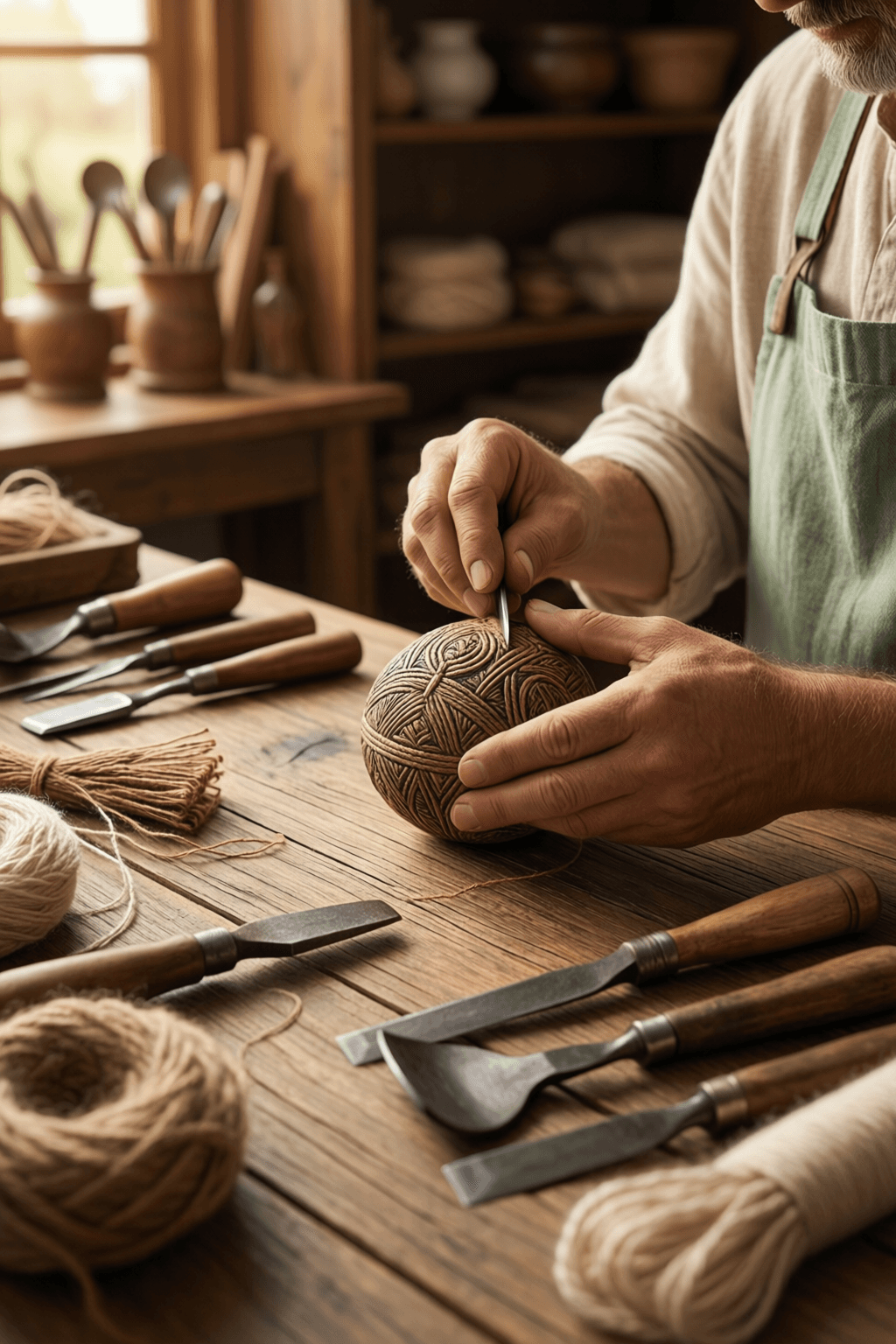
Mastery is more than technique. It's legacy, it's tradition, and it's worth preserving. — Art of Mastery
—What lingers after this line?
Beyond Skill Alone
At first glance, mastery may seem like the highest refinement of technique, the polished result of repetition and control. Yet this quote insists that technical ability, while essential, is only the visible surface of something deeper. True mastery carries memory, values, and a sense of stewardship; it is not merely about doing something well, but about understanding what that craft means within a larger human story. In this way, mastery becomes less an individual achievement than a relationship between the practitioner and the discipline itself. The artist, teacher, or craftsperson does not simply perfect motions—they inherit a way of seeing, judging, and caring that has been shaped over generations.
The Weight of Legacy
From there, the idea of legacy expands mastery beyond the present moment. A master does not work only for applause or personal satisfaction; they contribute to a chain of influence that began before them and will continue after them. Their choices—how they teach, what standards they uphold, what beauty they defend—become part of what others will later receive. This is why legacy is not a monument but an ongoing transmission. Consider the workshops of Renaissance painters, where apprentices learned not just brushwork but habits of observation and discipline; Giorgio Vasari’s Lives of the Artists (1550) shows how reputations endured because knowledge was passed forward as a cultural inheritance.
Tradition as a Living Practice
Closely tied to legacy is tradition, though the quote implies something more dynamic than nostalgia. Tradition is often misunderstood as rigid repetition, when in fact its strength lies in continuity with adaptation. A living tradition preserves principles while allowing each generation to respond to new tools, new audiences, and new problems without losing the craft’s essential character. Seen this way, tradition gives mastery context. Japanese tea ceremony, shaped by Sen no Rikyū in the 16th century, illustrates this balance: precise forms are preserved, yet the practice remains alive because each gathering is newly embodied. The tradition survives not by resisting life, but by being practiced meaningfully within it.
Preservation as Responsibility
Naturally, if mastery contains both legacy and tradition, then preservation becomes an ethical duty rather than a sentimental preference. What is worth preserving is not only finished works but also methods, standards, and ways of attention that modern speed often erodes. The quote therefore argues against disposable culture, suggesting that some forms of excellence require patience and care simply to remain visible. This responsibility appears vividly in endangered crafts such as hand bookbinding, instrument making, or classical weaving. UNESCO’s efforts around intangible cultural heritage similarly reflect the belief that techniques alone are insufficient; what must be preserved is the embodied knowledge of communities, the human practice behind the object.
The Master as Steward
Consequently, the figure of the master emerges not as a solitary genius but as a steward. Stewardship means holding something valuable in trust—protecting it, deepening it, and making it available to others. Under this view, mastery includes humility, because one recognizes that the craft was never entirely one’s own to begin with. This perspective changes how excellence is measured. It is not only in innovation or virtuosity, but also in whether the practitioner leaves the field stronger, clearer, and more honorable than they found it. A true master therefore teaches, documents, mentors, and exemplifies standards that help the tradition endure.
Why It Still Matters Today
Finally, the quote feels especially urgent in an age that often rewards speed, novelty, and visibility over depth. When skills can be imitated quickly and trends vanish overnight, mastery reminds us that enduring value is built slowly. It asks us to honor process, lineage, and the patient accumulation of judgment that no shortcut can fully replace. For that reason, preserving mastery is not about resisting progress; rather, it is about ensuring that progress does not sever us from wisdom. What survives through careful hands and faithful teaching becomes more than a technique—it becomes a cultural memory, and ultimately, a gift to the future.
One-minute reflection
Why might this line matter today, not tomorrow?
Related Quotes
6 selectedHold fast to the way of antiquity to master what exists today. To be able to know the beginnings of antiquity is called the guiding thread of the Way. - Laozi
Laozi
Laozi’s counsel begins with a simple but demanding practice: “hold fast” to antiquity, not as nostalgia, but as orientation. The phrase suggests continuity—an insistence that what is oldest can still point the direction...
Read full interpretation →The beauty of a life well-lived is measured by the depth of the roots you grow into the lives of those standing right beside you. — Wendell Berry
Wendell Berry
At first glance, Wendell Berry shifts our idea of a successful life away from personal achievement and toward human closeness. The beauty of living well, he suggests, is not counted in status, wealth, or visibility, but...
Read full interpretation →The things that you do for yourself are gone when you are gone, but the things that you do for others remain as your legacy. — Kalu K. Ndukwe Kalu
Kalu K. Ndukwe Kalu
At its heart, Kalu K. Ndukwe Kalu’s quote redirects attention from personal gain to shared impact.
Read full interpretation →Our stories are medicine for the present and lessons for the future. — Chag Lowry
Chag Lowry
Chag Lowry’s line begins by treating story not as entertainment but as care: something administered in the middle of real conditions. In the present, people reach for narratives to name what hurts, what’s changing, and w...
Read full interpretation →Act with care, move with purpose, and leave behind a trail people want to follow. — Viktor Frankl
Viktor Frankl
The opening directive—“Act with care”—frames life as something shaped by attention rather than impulse. Care here is not mere gentleness; it is the discipline of considering consequences, especially when other people’s d...
Read full interpretation →Make your work a gift that future faces will smile to receive — Oprah Winfrey
Oprah Winfrey
Oprah Winfrey’s line reframes achievement as something measured not only by what it earns today, but by what it leaves behind. By calling work a “gift,” she shifts attention from self-centered ambition to a wider horizon...
Read full interpretation →More From Author
More from Art of Mastery →