
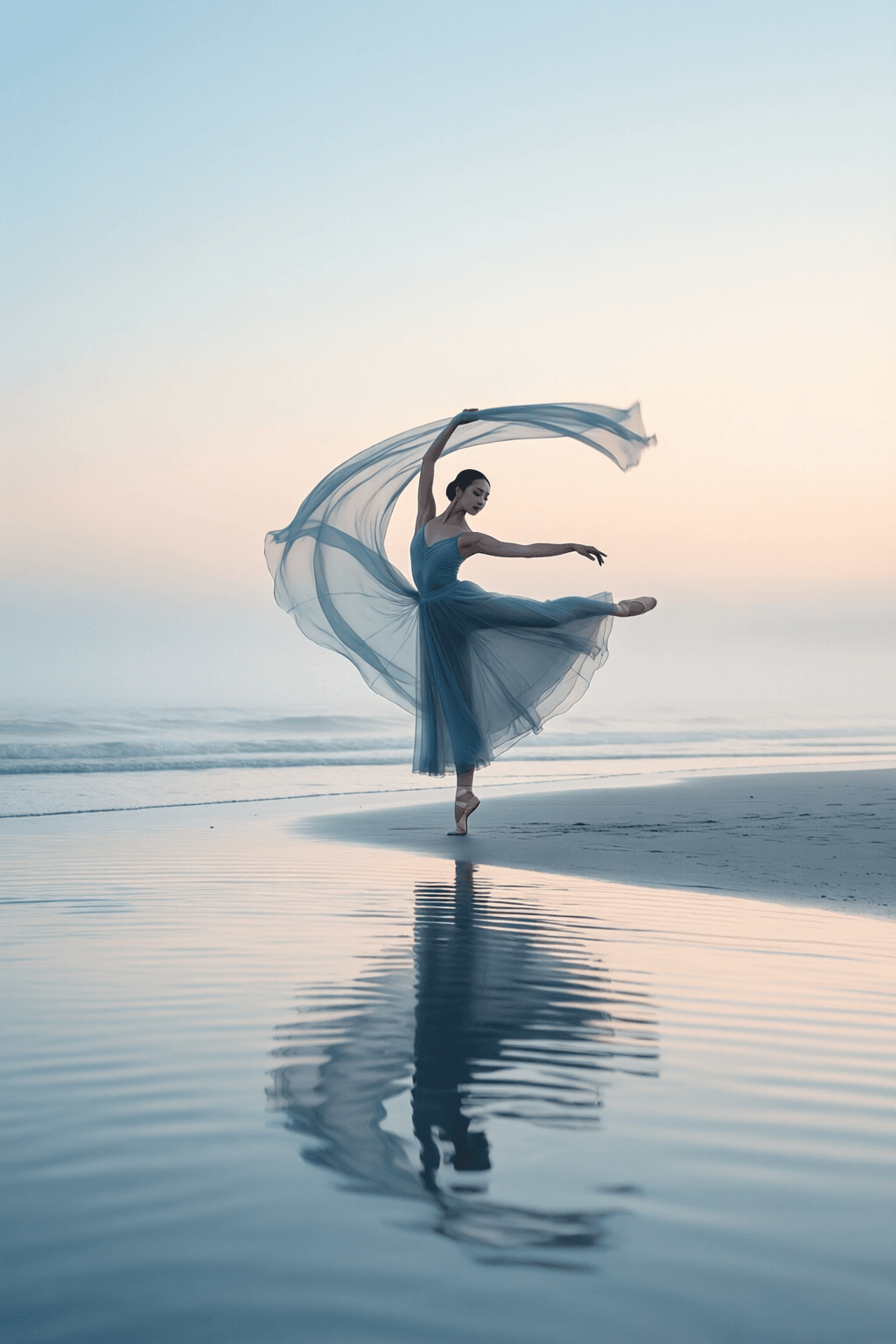
When you can be still and still dance, you are a great dancer. When you can move and still be still, you are a greater dancer. — Donna Goddard
—What lingers after this line?
The Paradox at the Heart of Dance
Donna Goddard’s line begins with a seeming contradiction: how can someone be still and still dance? Yet that paradox is precisely the point. She suggests that dance is not merely physical movement but a quality of presence. A great dancer can stand nearly motionless and still radiate rhythm, intention, and feeling, because the dance is already alive within them. From there, the second sentence deepens the idea. To move and still be still is harder, because it asks for inner calm amid outward action. In other words, mastery is not just about technique or energy; it is about maintaining a centered spirit even while the body turns, leaps, and flows.
Stillness as Living Presence
At first glance, stillness may seem like the absence of expression, but in performance it often becomes its most concentrated form. A paused gesture, a held breath, or a quiet stance can command more attention than a flurry of steps. Martha Graham famously treated stillness as an active force in modern dance, showing that what is withheld can be as eloquent as what is displayed. Thus, Goddard’s first claim honors the dancer who understands restraint. Rather than filling every moment with motion, such an artist lets silence, suspension, and poised awareness speak. The body may appear still, yet the audience senses current, tension, and readiness beneath the surface.
Movement Without Losing the Center
If stillness in motionlessness marks greatness, then stillness within movement marks an even deeper achievement. Here Goddard points toward inner equilibrium—the ability to remain grounded while everything external changes. This recalls practices found in disciplines like Tai Chi, where continuous movement is guided by calm attention rather than strain or agitation. Seen this way, the greater dancer is not the one who moves the most dramatically, but the one who never becomes scattered by movement. Even in speed, complexity, or emotional intensity, there remains a stable core. The body travels through space, yet the self does not lose its center.
A Spiritual Reading of the Quote
As the thought unfolds, the quote begins to sound like more than advice about choreography. It also reads as a meditation on life. Many spiritual traditions value the union of action and stillness: the Bhagavad Gita teaches disciplined action without inner disturbance, while Zen practice often emphasizes quiet awareness in the middle of ordinary activity. In that light, dancing becomes a metaphor for living well. Anyone can be calm when nothing is happening, just as anyone can become agitated when life speeds up. The greater art is to remain inwardly steady while participating fully in the world’s motion.
Why the Idea Resonates Beyond the Stage
Because of that broader meaning, Goddard’s words resonate even for people who never dance professionally. A teacher managing a lively classroom, a surgeon working under pressure, or a parent navigating chaos all face the same challenge: can they act decisively without surrendering their composure? The image of the dancer makes this abstract ideal vivid and memorable. Consequently, the quote praises a form of maturity that blends vitality with peace. It does not reject movement, ambition, or expression; instead, it asks that they arise from a deep internal stillness. That union, whether in art or daily life, is what turns skill into grace.
Mastery as Harmony Rather Than Force
Finally, the quote redefines mastery itself. Many people assume greatness comes from intensity, speed, or visible effort, but Goddard points elsewhere—to harmony. The finest dancer does not simply conquer the body into submission; they integrate body, mind, and feeling so completely that stillness and movement no longer oppose each other. This is why the saying lingers. It captures a rare human achievement: to be fully alive without being restless, and fully active without being inwardly shaken. In that fusion of motion and calm, dance becomes not just performance, but wisdom made visible.
Recommended Reading
As an Amazon Associate, we earn from qualifying purchases.
One-minute reflection
Why might this line matter today, not tomorrow?
Related Quotes
6 selectedWe are not human doings, we are human beings. — Jon Kabat-Zinn
Zinn
Jon Kabat-Zinn’s line quietly overturns a habit that defines much of modern life: measuring worth by output. At first glance, the quote sounds simple, yet it confronts the deep assumption that people must constantly perf...
Read full interpretation →The artist is a witness to the present moment, not a slave to the machine that wants to replace it. — bell hooks
bell hooks
At its core, bell hooks’s statement insists that art begins with presence. To be a witness to the present moment is to attend closely to lived reality—its tensions, beauties, wounds, and contradictions—rather than merely...
Read full interpretation →Healthy boundaries allow us to be more fully present in our lives. — Deepak Chopra
Deepak Chopra
At first glance, Deepak Chopra’s statement links two ideas that are often treated separately: limits and mindfulness. Yet the connection is intuitive.
Read full interpretation →The real gift of gratitude is that the more grateful you are, the more present you become. — Robert Holden
Robert Holden
Robert Holden’s quote suggests that gratitude is more than a polite response to good fortune; it is a way of paying fuller attention to life. In other words, when people actively notice what they appreciate, they are pul...
Read full interpretation →The real fault line in our lives is not between those who are awake and those who are asleep, but between those who can stay present with discomfort and those who must immediately explain it away. — Tara Brach
Tara Brach
Tara Brach shifts attention away from the familiar contrast between the ‘aware’ and the ‘unaware’ and toward something more intimate: how we respond when life becomes uncomfortable. In this view, the deepest dividing lin...
Read full interpretation →True togetherness is the art of sitting with one another in the silence, acknowledging that being present is the highest form of support we can offer. — Henri Nouwen
Henri Nouwen
Henri Nouwen’s reflection begins by redefining togetherness not as constant conversation, but as a quiet, attentive communion. In this view, silence is not emptiness; rather, it becomes a space where two people recognize...
Read full interpretation →More From Author
More from Donna Goddard →