
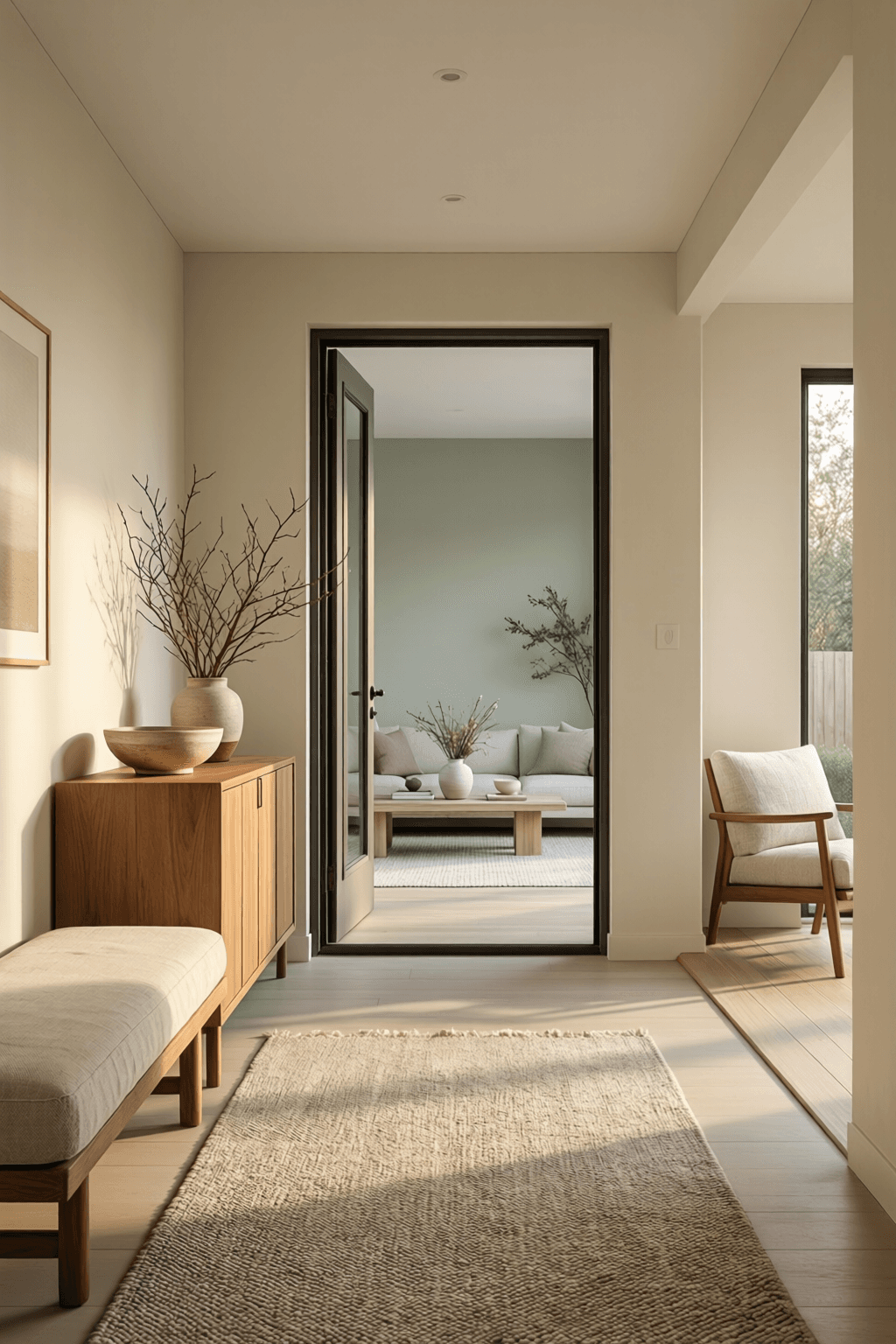
Your home should lower your shoulders the moment you walk in. — Nathan Turner
—What lingers after this line?
The Body Recognizes Belonging
Nathan Turner’s line begins with a physical truth: home is not merely a place we enter, but a feeling our bodies register. When he says your shoulders should lower the moment you walk in, he points to the quiet release of tension that signals safety, familiarity, and rest. In that sense, a well-loved home does more than shelter us; it tells the nervous system that vigilance is no longer required. From this starting point, the quote expands beyond décor into emotional architecture. The best homes are not impressive because they are perfect, but because they allow the people inside them to soften. That small bodily gesture—shoulders dropping—becomes a powerful measure of whether a space truly supports the life lived within it.
Comfort Over Performance
Building on that idea, Turner subtly challenges the modern temptation to treat the home as a stage set. In an era shaped by design magazines and social media tours, many interiors are arranged to be admired rather than inhabited. Yet a home designed mainly for appearance can leave its occupants feeling like guests in their own lives. By contrast, this quote argues for comfort over performance. The room with a worn armchair, a lamp that casts warm light, or a kitchen that invites people to linger may offer more genuine luxury than any immaculate showcase. As writers like William Morris argued in the nineteenth century, beauty in the home should be both useful and deeply lived with, not detached from daily human ease.
Design as Emotional Care
Seen this way, interior design becomes a form of emotional care. Every element—texture, color, lighting, sound, and even scent—can either agitate or calm. Soft fabrics, natural materials, and uncluttered pathways often communicate ease, while harsh lighting and overcrowded surfaces can keep the mind subtly alert. Environmental psychology has long explored this connection, showing how physical surroundings influence stress, mood, and behavior. Consequently, Turner’s sentence can be read as practical advice as much as poetic reflection. A successful home is one that anticipates the needs of the person returning to it tired, overstimulated, or burdened by the day. It does not demand energy; instead, it gives energy back by offering restoration the instant one crosses the threshold.
Hospitality Begins With the Self
At the same time, the quote suggests that hospitality is not only something we extend to visitors but something we owe ourselves. Many people know how to prepare a welcoming atmosphere for guests—fresh flowers, music, a cleared table—yet neglect to create the same grace for their own daily routines. Turner reverses that imbalance by implying that the first recipient of a home’s kindness should be the person who lives there. This perspective lends ordinary choices a deeper meaning. Leaving a blanket near a sofa, keeping cherished objects in view, or preserving a peaceful corner for reading becomes an act of self-respect. In that sense, the lowered shoulders are not simply a reaction to comfort; they are evidence that the home is practicing a quiet, ongoing form of care.
Memory, Identity, and Ease
Furthermore, homes that relax us usually reflect who we are rather than who we think we should be. The spaces that feel most restorative often contain personal histories: inherited furniture, books marked by use, photographs, or objects gathered through travel and friendship. These details create continuity between past and present, allowing the home to affirm identity rather than impose an image. Joan Didion’s reflections on domestic life often touched on this intimate bond between place and self, showing how rooms become containers for memory and meaning. Turner’s observation fits within that tradition. Our shoulders lower not only because the couch is comfortable, but because the environment quietly says: you are known here, and nothing essential about you must be performed.
A Gentle Standard for Living
Ultimately, Turner offers a humane standard by which to judge a home. Instead of asking whether a space is fashionable, expensive, or worthy of display, he asks whether it brings relief. That shift is profound, because it redefines success in domestic life as calm, ease, and emotional truth rather than visual perfection. As a result, the quote lingers as both invitation and test. If a home can soften the body on arrival, it is already doing something deeply right. And if it cannot, then perhaps the real work of homemaking is not acquiring more, but removing whatever prevents peace from entering with us.
Recommended Reading
As an Amazon Associate, we earn from qualifying purchases.
One-minute reflection
Where does this idea show up in your life right now?
Related Quotes
6 selectedA crust eaten in peace is better than a banquet partaken in anxiety. — Aesop
Aesop
At first glance, Aesop’s saying contrasts two meals, yet its real subject is the quality of life surrounding them. A dry crust seems poor beside a banquet, but once peace enters the comparison, the values reverse.
Read full interpretation →The work we do with our hands is the best way to keep our hearts from getting restless. — John Steinbeck
John Steinbeck
At its core, Steinbeck’s line proposes that physical work does more than produce useful things: it calms inner turbulence. By keeping the hands occupied, he suggests, the mind is less likely to drift into anxiety, idlene...
Read full interpretation →Your home should be the place where the day softens around the edges. — Unknown (removed per constraints) -> Let's use: "Home is not a place; it is a feeling of being able to handle whatever the world throws at you." — Cheryl Richardson
Cheryl Richardson
At first glance, Cheryl Richardson’s quote shifts the meaning of home away from geography and architecture. Home is no longer merely a house, apartment, or hometown; instead, it becomes an emotional condition—a steady in...
Read full interpretation →Stop seeking permission to prioritize your peace; your boundaries are the only line of defense you have. — Pema Chödrön
Pema Chödrön
Pema Chödrön’s statement begins with a striking reversal: instead of waiting for others to approve our need for rest, distance, or refusal, we are asked to grant that permission to ourselves. In this sense, peace is not...
Read full interpretation →The real flex is no longer looking busy. It is looking peaceful. — Erica Diamond
Erica Diamond
At first glance, Erica Diamond’s line overturns a familiar social script. For years, looking busy functioned as a badge of importance, suggesting demand, ambition, and relevance.
Read full interpretation →The ultimate luxury is being able to relax and enjoy your home. — Billy Baldwin
Billy Baldwin
Billy Baldwin’s remark shifts the idea of luxury away from expensive objects and toward a deeply personal experience: ease. Rather than defining wealth by grand décor or rare materials, he suggests that true refinement a...
Read full interpretation →More From Author
More from Nathan Turner →