
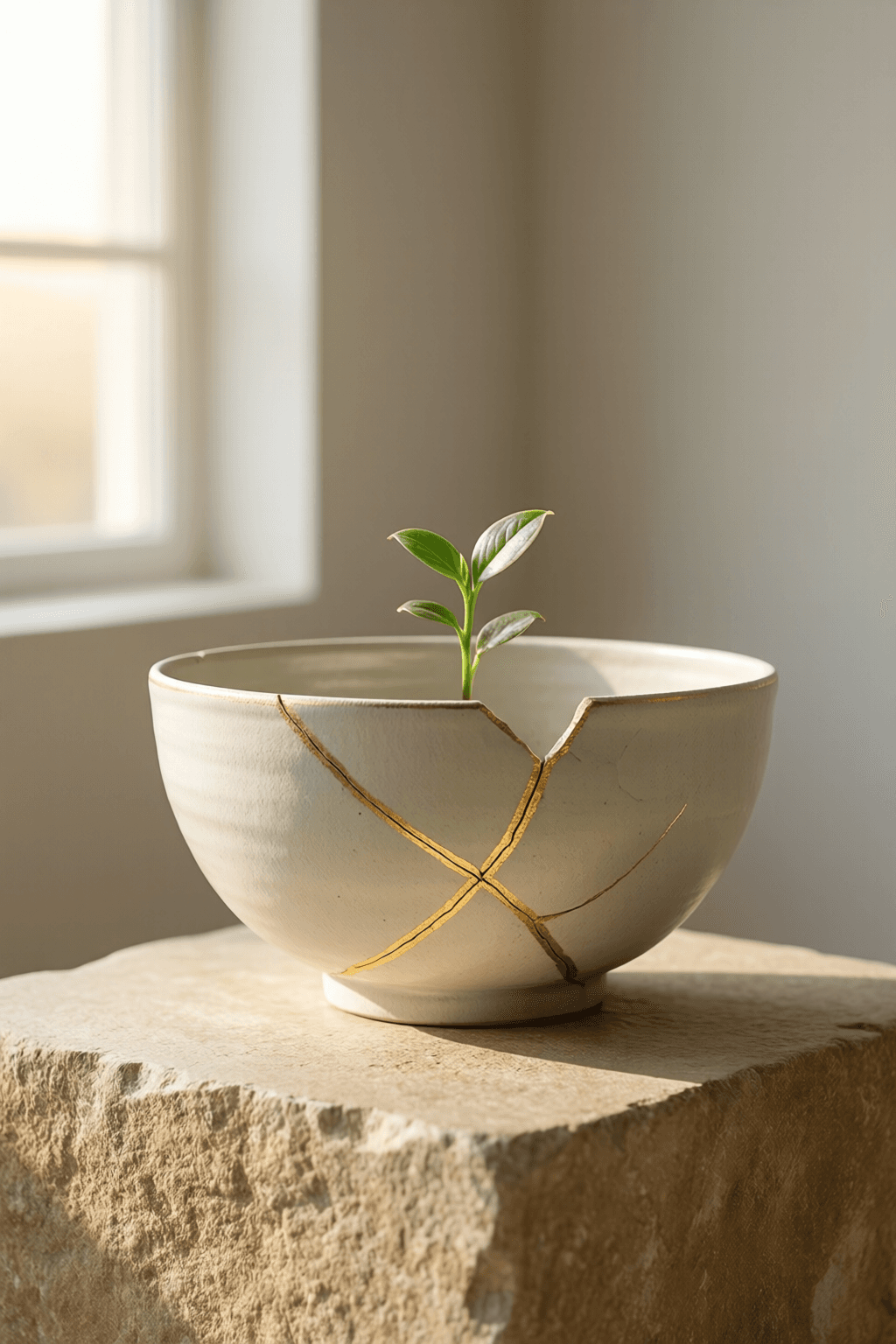
Healing is not the absence of pain—it's a steady return to wholeness despite it. — Mark Nepo
—What lingers after this line?
Pain Is Not the Opposite of Healing
Mark Nepo’s reflection begins by challenging a common assumption: that healing means pain has disappeared. Instead, he suggests that pain may remain present while healing is still underway. This shift matters because it frees us from measuring recovery only by comfort, and invites us to notice deeper signs of renewal—patience, self-trust, and the ability to keep living with openness.
Wholeness as a Gradual Return
From there, the quote moves toward the idea of wholeness, not as perfection, but as reconnection. To become whole again is to gather the scattered parts of the self after loss, illness, grief, or disappointment. In this sense, healing is less like flipping a switch and more like walking home slowly, even when the road is uneven.
The Courage to Continue
This steady return requires courage because it asks a person to keep moving without guarantees of immediate relief. Viktor Frankl’s Man’s Search for Meaning (1946) shows a similar truth: human beings can endure profound suffering when they find meaning within it. Nepo’s words echo that insight, reminding us that healing often grows through persistence rather than escape.
A Spiritual View of Recovery
Seen spiritually, healing becomes a practice of presence. Mark Nepo, known for The Book of Awakening (2000), often writes about meeting life as it is rather than waiting for it to become painless. This perspective does not romanticize suffering; rather, it honors the quiet strength involved in staying open-hearted while carrying what still hurts.
The Body and Mind Remember
Likewise, modern trauma research supports the idea that recovery is not simply erasure. Bessel van der Kolk’s The Body Keeps the Score (2014) explains how pain can remain stored in the body and nervous system, even after danger has passed. Yet through care, therapy, connection, and time, people can regain a sense of safety and selfhood despite those lingering traces.
Living Fully Alongside Pain
Ultimately, Nepo’s quote offers a compassionate definition of healing: not a spotless life, but a life reclaimed. Pain may still visit, but it no longer has to define the whole landscape. In returning steadily to wholeness, a person learns that healing is not proven by the absence of wounds, but by the renewed capacity to love, hope, and continue.
One-minute reflection
What's one small action this suggests?
Related Quotes
6 selectedHealing isn't about erasing the past. It's about changing how the past lives within you so it no longer controls your present. — Cory Muscara
Cory Muscara
Cory Muscara’s quote begins with a gentle but important correction: healing does not require pretending that pain never happened. Instead, it asks us to transform our relationship with memory, so the past becomes part of...
Read full interpretation →Healing may not be so much about getting better, as about letting go of everything that isn't you. — Rachel Naomi Remen
Rachel Naomi Remen
Rachel Naomi Remen’s insight gently shifts healing away from the usual language of repair. Instead of imagining ourselves as broken machines that must be made efficient again, she suggests that healing may involve removi...
Read full interpretation →It's when we start working together that the real healing takes place. — Yoko Ono
Yoko Ono
At its heart, Yoko Ono’s statement shifts healing away from the isolated individual and toward shared effort. The phrase “start working together” suggests that repair begins not merely with intention, but with cooperatio...
Read full interpretation →Healing is the return of the memory of wholeness. — Deepak Chopra
Deepak Chopra
At first glance, Deepak Chopra’s line reframes healing as something larger than the disappearance of pain or illness. To call healing “the return of the memory of wholeness” suggests that wellness is not newly manufactur...
Read full interpretation →Healing is an art. It takes time, it takes practice, it takes love. — Maza Dohta
Maza Dohta
Maza Dohta’s quote begins by reframing healing as an art rather than a mechanical repair. That distinction matters, because art is rarely instant: it involves sensitivity, patience, revision, and care.
Read full interpretation →It is when we start working together that the real healing takes place. — David Hume
David Hume
At its core, David Hume’s line suggests that healing is not merely a private act of endurance but a shared human process. The moment people begin working together, suffering is no longer carried in isolation; instead, it...
Read full interpretation →More From Author
More from Mark Nepo →