
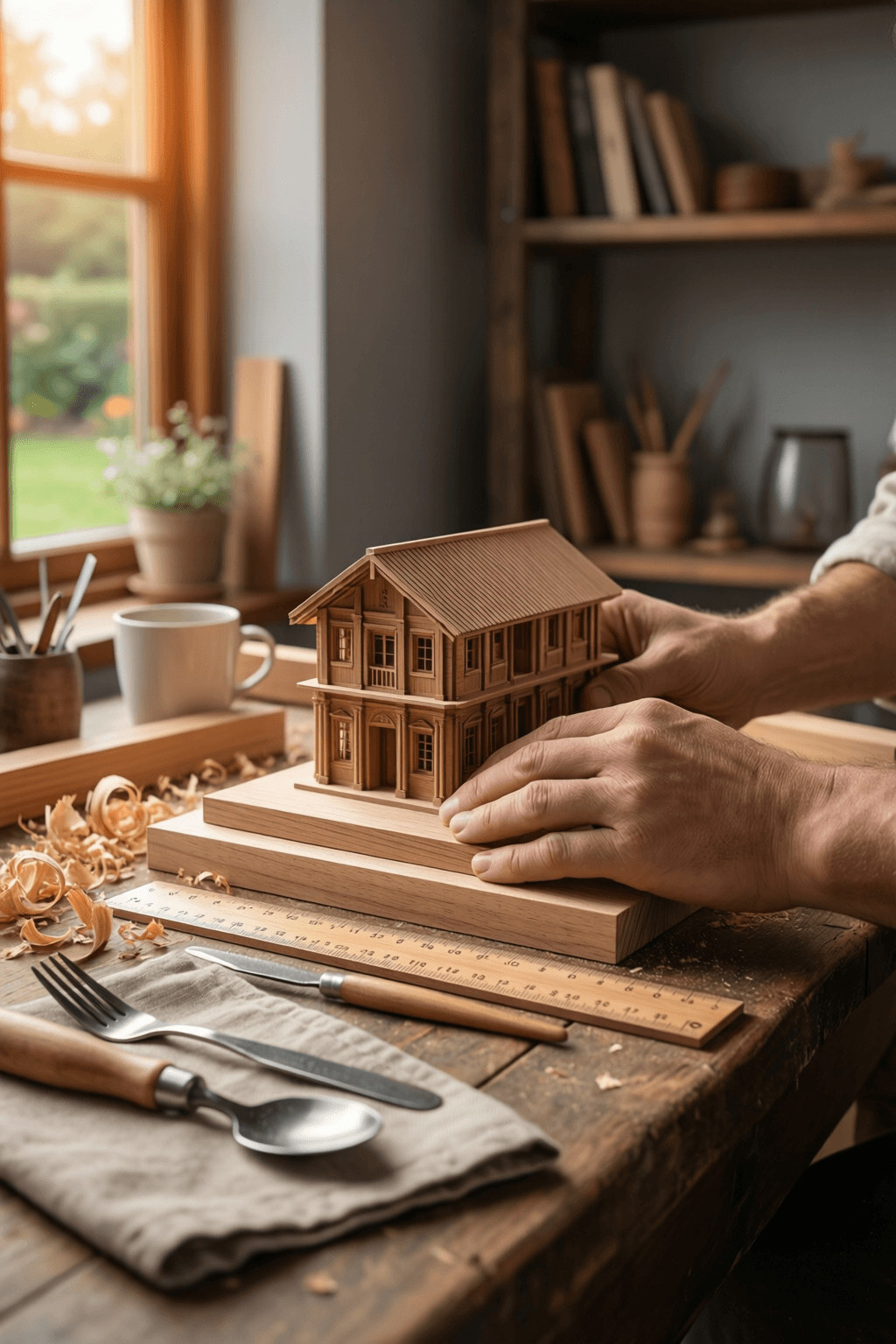
Patience is not merely a virtue but a fundamental component of craftsmanship; it is the quiet companion that guides the steady hand. — Tadao Ando
—What lingers after this line?
The Virtue Behind the Finished Work
At first glance, Tadao Ando’s words seem to praise patience as a moral quality, but he goes further by placing it at the center of making. Craftsmanship is not only skill with tools or mastery of materials; it is the discipline to let a work unfold at its proper pace. In this sense, patience becomes the quiet force that prevents haste from weakening beauty.
The Steady Hand and the Calm Mind
From there, the image of the “steady hand” suggests that true craft begins before the hand moves. A calm mind shapes the quality of each gesture, whether one is drawing a line, cutting wood, pouring concrete, or setting stone. Patience allows the maker to notice small errors before they become permanent and to respect the slow conversation between intention and material.
Architecture as Measured Silence
This idea is especially fitting for Ando, whose architecture often depends on restraint, precision, and silence. Buildings such as the Church of the Light in Osaka (1989) show how carefully controlled concrete, shadow, and light can create emotional depth without ornament. Such work could not arise from speed alone; it requires waiting, revising, and trusting that simplicity gains power through exactness.
Craftsmanship Beyond Technical Skill
Yet Ando’s insight reaches beyond architecture. A potter centering clay, a violin maker carving wood, or a writer refining a sentence all rely on patience as much as talent. Technical ability may begin the work, but patience carries it through the difficult middle, where repetition can feel invisible and progress seems slow.
The Discipline of Respecting Materials
Moreover, patience teaches the craftsperson to listen to materials rather than dominate them. Wood has grain, concrete has curing time, clay has moisture, and words have rhythm. When makers rush, they often impose their will too harshly; when they wait, they discover what the material itself permits and reveals.
Why Slowness Creates Lasting Value
Finally, the quote reminds us that lasting work is rarely born from impatience. In an age that often rewards speed, Ando’s view restores dignity to slowness and careful attention. Patience is not passivity; it is active devotion, the unseen companion that transforms labor into craft and craft into something enduring.
One-minute reflection
Why might this line matter today, not tomorrow?
Related Quotes
6 selectedPatience is not passive waiting. Patience is active acceptance of the process required to attain your goals and dreams. — Ray Davis
Ray Davis
Ray Davis’s words begin by correcting a common misunderstanding: patience is not the same as doing nothing. Passive waiting suggests resignation, as if time alone will deliver success.
Read full interpretation →The craft of living is a slow art, requiring the courage to be ordinary and the patience to be consistent. — Parker Palmer
Parker Palmer
Parker Palmer’s line frames living not as a sudden achievement but as a craft, something formed through repetition, attention, and humility. By calling it a “slow art,” he shifts the focus away from dramatic breakthrough...
Read full interpretation →The beauty of craftsmanship is that it is a dialogue with time, a slow resistance against the rush of the world. — Richard Sennett
Richard Sennett
At its core, Richard Sennett’s line presents craftsmanship as more than skilled labor; it becomes a moral and temporal stance. To make something carefully is to refuse the culture of haste, where speed is often mistaken...
Read full interpretation →The artist must be a craftsman; he must know his materials, his tools, and his methods. — Henri Matisse
Henri Matisse
Henri Matisse’s statement immediately shifts attention from inspiration to discipline. Rather than treating art as a purely mysterious gift, he insists that the artist is first a craftsman—someone who understands how thi...
Read full interpretation →The craft of life is not in the final product, but in the slow, intentional turning of the hands and the quiet cultivation of the soul. — William Morris
William Morris
At its heart, this reflection shifts attention away from finished achievements and toward the manner in which a life is shaped. William Morris suggests that meaning does not reside chiefly in what we produce, display, or...
Read full interpretation →But patience can't be acquired overnight. It's just like building up a muscle. Every day you need to work on it, to push its limits. — Eknath Easwaran
Eknath Easwaran
Eknath Easwaran frames patience not as a fixed personality trait but as a capacity that develops over time. From the outset, his comparison to building muscle changes the way we think about self-control: instead of waiti...
Read full interpretation →More From Author
More from Tadao Ando →