
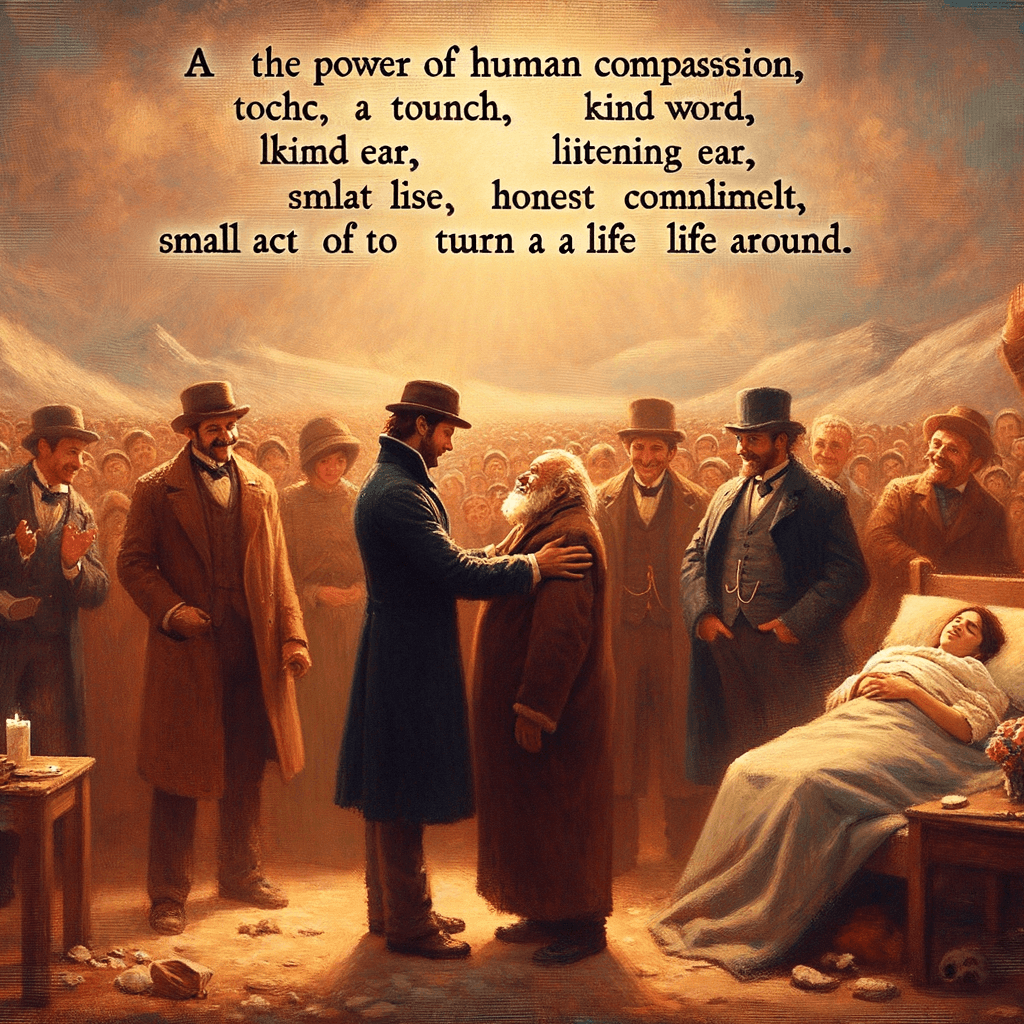
Let us not underestimate the power of a touch, a smile, a kind word, a listening ear, an honest compliment, or the smallest act of caring, all of which have the potential to turn a life around. — Leo Buscaglia, United States.
—What lingers after this line?
Impact of Simple Gestures
This quote highlights how simple actions like a smile, kind word, or touch can have a significant impact on someone's life, emphasizing that small gestures can lead to meaningful change.
Human Connection
It underscores the importance of human connection and compassion. These small acts can foster relationships and create a sense of belonging, which are vital for emotional well-being.
Empathy and Listening
The mention of a listening ear suggests that being present and truly listening to someone can greatly affect their state of mind and openness. Empathy plays a crucial role in supporting others.
Encouragement and Recognition
An honest compliment can uplift someone’s spirit, and recognition of their efforts or worth can instill confidence and motivation, showing the transformative power of encouragement.
Philosophical Context
Leo Buscaglia, known for his teachings on love and people, often advocated for the power of love and kindness. His philosophy revolves around the idea that everyone can make a difference, no matter how small the action may seem.
Recommended Reading
As an Amazon Associate, we earn from qualifying purchases.
One-minute reflection
Where does this idea show up in your life right now?
Related Quotes
6 selectedYou can't save people from themselves. You can only love them while they save themselves. — Al-Anon Philosophy
Anon Philosophy
At its core, this Al-Anon saying confronts a painful truth: no amount of devotion can force another person to change. It rejects the fantasy of rescue, reminding us that healing, sobriety, and emotional growth must ultim...
Read full interpretation →The capacity to care is the thing which gives life its deepest significance. — Pablo Casals
Pablo Casals
Pablo Casals’ remark begins with a simple but profound claim: life does not gain depth merely from achievement, pleasure, or survival, but from the ability to care. In this view, significance is not something we possess...
Read full interpretation →Be a hard master to yourself and be lenient to everybody else. — Henry Ward Beecher
Henry Ward Beecher
Henry Ward Beecher’s advice turns ordinary judgment upside down. Instead of demanding much from other people and excusing our own flaws, he urges the reverse: strictness inward, gentleness outward.
Read full interpretation →Even when you feel entirely alone, remember that your capacity to love and care for others remains your strongest anchor to the human collective. — Mother Teresa
Mother Teresa
At first glance, Mother Teresa’s words speak to the pain of isolation, that unsettling feeling of being cut off from everyone else. Yet she immediately redirects attention toward something still intact: the ability to lo...
Read full interpretation →You shouldn't have to crash to deserve compassion. — Tessa Frazer
Tessa Frazer
At first glance, Tessa Frazer’s line exposes a painful social habit: people are often taken seriously only after they visibly break down. The quote rejects the idea that suffering must become dramatic before it is consid...
Read full interpretation →In dealing with those who are undergoing great suffering, if you feel burnout setting in, it is best, for the sake of everyone, to withdraw and restore yourself. — Dalai Lama XIV
Dalai Lama XIV
At its core, the Dalai Lama’s remark reframes withdrawal not as abandonment but as responsibility. When we accompany people through intense pain, we often imagine that constant presence is the highest form of care.
Read full interpretation →More From Author
More from Leo Buscaglia, United States. →