
Your Happiness Is Not Something You Postpone for the Future; It Is Something You Design for the Present - Jim Rohn
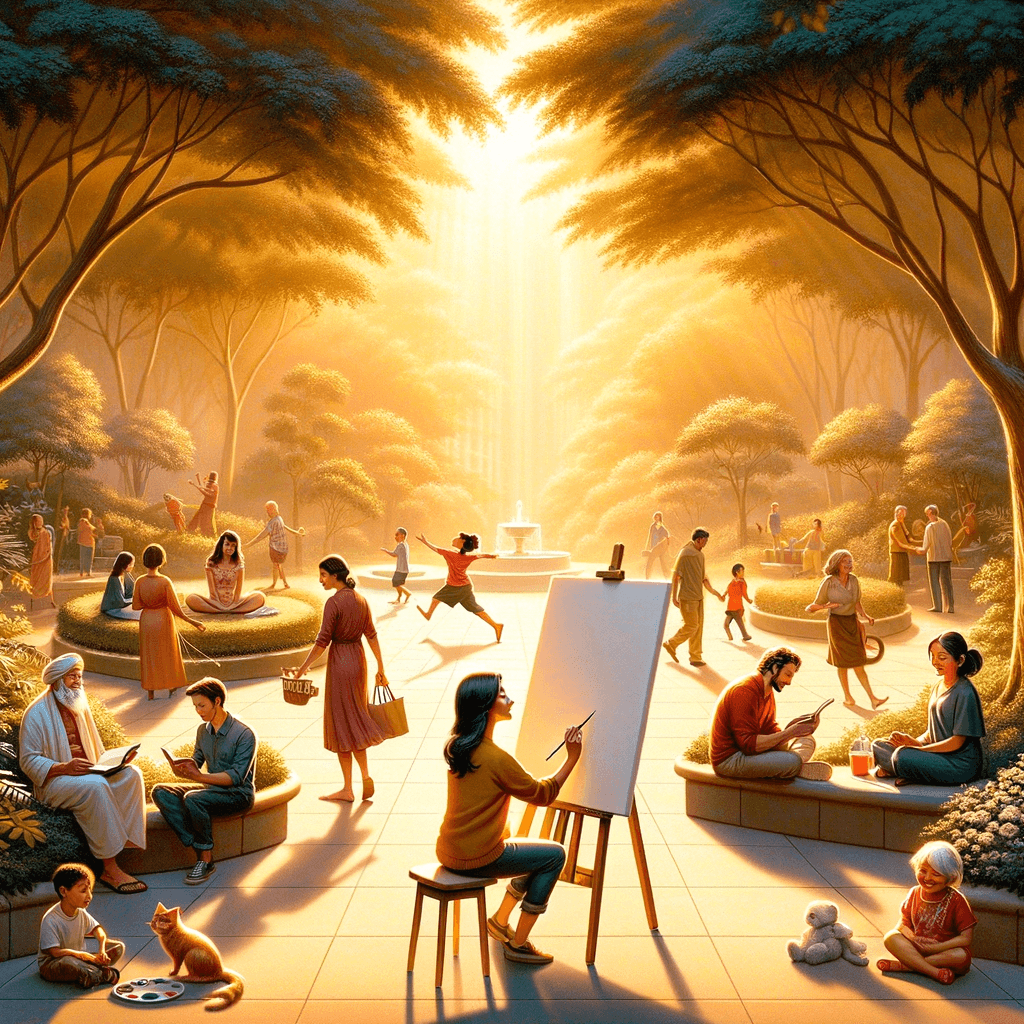
Your happiness is not something you postpone for the future; it is something you design for the present. — Jim Rohn
—What lingers after this line?
Living in the Present
This quote emphasizes the importance of experiencing and cultivating happiness in the current moment rather than waiting for a future event or milestone. Happiness is something that should be embraced today, not deferred.
Active Pursuit of Happiness
It suggests that happiness is a state that requires intentional effort and planning. It is something you design and take responsibility for, rather than passively waiting for it to occur later in life.
Avoiding Procrastination
The quote warns against postponing joy and suggests that people often wait for ideal circumstances to feel happy. However, it encourages us to focus on creating happiness in the present instead of assuming that a future situation will bring contentment.
Empowerment and Choice
This message underscores the idea that people have control over their emotional state. By recognizing that happiness is something one can design, individuals are empowered to make choices that lead to immediate fulfillment and joy.
Philosophy of Jim Rohn
Jim Rohn was a motivational speaker and personal development coach who often spoke about the significance of taking responsibility for one's own success and happiness. His philosophy centers around the idea that individuals have the power to shape their own lives through daily actions and decisions.
Recommended Reading
As an Amazon Associate, we earn from qualifying purchases.
One-minute reflection
Why might this line matter today, not tomorrow?
Related Quotes
6 selectedToday is the tomorrow I was worried about yesterday. — Anthony Hopkins
Anthony Hopkins
Anthony Hopkins’ line compresses a familiar experience into a single, slightly comic realization: the future we dreaded has arrived, and we are still here. The phrasing makes time feel like a loop—yesterday’s imagination...
Read full interpretation →Unease, anxiety, tension, stress, worry—all forms of fear are caused by too much future, and not enough presence. — Eckhart Tolle
Eckhart Tolle
Eckhart Tolle’s claim reframes fear less as an external threat and more as a shift in where attention lives. When the mind leans heavily into what might happen, it manufactures a space for uncertainty to multiply—produci...
Read full interpretation →It's okay to not have a dream. If you have moments where you feel happiness, that's enough. — Min Yoon-gi
gi
Min Yoon-gi’s line begins by loosening a pressure many people quietly carry: the idea that life must be organized around a singular, ambitious dream. In cultures that praise hustle and constant self-optimization, not hav...
Read full interpretation →We have to be careful not to spend our lives anticipating the next thing. — Thich Nhat Hanh
Thich Nhat Hanh
Thich Nhat Hanh’s warning points to a quiet but pervasive habit: living in the mental future. Anticipation can feel productive—planning, improving, preparing—but it can also become a way of postponing life itself.
Read full interpretation →The most important, the primordial relationship in your life is your relationship with the Now. — Eckhart Tolle
Eckhart Tolle
Eckhart Tolle’s line shifts the idea of “relationship” away from a person and toward a lived condition: the quality of attention you bring to this moment. In that framing, the Now isn’t a background setting—it’s the part...
Read full interpretation →Your life does not get better by chance, it gets better by change. – Jim Rohn
Jim Rohn
This quote emphasizes the necessity of taking intentional action to improve one's life. Relying on chance alone is insufficient; active change is required.
Read full interpretation →More From Author
More from Jim Rohn →How long should you try? Until. — Jim Rohn
Jim Rohn’s terse answer—until—compresses an entire philosophy into a single horizonless adverb. It rejects arbitrary timelines and locates success in sustained engagement rather than instant outcomes.
Read full interpretation →If you don't like where you are, move. You are not a tree. — Jim Rohn
Jim Rohn’s line begins with a playful image and ends with a serious challenge: trees are rooted; people choose. In his seminars (1970s–2000s), he urged audiences to treat dissatisfaction not as a life sentence but as a s...
Read full interpretation →Your life does not get better by chance, it gets better by change. – Jim Rohn
This quote emphasizes the necessity of taking intentional action to improve one's life. Relying on chance alone is insufficient; active change is required.
Read full interpretation →Either you run the day, or the day runs you. — Jim Rohn
This quote emphasizes the importance of taking control of your own life. By actively managing your time and priorities, you ensure that you are in charge of your daily actions and outcomes.
Read full interpretation →