
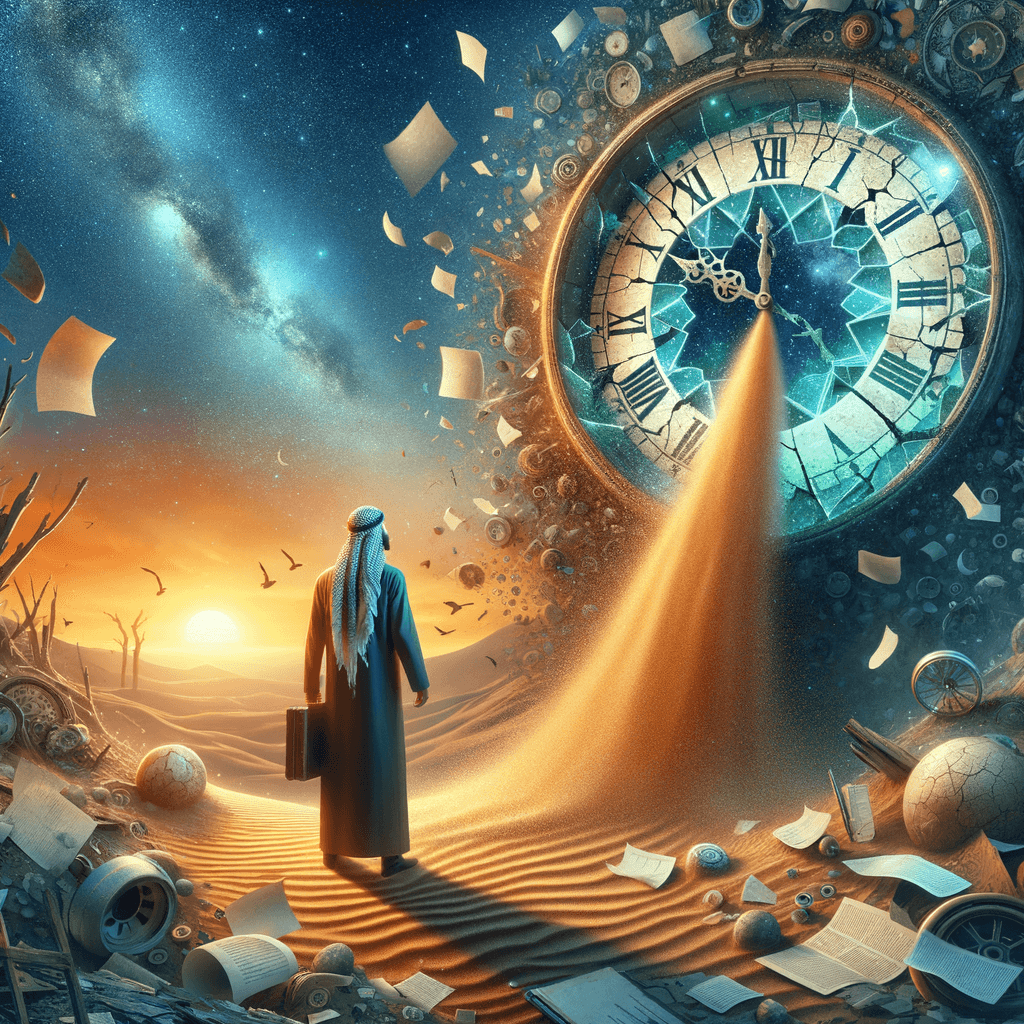
Time is what we want most, but what we use worst. — William Penn
—What lingers after this line?
Value of Time
This quote highlights the immense value humans place on time, often desiring more of it for various activities, goals, or pleasures. However, despite recognizing this value, we often fail to use time wisely.
Mismanagement of Time
William Penn is pointing out a common human flaw—the tendency to misuse or waste time, whether through procrastination, distractions, or poor planning. Despite its undeniable importance, we often fail to maximize the time we have.
Human Desire for More Time
The quote reveals a paradox: humans constantly want more time to achieve their dreams or enjoy life, yet they frequently misuse the time they are given, leading to regret.
The Irreplaceability of Time
Time is a finite and non-renewable resource, making it one of the most precious assets we have. The quote alludes to the fact that once time is wasted, it can never be recovered, adding significance to how it's used.
Historical Context
William Penn, an English philosopher and Quaker, lived during the 17th century, a period when the relationship between time and productivity, as well as moral values, were becoming crucial subjects in Western thought, especially within the context of rising intellectualism.
One-minute reflection
Where does this idea show up in your life right now?
Related Quotes
6 selectedWhen I tell my kids I will do something in a minute, what I'm really saying is: Please forget. — Karen Salmansohn
Karen Salmansohn
Karen Salmansohn’s line turns an ordinary parental phrase into a small confession. When a parent says, “in a minute,” the words sound like a promise, but the hidden hope is that the child’s request will quietly vanish.
Read full interpretation →People say nothing is impossible, but I do nothing every day. — A.A. Milne
A. A. Milne
At first glance, A.A. Milne’s line turns a familiar motivational slogan inside out.
Read full interpretation →The most productive thing you can do is learn to manage your energy, not just your time. — Arianna Huffington
Arianna Huffington
Arianna Huffington’s quote reframes productivity at its foundation. Instead of treating time as the only scarce resource, she points to energy as the real force that determines whether hours become meaningful work or mer...
Read full interpretation →Whatever you want to do, do it now. — Michael Landon
Michael Landon
Michael Landon’s line turns a private wish into a public command: if something matters, do it now. At first glance, the statement sounds simple, yet its force lies in how it strips away excuses, postponements, and the fa...
Read full interpretation →Instead of saying 'I don't have time,' try saying 'it's not a priority,' and see how that feels. — Laura Vanderkam
Laura Vanderkam
Laura Vanderkam’s quote works by replacing a familiar excuse with a more revealing truth. “I don’t have time” sounds objective, as if the day itself has failed us; however, “it’s not a priority” returns the matter to cho...
Read full interpretation →Someday is a disease that will take your dreams to the grave with you. — Tim Ferriss
Tim Ferriss
At first glance, “someday” sounds innocent, even hopeful. Yet Tim Ferriss turns it into a warning, arguing that the word often disguises delay rather than possibility.
Read full interpretation →More From Author
More from William Penn →