
Act with a Purpose, and Let Your Purpose Be the Act - Jiddu Krishnamurti
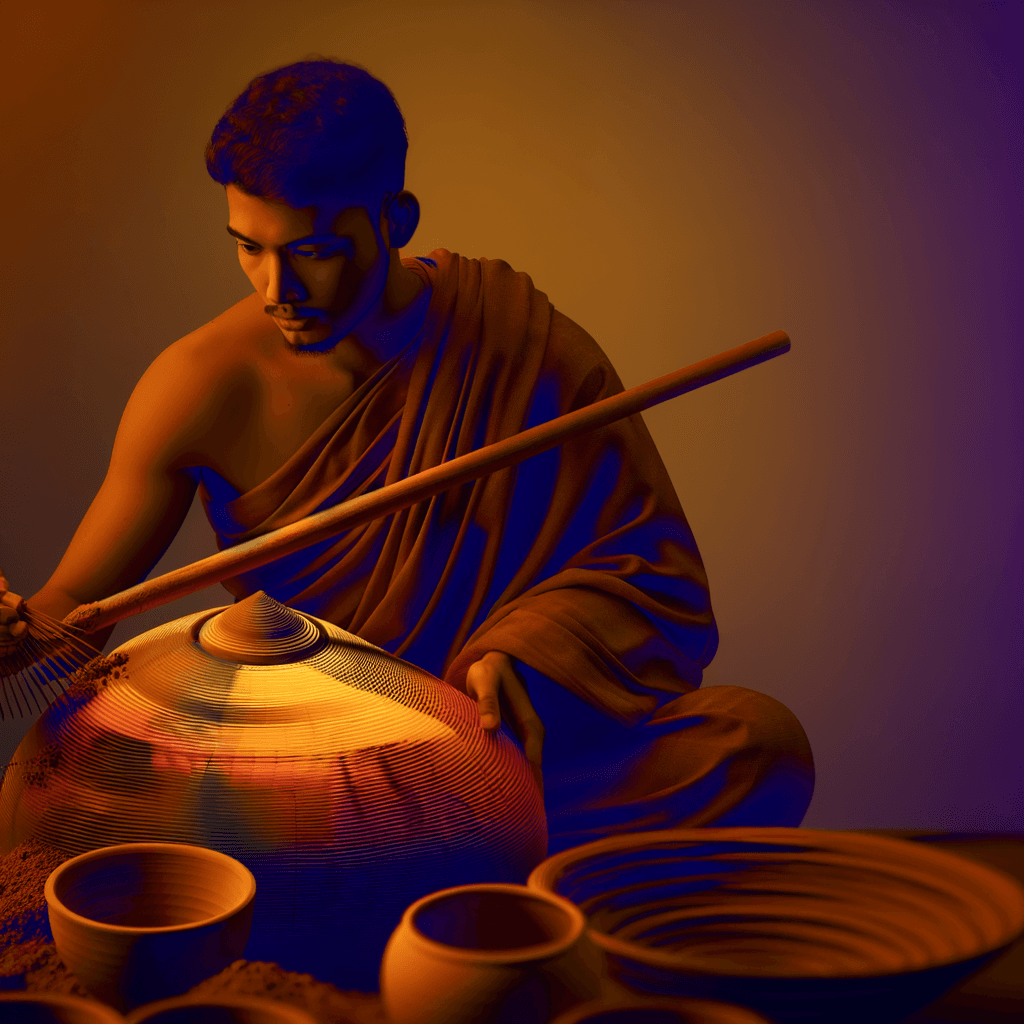
Act with a purpose, and let your purpose be the act. — Jiddu Krishnamurti
—What lingers after this line?
Mindful Action
This quote emphasizes the importance of being fully present in one's actions. Instead of fixating on external outcomes, one should focus on the act itself, allowing the purpose to emerge naturally.
Detachment from Results
Krishnamurti suggests that true purpose lies in the process rather than the result. By acting with awareness and intention, individuals can find meaning in the action itself rather than being bound by expectations or external rewards.
The Philosophy of Purpose
Purpose is often seen as an external goal, but this quote challenges that notion. By aligning one's purpose with the act itself, one achieves a form of self-integrated purpose that is free from societal pressures or personal desires.
Zen and Eastern Philosophies
This idea is closely related to Zen and other Eastern philosophies, which emphasize doing things for their own sake rather than as a means to an end. Such an approach fosters inner peace and fulfillment.
Jiddu Krishnamurti’s Teachings
As a spiritual thinker, Krishnamurti often spoke on awareness, freedom, and the nature of human thought. His teachings encourage individuals to break free from conditioned thinking and act with true understanding and presence.
Recommended Reading
One-minute reflection
What feeling does this quote bring up for you?
Related Quotes
6 selectedSlow productivity is not about doing less. It is about doing what matters with more intention. — Unknown
Unknown
The quote begins by challenging a common misunderstanding: “slow” sounds like “less,” as if productivity must shrink to become gentler. Instead, it reframes slowness as deliberateness—an approach where pace is chosen to...
Read full interpretation →Do nothing which is of no use.
Unknown
“Do nothing which is of no use” compresses an entire philosophy into a single command: let utility be the filter through which actions pass. It does not merely warn against laziness; rather, it challenges the subtle habi...
Read full interpretation →Ask yourself at every moment, 'Is this necessary?' — Marcus Aurelius
Marcus Aurelius
Marcus Aurelius’ prompt—“Is this necessary?”—works like a mental pause button. Rather than condemning desire or action outright, it inserts a moment of scrutiny between impulse and behavior.
Read full interpretation →Act with care, move with purpose, and leave behind a trail people want to follow. — Viktor Frankl
Viktor Frankl
The opening directive—“Act with care”—frames life as something shaped by attention rather than impulse. Care here is not mere gentleness; it is the discipline of considering consequences, especially when other people’s d...
Read full interpretation →Order your thoughts, then set your feet in motion; intention finds its path through action. — Marcus Aurelius
Marcus Aurelius
Marcus Aurelius’ line begins with a simple sequence: first arrange the mind, then move the body. In Stoic terms, this reflects the idea that a well-ordered inner life—clear judgments, realistic expectations, and measured...
Read full interpretation →Arrive at your future by stepping into the present with purpose. — Sappho
Sappho
Sappho’s line turns the usual timeline on its head: instead of chasing the future as a distant place, she frames it as something we “arrive at” by how we inhabit today. The future becomes less like a destination you stum...
Read full interpretation →More From Author
More from Jiddu Krishnamurti →To live is to be among others; to be among others is to be different. — Jiddu Krishnamurti
Krishnamurti builds a compact chain of meaning: life is not merely biological survival but participation in a human world, and participation immediately places us in relation to people who are not ourselves. In other wor...
Read full interpretation →The only revolution that is possible is the one within. — Jiddu Krishnamurti
Krishnamurti’s line turns the usual meaning of “revolution” on its head. Instead of crowds, slogans, or new governments, he points to a quieter upheaval: a deep shift in the way a person perceives, thinks, and acts.
Read full interpretation →To be truly free, one must be able to be free of oneself. — Jiddu Krishnamurti
Krishnamurti’s line turns the usual idea of freedom inside out. Instead of blaming external rules alone—governments, traditions, or other people—he points to a subtler captivity: the constant pressure of “me,” with its p...
Read full interpretation →It is no measure of health to be well adjusted to a profoundly sick society. — Jiddu Krishnamurti
Krishnamurti’s line begins by unsettling a common assumption: that if you fit smoothly into your environment, you must be doing well. Yet he argues that “health” cannot be defined by adaptation alone, because adaptation...
Read full interpretation →