
The Crucial Interplay of Failure, Courage, and Wisdom
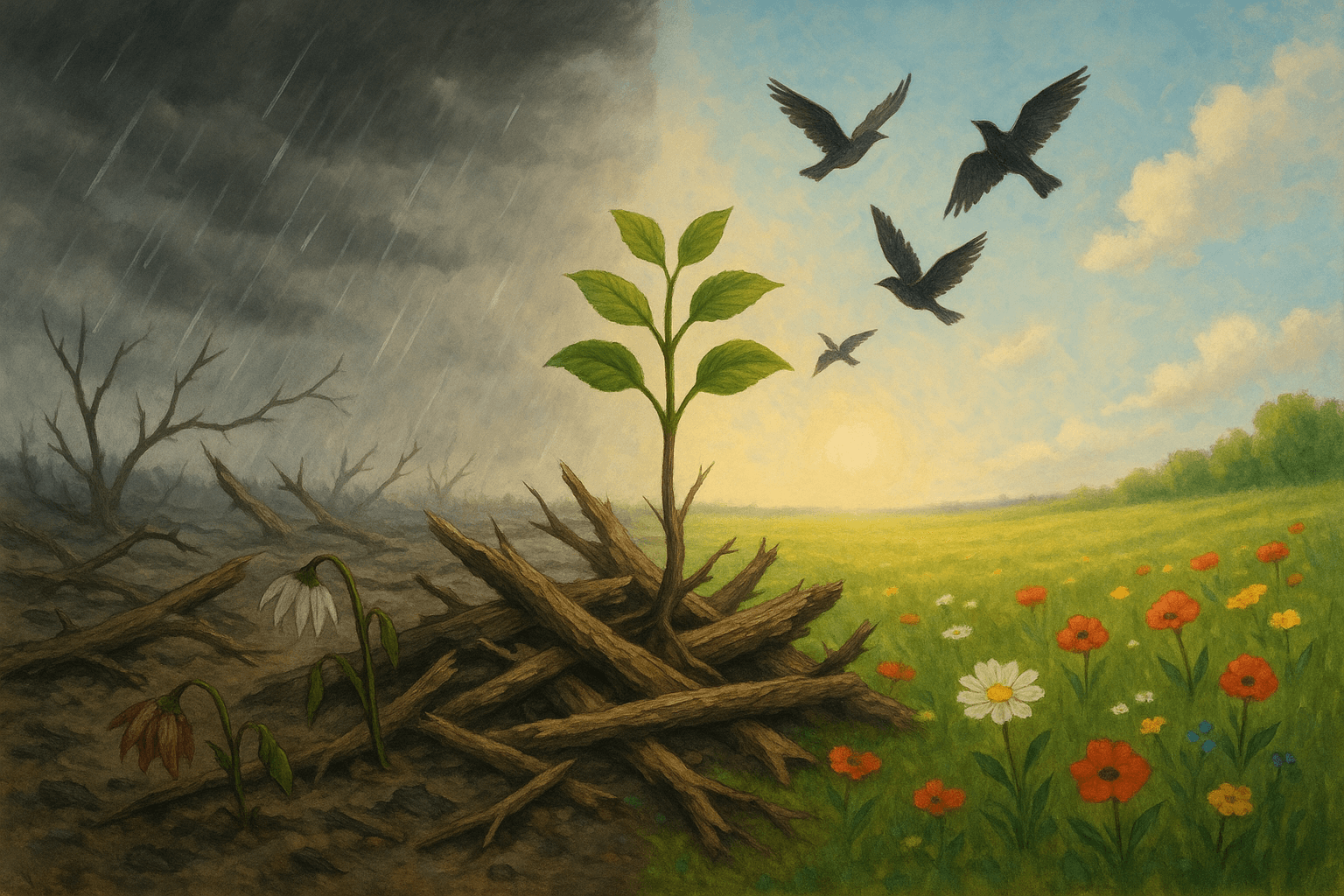
Wisdom is born from a blend of failure and courage. — Haruki Murakami
—What lingers after this line?
Understanding the Origins of Wisdom
Murakami’s quote proposes that wisdom does not emerge spontaneously; rather, it is cultivated through lived experience. Central to this process is the interplay between failure—often painful and humbling—and the courage required to persist through setbacks. As we examine how wisdom is formed, it becomes clear that these two elements are not opposites, but collaborators in personal growth.
Learning Through Failure’s Lessons
The first component, failure, offers life’s most candid instruction. From Edison’s thousands of unsuccessful attempts before inventing the light bulb to J.K. Rowling’s early rejections, history showcases failure as an invaluable teacher. Failure strips away pretense, forcing reflection and adaptation. However, such lessons remain buried unless one possesses the courage to confront and learn from them.
The Role of Courage in Facing Adversity
Transitioning from failure to growth requires courage—a willingness to continue despite uncertainty and fear. Courage propels individuals out of the paralysis of disappointment, opening the door to new attempts and creative solutions. For instance, Nelson Mandela’s perseverance through decades of imprisonment exemplifies how courageous resolve leads to transformative wisdom rather than bitterness.
How Wisdom Emerges from the Process
As failure and courage interact, they forge the tempered understanding that we label as wisdom. This synthesis is evident in many philosophical works, such as Confucius’s teachings, which emphasize self-improvement and resilience in the face of adversity. It is through the iterative process of trial, error, and renewed effort that individuals attain a deeper grasp of both themselves and the world.
Applying This Blend in Everyday Life
Ultimately, embracing Murakami’s insight can reshape how we approach challenges. Rather than shying away from failure or letting fear dictate our choices, we become open to experience and growth. In doing so, we create a fertile ground for wisdom to flourish—not as an abstract concept, but as a practical guide for navigating the complexities of life.
Recommended Reading
As an Amazon Associate, we earn from qualifying purchases.
One-minute reflection
Why might this line matter today, not tomorrow?
Related Quotes
6 selectedCourage is less about fearlessness than training the mind to act with clarity and conviction. — Ranjay Gulati
Ranjay Gulati
Ranjay Gulati’s line begins by overturning a common myth: that courage belongs to people who simply don’t feel afraid. Instead, he frames fear as normal—and even expected—while locating courage in what happens next.
Read full interpretation →Dare to begin where fear says to stop; the first step redraws the map — Paulo Coelho
Paulo Coelho
Paulo Coelho’s line treats fear less as a warning and more as a border we mistakenly accept as permanent. When fear says “stop,” it often isn’t pointing to actual danger; it’s signaling uncertainty, inexperience, or the...
Read full interpretation →If you are not in the arena also getting your ass kicked, I'm not interested in your feedback. — Brené Brown
Brené Brown
Brené Brown’s blunt image of “the arena” draws a sharp line between spectators and participants. Feedback, she implies, carries real weight when it comes from someone who has also accepted the risks of being seen, judged...
Read full interpretation →There is something wonderfully bold and liberating about saying yes to our entire imperfect and messy life. — Tara Brach
Tara Brach
Tara Brach frames acceptance not as resignation but as a daring, almost countercultural act. To say yes to “our entire imperfect and messy life” is to stop bargaining for a cleaner version of reality before we allow ours...
Read full interpretation →Lasting change requires compassion alongside courage, not punishment disguised as self-improvement. — Brené Brown
Brené Brown
Brené Brown’s line challenges the common belief that harshness is the fastest route to transformation. Instead, she argues that durable change is built from two forces working together: the courage to face what must shif...
Read full interpretation →Wealth is the slave of a wise man. The master of a fool. — Seneca
Seneca
Seneca’s line turns a common assumption upside down: money doesn’t automatically grant freedom; it can just as easily impose a new kind of dependence. By calling wealth a “slave” to the wise, he implies that the wise per...
Read full interpretation →More From Author
More from Haruki Murakami →I'm not interested in being a 'perfect' person. I am interested in being a whole person. — Haruki Murakami
Murakami’s distinction begins by exposing how “perfect” often means polished, acceptable, and free of visible flaws. That standard is typically external—set by culture, family expectations, or the quiet pressure to appea...
Read full interpretation →Dance with the unknown; it often teaches the steps you need next. — Haruki Murakami
Murakami’s line reframes uncertainty as a dance partner rather than a threat. Instead of waiting for perfect clarity, it suggests stepping forward while the music is still forming, trusting that motion itself reveals rhy...
Read full interpretation →Walk into the morning with work to do and gratitude to carry you along. — Haruki Murakami
Murakami’s line reads like a quiet directive: step into the day with two companions—work and gratitude. Rather than romanticizing mornings as purely inspirational, he frames them as practical thresholds where intention m...
Read full interpretation →When you clear a corner of doubt, the rest of the room fills with possibility. — Haruki Murakami
Murakami frames doubt not as a fleeting thought but as something spatial—like a cluttered corner that quietly dictates how you move through an entire room. In that image, uncertainty is more than hesitation; it becomes a...
Read full interpretation →