
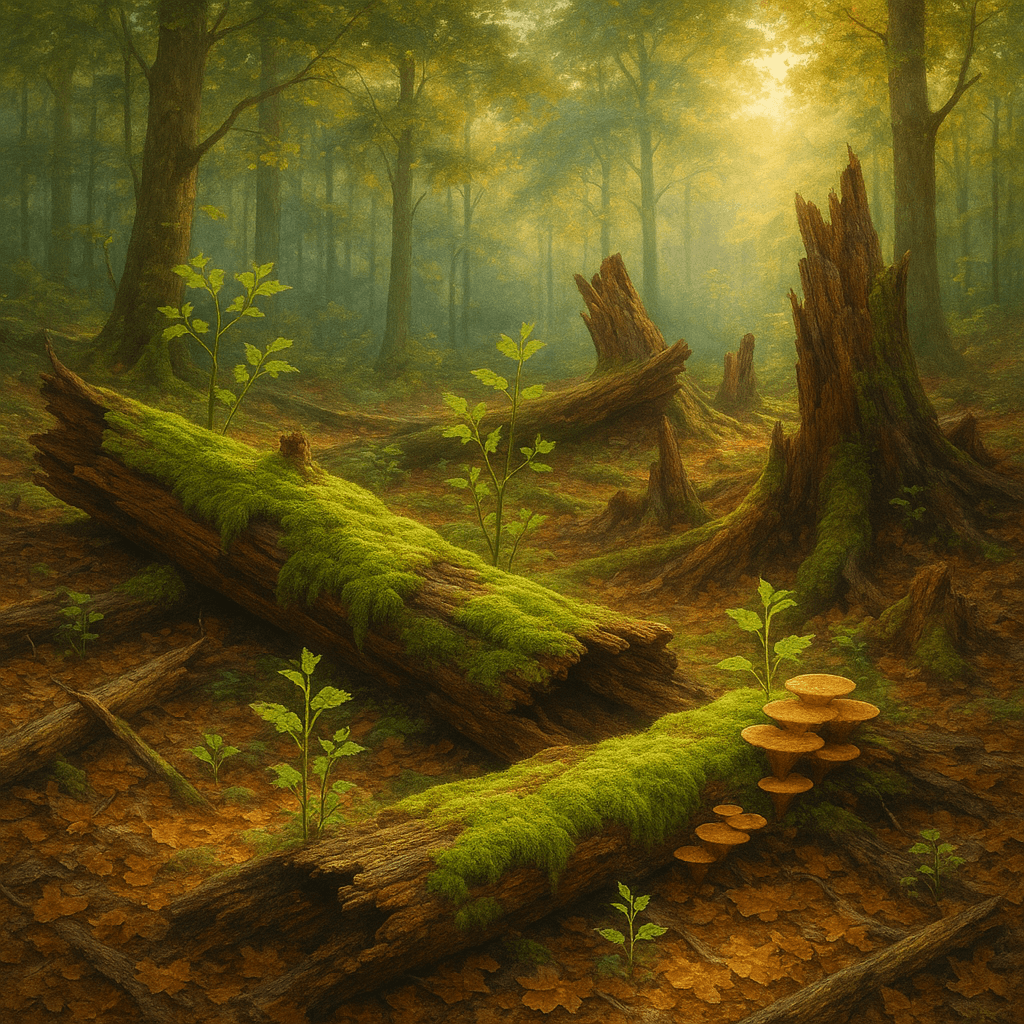
To create, one must first dare to dismantle. — Anaïs Nin
—What lingers after this line?
The Audacity to Break with Tradition
Anaïs Nin’s words underscore a profound truth: the act of creation often begins with the courage to break away from established norms. Whether in art, science, or personal reinvention, progress rarely comes from unquestioned adherence to tradition. Pablo Picasso exemplified this principle when he shattered classical artistic conventions to pioneer Cubism, illustrating that only by dismantling the old can space be made for the new.
Destruction as a Prerequisite for Innovation
Yet, the process of dismantling is more than rebellion—it is a necessary precursor to genuine innovation. Silicon Valley’s concept of ‘disruptive technology,’ popularized by Clayton Christensen in ‘The Innovator’s Dilemma’ (1997), demonstrates how transformative progress frequently requires abandoning obsolete systems. This willingness to disrupt lays the groundwork for breakthroughs that reshape industries and societies alike.
Personal Growth and Reinvention
On a personal level, Nin’s insight resonates with the journeys of individuals facing change. Psychological theories, such as Joseph Campbell’s Hero’s Journey, highlight how dismantling prior beliefs and identities is crucial for authentic self-discovery. By daring to let go of outdated narratives, people can reconstruct a more resilient and authentic sense of self, enabling growth and fulfillment.
Literary and Artistic Transformations
This philosophy also animates the evolution of literature and art. Modernist writers like Virginia Woolf dismantled linear storytelling and Victorian values to invent stream-of-consciousness narration, inviting readers into fragmented, yet richer, inner landscapes. Such creative transformation links directly to Nin’s assertion: new artistic forms flourish only when established modes are bravely set aside.
Embracing Uncertainty in the Creative Process
Ultimately, to create is to embrace uncertainty, not just about the final product, but also about the necessary act of letting go. Nin’s challenge is both invitation and exhortation—reminding us that every authentic act of creation is born from moments of doubt and risk. Therefore, only by daring to dismantle can one truly open the door to inventive possibilities and transformative growth.
One-minute reflection
What does this quote ask you to notice today?
Related Quotes
6 selectedYou don't need a formal license to be an artist; you only need the courage to claim your own perspective. — Ai Weiwei
Ai Weiwei
Ai Weiwei’s statement immediately dismantles the idea that artistic legitimacy must be granted by institutions, critics, or official credentials. Instead, he shifts the center of gravity inward: what makes someone an art...
Read full interpretation →Do not let the fear of being misunderstood keep you from producing the work you were born to manifest. Authenticity is the only currency that lasts. — Jean-Michel Basquiat
Michel Basquiat
At its core, Basquiat’s statement is a call to keep making what feels necessary, even when recognition is uncertain. Fear of being misunderstood can become a quiet form of self-censorship, persuading artists, thinkers, a...
Read full interpretation →Write your courage into the ordinary hours; the page will remember and reward you. — Langston Hughes
Langston Hughes
Hughes frames courage not as a single grand gesture but as something we “write” into the most unremarkable parts of life—the ordinary hours that tend to blur together. In that phrasing, bravery becomes a habit of attenti...
Read full interpretation →Edge past doubt by choosing the sentence you owe yourself to write. — Virginia Woolf
Virginia Woolf
Virginia Woolf’s line frames doubt not as a permanent condition but as an edge—a boundary you can approach and then deliberately cross. “Edge past doubt” implies motion: the writer is not waiting for uncertainty to disap...
Read full interpretation →Begin the poem of your life with one bold line, then write without fear. — Emily Dickinson
Emily Dickinson
Emily Dickinson’s line treats a human life as something authored rather than merely endured. By calling it “the poem of your life,” she implies that identity is shaped through choices, patterns, and revisions—much like s...
Read full interpretation →Paint your inner winds with bold strokes; the canvas of life rewards the brave. — Virginia Woolf
Virginia Woolf
At first glance, the line urges us to meet our shifting inner weather—gusts of fear, drafts of hope—with decisive color. To paint one’s “inner winds” is to turn turbulence into form; to choose bold strokes is to replace...
Read full interpretation →More From Author
More from Anaïs Nin →Perfection is static, and I am in full progress. — Anaïs Nin
Anaïs Nin’s line immediately contrasts two ways of being: perfection, which she calls static, and progress, which she embraces as alive and ongoing. In that contrast, she challenges the common fantasy that a flawless sel...
Read full interpretation →Each friend represents a world in us, a world possibly not born until they arrive, and it is only by this meeting that a new world is born. — Anais Nin
Anaïs Nin’s reflection begins with a striking premise: each person contains unrealized possibilities, as though entire inner worlds lie dormant beneath ordinary life. In this view, friendship is not merely companionship...
Read full interpretation →We are the architects of our own perception; the world looks the way we choose to frame it. — Anais Nin
Anaïs Nin’s statement begins with a striking reversal: instead of treating perception as a passive mirror, she presents it as an act of construction. In other words, we do not simply receive the world; we organize, inter...
Read full interpretation →Where people fail is that they wish to elect a state and remain in it. — Anaïs Nin
Anaïs Nin points to a common human temptation: treating life as a set of destinations rather than an unfolding process. We imagine that if we can finally “elect a state”—confidence, happiness, success, certainty—we can s...
Read full interpretation →