
Imagining Experience: Rumi’s Vision of the Creative Soul
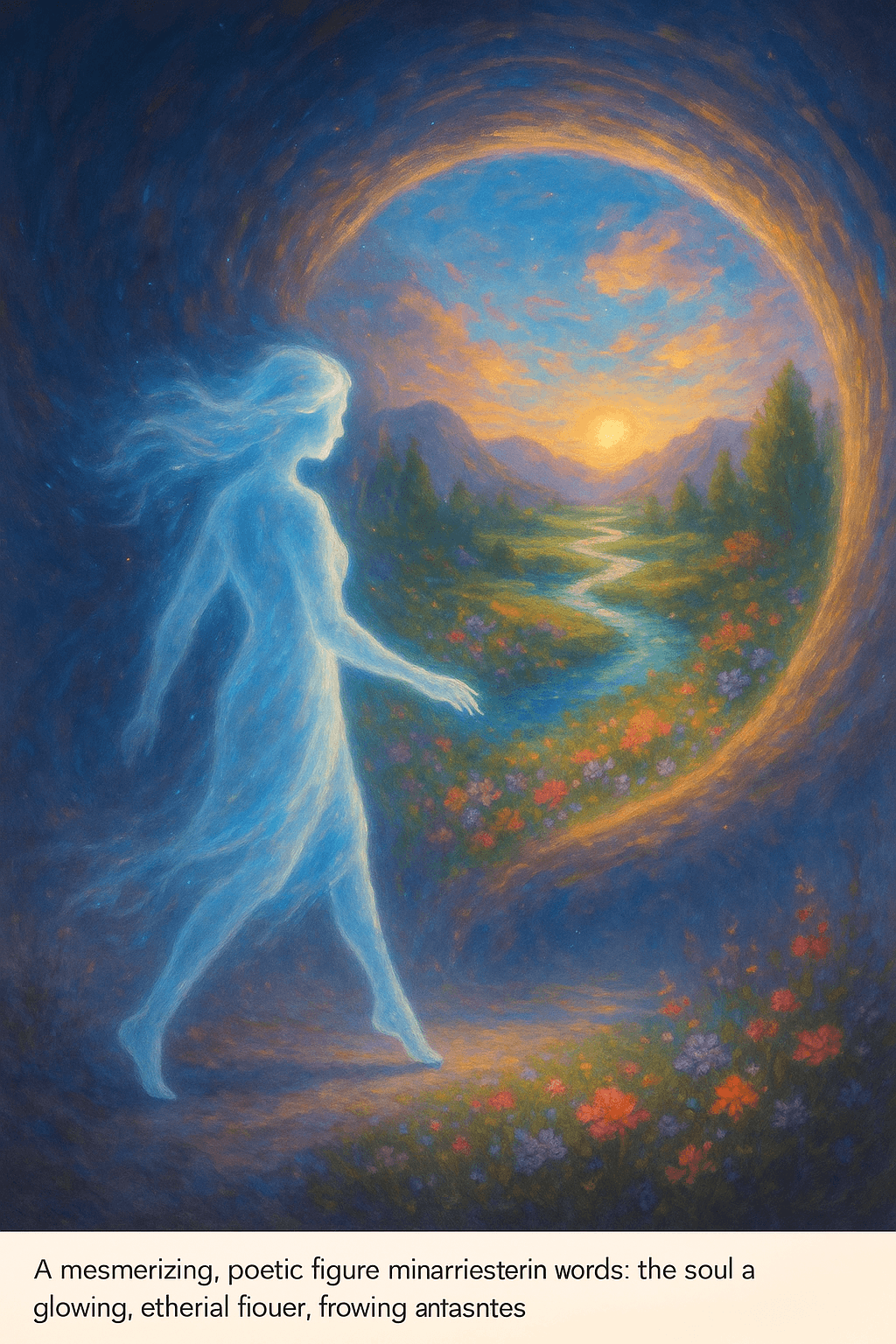
When the soul wants to experience something she throws out an image in front of her and then steps into it. — Rumi
—What lingers after this line?
Rumi’s Metaphor of the Soul and Image
Rumi’s poetic wisdom often invites readers to explore the soul’s intricate workings. In this quote, he presents the soul as an active participant in its own journey, projecting an image—an aspiration or desire—before stepping into it. This metaphor highlights the transformative power of imagination, suggesting that our inner visions are not idle fancies but blueprints for lived experience.
Imagination as the Seed of Transformation
Building on Rumi’s insight, imagination becomes the first step toward transformation. By 'throwing out an image,' the soul shapes its potential reality, much like artists envisioning their creations before setting brush to canvas. Psychological studies, such as Carl Jung’s concept of 'active imagination,' emphasize how individuals can access deeper layers of their psyche to facilitate growth and change.
The Creative Process in Human Experience
Furthermore, the creative process itself mirrors Rumi’s idea. Whether in art, philosophy, or innovation, envisioning a possibility precedes its realization. For example, Leonardo da Vinci’s sketches were projections of inventions and anatomical discoveries he yearned to explore. This act of imagining, then embodying, underscores how vision shapes achievement.
Spiritual Implications of Stepping Into One’s Visions
Rumi’s Sufi background frames these images not just as goals, but as spiritual invitations. Stepping into the projected image symbolizes an act of faith—trusting that the soul’s yearnings are worthy of pursuit. This echoes mystical traditions where inward longing compels seekers to embody virtues or mysteries glimpsed in meditation or prayer, much like the allegories in Sufi poetry.
Practical Applications: Imagery and Personal Growth
Finally, modern practice affirms Rumi’s wisdom through visualization techniques in therapy and sports psychology. Athletes, for instance, rehearse success in their minds before performance, often stepping into their visualized outcomes. By understanding the soul’s tendency to project and then inhabit its images, we are empowered to shape our destinies consciously, weaving vision into reality as Rumi so beautifully describes.
Recommended Reading
One-minute reflection
What feeling does this quote bring up for you?
Related Quotes
6 selectedComputers are useless. They can only give you answers. — Pablo Picasso
Pablo Picasso
Pablo Picasso’s jab—“Computers are useless. They can only give you answers.”—is less a literal dismissal than a provocation about what humans value.
Read full interpretation →We are such stuff as dreams are made on. — William Shakespeare
William Shakespeare
Shakespeare’s “We are such stuff as dreams are made on” comes from The Tempest (c. 1611), where Prospero reflects on how quickly spectacles—and lives—vanish.
Read full interpretation →You may think I'm small, but I have a universe inside my mind. — Yoko Ono
Yoko Ono
Yoko Ono’s line opens with a contrast that immediately reframes power: what appears “small” on the outside can contain something immeasurably large within. The sentence pushes back against the lazy equation of physical p...
Read full interpretation →My life has been full of terrible misfortunes, most of which never happened. — Michel de Montaigne
Michel de Montaigne
Montaigne’s line captures a familiar irony: the mind can live through disasters that reality never delivers. Although misfortune sounds like an external blow, he points inward, suggesting that a substantial portion of ou...
Read full interpretation →We can dream of a world that is vast, alive, and interesting, or reason it to be small, hard, and empty. — Nick Cave
Nick Cave
Nick Cave frames imagination and reason not as enemies, but as competing habits of perception that shape the world we experience. In his telling, we can live as if reality is spacious and animated, or we can interpret it...
Read full interpretation →We suffer more often in imagination than in reality. — Seneca
Seneca
Seneca’s line distills a core Stoic observation: much of what wounds us is not the event itself but the mind’s forecast of it. Before reality arrives, we rehearse losses, humiliations, and disasters in vivid detail, and...
Read full interpretation →More From Author
More from Rumi →Why do you stay in prison when the door is so wide open? — Rumi
Rumi’s line, “Why do you stay in prison when the door is so wide open?” confronts the listener with an unsettling possibility: that confinement is not always imposed from outside. Instead of offering comfort, he offers a...
Read full interpretation →The quieter you become, the more you are able to hear. — Rumi
Rumi’s line suggests that hearing is not only a physical act but also a quality of attention. When we “become quieter,” we reduce the noise of reactive thoughts, self-commentary, and the urge to respond immediately.
Read full interpretation →The wound is the place where the Light enters you. — Rumi
Rumi’s line turns suffering into architecture: a “wound” becomes an opening rather than merely damage, and “Light” becomes something that can enter and transform. Instead of treating pain as evidence of failure, he frame...
Read full interpretation →The quieter you become, the more you are able to hear. — Rumi
Rumi’s line suggests that hearing is not only a function of the ears but also of attention. When inner noise—plans, judgments, rehearsed replies—fills the mind, it competes with what the world is actually offering in the...
Read full interpretation →